
HVAC Installation in Marshalltown, IA
A new system here will heat from October through May and cool from June through August every year. Tell us about the house, and a licensed contractor who covers Marshall County will get in touch.
Tell us about the job
It takes about a minute.

A new system here works most of the year
Marshalltown asks for heat from October through May and cooling in June through August. That is 11 months a year with the furnace or the air conditioner running. Winter nights average 14°F, cold enough that a new furnace needs to hold up to long, steady runs, not just short bursts. Summer afternoons average 82°F, so the air conditioner has its own season to answer for, even if it is the shorter one.
57.8% of homes here heat with gas, and any new furnace sold today has to meet a federal minimum efficiency. Power interruptions are worth planning around too. Iowa saw 21 winter storms and 65 damaging wind events over the past ten years, and statewide, 15% of households lost power for at least a day in 2024. A new system installed correctly should start back up on its own once power is restored.
- 8 months
- October through May, your system heats
- 3 months
- June through August, it cools
- 14°F
- the average winter night it heats against
- 82°F
- the average summer afternoon it cools against
NOAA nClimDiv, 1991–2020 normals
Iowa requires HVAC contractors to hold a state license.
The Iowa Plumbing and Mechanical Systems Board issues that license, and it attaches to the contractor, not to the job in your house. That means the state has tested this contractor and keeps a record of them. It does not mean an inspector checks the furnace or air conditioner once it is installed.
That check comes from somewhere else. In most cities and counties, putting in a new furnace, air conditioner or heat pump needs a permit from the local building office, and an inspection once the work is done. The license tells you the contractor was tested by the state. The permit and inspection are what looks at this particular job.
Sources: Iowa Legislature · Iowa Department of Inspections, Appeals and Licensing
- When should I replace my HVAC system?
- Once your furnace or air conditioner is old enough that repairs keep coming back, replacement is usually the better move. Watch for a furnace that struggles to keep up on the coldest nights, or an air conditioner that runs long stretches without getting the house comfortable. Homes here need heat from October through May, so a furnace failing during those months is a much bigger problem than one showing weakness in summer. If a contractor tells you a repair bill is climbing close to what a new unit would run, that is usually the signal to stop patching and replace it.
- Should I replace my furnace and air conditioner at the same time?
- If both are near the end of their life, replacing them together makes sense. They are often matched to work as a system, so an old furnace paired with a new air conditioner, or the other way around, can mean the two never run as well as they would together. It also means one installation and one inspection instead of two separate jobs down the road. That said, if one unit still has real life left in it, a contractor can size a replacement to work with what is staying.
- What happens during an HVAC installation?
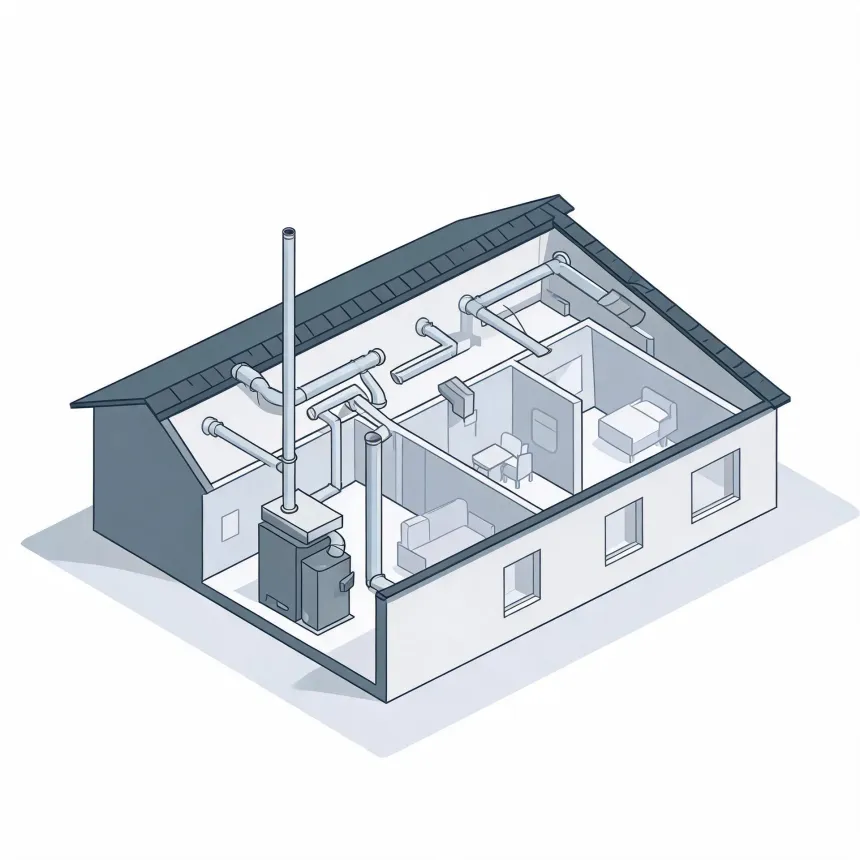
- A contractor removes the old furnace and air conditioner and puts in the new equipment, connecting it to the ductwork, gas line or electrical circuit, and the thermostat. They will check the ducts for leaks or damage since air moving through bad ductwork undercuts even a new system. Once everything is running, they test it and make sure it is heating and cooling the way it should. In most places here, replacing a furnace or air conditioner needs a permit from the local building office, and the work gets inspected once it is done.