Mini Split Installation in Burlington, IA
A new system here will heat from October through May and cool from June through September every year. Tell us about the house, and a licensed contractor who covers Des Moines County will get in touch.
Tell us about the job
It takes about a minute.
Burlington asks for both a real winter and a real summer
Your mini-split needs to hold up on nights that average 19°F from December through February, and keep up on afternoons that average 84°F in summer. Homes here run on heat from October through May, eight months of the year, then switch to cooling for the four months after that. That leaves the system working nearly the whole year, in both directions.
Any mini-split installed new has to meet the federal minimum for a split-system heat pump, 14.3 SEER2 for cooling and 7.5 HSPF2 for heating. There is no separate ductless rating, that is the floor for the equipment going in. Worth knowing too that 15% of Iowa households went at least 24 hours without power in 2024, and this county has logged 17 winter storms and 88 damaging wind events over the past ten years. A mini-split that comes back on by itself once power returns matters here.
- 8 months
- October through May, your system heats
- 4 months
- June through September, it cools
- 19°F
- the average winter night it heats against
- 84°F
- the average summer afternoon it cools against
NOAA nClimDiv, 1991–2020 normals
Iowa requires HVAC contractors to hold a state license.
The license is issued to the contractor, not to the job, so it covers the business doing your install and every job they take on, not just this one. Iowa's board tests and records contractors before they can hold that license, so hiring a licensed contractor means the state has already checked them once, before they ever got to your house.
For a mini-split install in Des Moines County, that license is what stands behind the person doing the work, but the local building office still has a say in the job itself. Most cities and counties require a permit for this kind of installation and an inspection once it's done, so someone besides the installer looks at the finished work before it's considered complete.
Sources: Iowa Legislature · Iowa Department of Inspections, Appeals and Licensing
- Is a mini split worth it?
- For most homes it comes down to what you're heating or cooling and how well the rest of your system covers it. A mini split handles a single room or zone well, holding steady heat down into cold winter nights and steady cooling through summer afternoons. If you're adding on a room, finishing a space that never got ductwork, or dealing with one part of the house that's always too hot or too cold, it solves that directly. If you're trying to replace a whole-house system, a contractor can tell you whether one or several units make sense for the layout.
- How many rooms can a mini split cover?
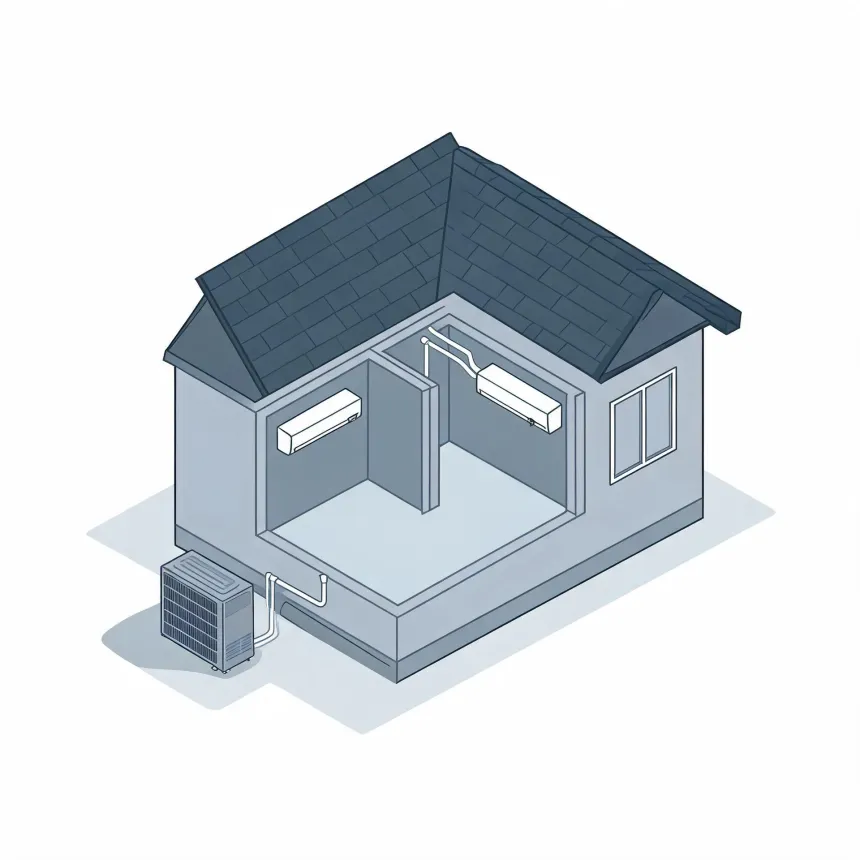
- A single-zone mini split covers one room or open area. Multi-zone systems run several indoor units off one outdoor unit, so each room gets its own thermostat and its own setting. How many zones a given outdoor unit can support depends on its capacity and on the size of each room, so a contractor sizing the job will look at the whole house before recommending a setup.
- Can a mini split heat a whole house?
- It can, but it takes the right number of zones placed and sized for every room, not one unit trying to cover the whole place. Done that way, a mini split system works as the primary heat source even through winter nights that average 19°F here. The bigger question for a house already on gas or another heating fuel is whether to replace that system entirely or keep it as backup for the coldest stretches, and that's a call a contractor will help you make after looking at the house.