Mini Split Installation in Indianola, IA
A new system here will heat from October through May and cool from June through September every year. Tell us about the house, and a licensed contractor who covers Warren County will get in touch.
Tell us about the job
It takes about a minute.

What winter and summer ask of a mini-split here
Indianola needs heat or cooling every month of the year. Winters bring nights averaging 17°F from December through February, and the heat has to run October through May, eight months straight. Summers are milder by comparison, afternoons around 84°F, but that cooling load still runs June through September.
A mini-split installed here has to hold up on both ends, the cold nights and the warm afternoons, with barely a break between seasons. Any unit manufactured from 2023 on has to meet the federal minimum for split-system heat pumps, 14.3 SEER2 for cooling and 7.5 HSPF2 for heating. That's the floor, not a special ductless rating, since the standard treats mini-splits the same as any other split system.
- 8 months
- October through May, your system heats
- 4 months
- June through September, it cools
- 17°F
- the average winter night it heats against
- 84°F
- the average summer afternoon it cools against
NOAA nClimDiv, 1991–2020 normals
Iowa requires HVAC contractors to hold a state license.
The license is issued to the contractor, not to the job, so it does not expire when the mini-split installation is finished. It stays on record with the Iowa Plumbing and Mechanical Systems Board, tied to that contractor's name, for the next homeowner and the one after that.
For this installation, the license is what stands behind the person doing the work. Most cities and counties also require a permit from the local building office for this kind of job, with an inspection once it's done, and that inspection is what checks the mini-split was set up correctly, separate from anything the state license already covers.
Sources: Iowa Legislature · Iowa Department of Inspections, Appeals and Licensing
- Is a mini split worth it?
- For most homes, yes, especially if you're heating or cooling a room that isn't on the main ductwork. A mini split gives that space its own thermostat, so you're not conditioning the whole house to fix one room. Down to 17°F on a winter night, a modern mini split heat pump still puts out heat, though its output drops as the temperature drops. Whether it makes sense for your house depends on which rooms need help and what's heating them now, so a contractor should walk through the space before you decide.
- How many rooms can a mini split cover?
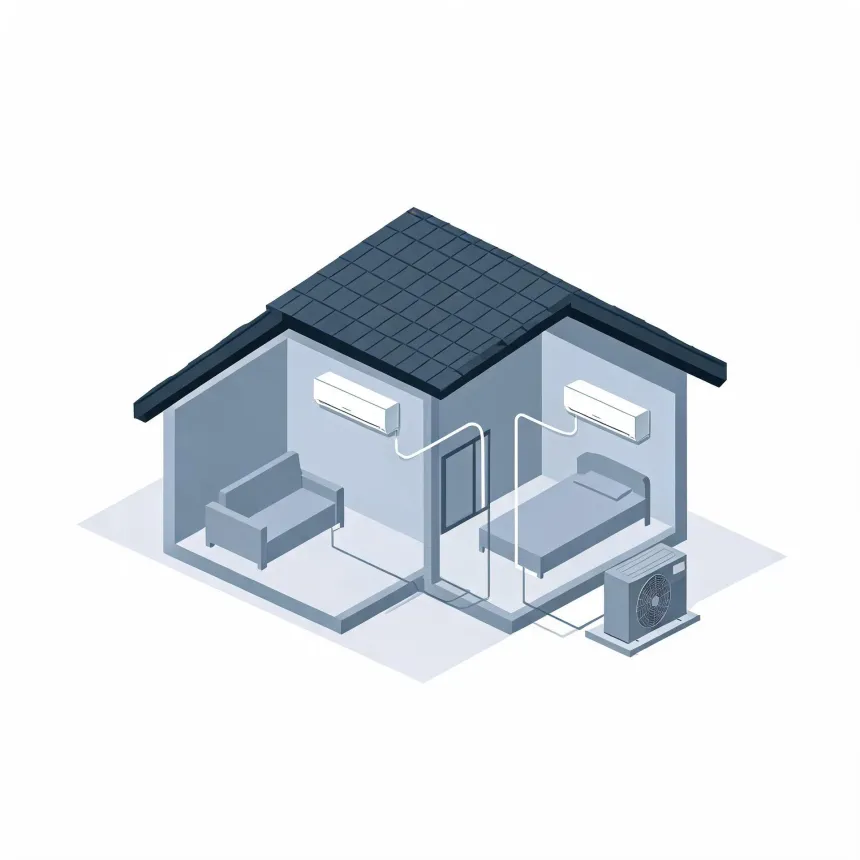
- One indoor unit heats and cools one room or open area well. If you need more rooms covered, a multi-zone system lets one outdoor unit run several indoor heads, each with its own thermostat. The outdoor unit needs enough capacity to serve every zone at once, which is why a contractor sizes the system to the rooms you actually want conditioned.
- Can a mini split heat a whole house?
- It can, but it takes the right number of zones matched to the house, not one indoor unit. Homes here need heat from October through May, eight months a year, with winter nights averaging 17°F, so the system has to be sized for that low end, not just a mild day. Over half the homes here heat with gas, and a lot of whole-house mini split setups end up paired with existing ductwork or another heat source for the coldest stretches rather than replacing it outright. A contractor can look at your house and tell you whether a whole-house mini split system covers it on its own or works better alongside what you already have.