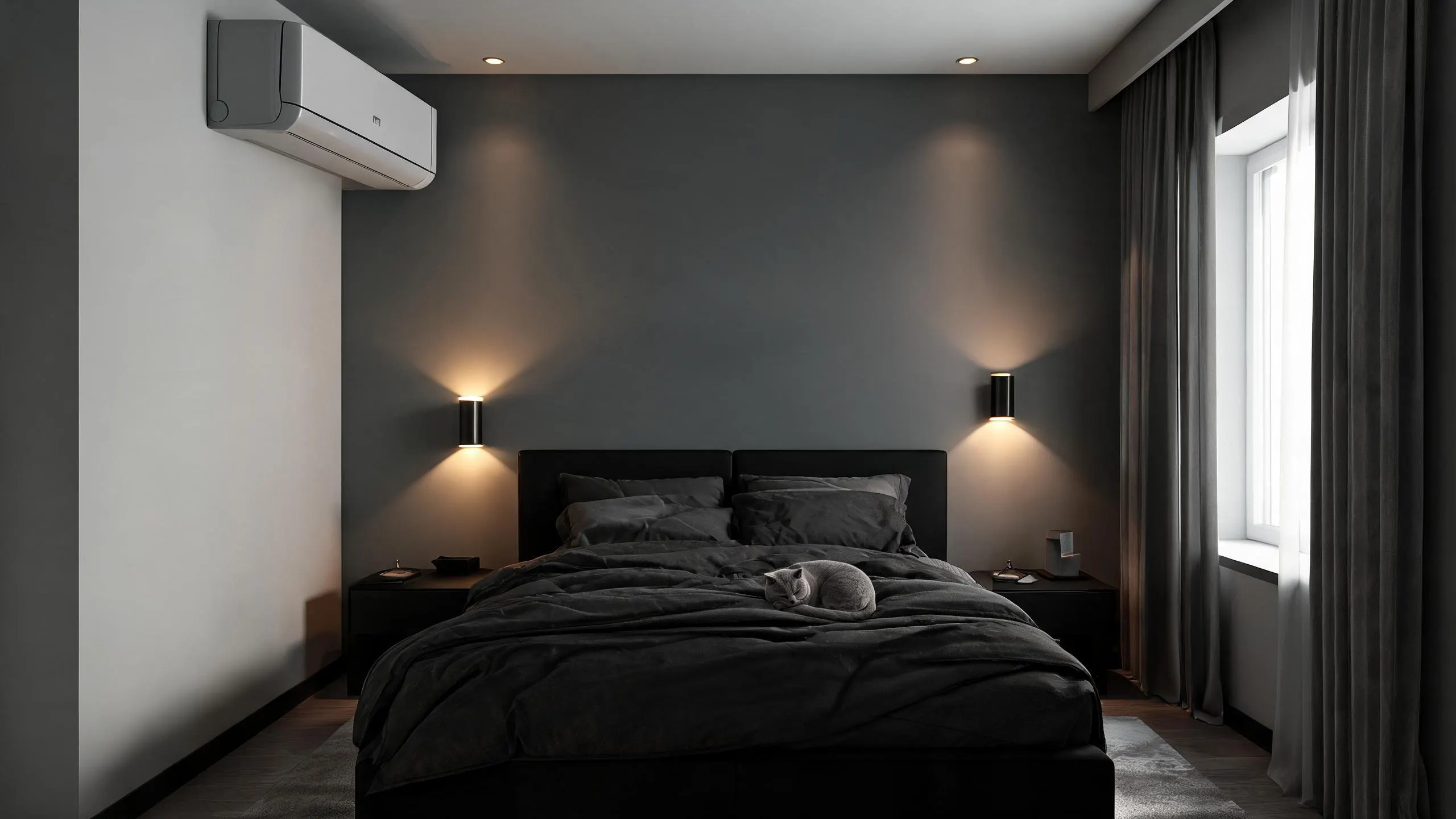
Mini Split Installation in Le Mars, IA
A new system here will heat from October through May and cool from June through August every year. Tell us about the house, and a licensed contractor who covers Plymouth County will get in touch.
Tell us about the job
It takes about a minute.

What a mini-split in Le Mars has to handle
Winter nights here average 13°F from December through February, and homes need heat from October through May, 8 months of the year. Summer afternoons average 83°F, with cooling needed June through August. That leaves 11 months where a mini-split is doing one job or the other, with barely a month of rest between.
A new mini-split has to hold up on both ends of that range. Under the federal minimum, split-system heat pumps built on or after January 1, 2023 must reach at least 14.3 SEER2 for cooling and 7.5 HSPF2 for heating. With 8 months of heating demand here against 3 of cooling, the heating side of that rating is the one doing most of the work.
- 8 months
- October through May, your system heats
- 3 months
- June through August, it cools
- 13°F
- the average winter night it heats against
- 83°F
- the average summer afternoon it cools against
NOAA nClimDiv, 1991–2020 normals
Iowa requires HVAC contractors to hold a state license.
Iowa licenses HVAC contractors through the Iowa Plumbing and Mechanical Systems Board. That license is issued to the contractor, not to any single job, so the mini-split going into your home is covered by a license the contractor already holds rather than one issued for this installation.
In most Iowa cities and counties, installing a mini-split needs a permit from the local building office, with an inspection once the work is done. That inspection looks at the installation itself, the lineset, the mounting, the electrical connection, separate from the license that qualifies the contractor to do the work.
Sources: Iowa Legislature · Iowa Department of Inspections, Appeals and Licensing
- Is a mini split worth it?
- For the right room or addition, yes. A mini split heats and cools one space well without ductwork, and it runs on demand instead of conditioning the whole house to warm one room. Here, where heat is needed from October through May and cooling runs June through August, a unit sized for the space it serves stays efficient nearly all year. Whether it fits your situation depends on what you're trying to heat or cool, so a contractor should look at the space before you decide.
- How many rooms can a mini split cover?
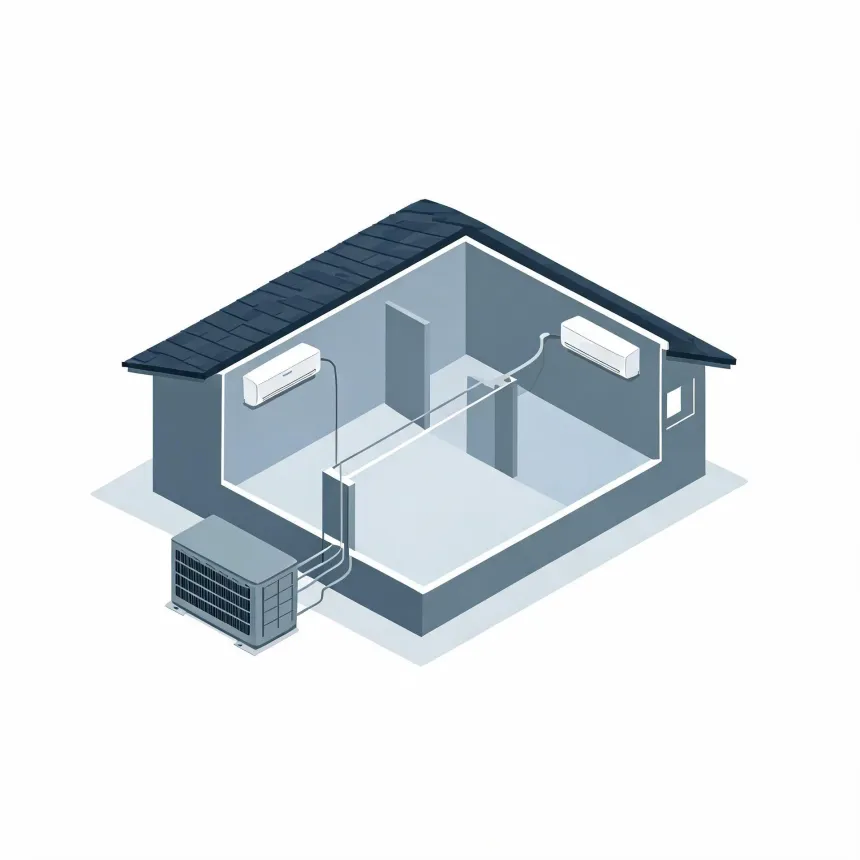
- A single-zone mini split is built for one room or open area. If you need more than one space covered, a multi-zone system connects several indoor units to one outdoor compressor, and each indoor unit handles its own room with its own thermostat. How many zones a home can support depends on the size of the outdoor unit and the layout of the house, which is something a contractor sizes for the specific job.
- Can a mini split heat a whole house?
- It can, but only if it's sized and placed to do that job, usually with a multi-zone system that puts an indoor unit in each main room. Winter nights here average 13°F, so the heat pump has to be rated for that kind of cold and matched to the house it's heating. A single indoor unit meant for one room will not heat a whole home. Whole-house coverage is a design question a contractor works out room by room.