Mini Split Installation in Waterloo, IA
A new system here will heat from October through May and cool from June through August every year. Tell us about the house, and a licensed contractor who covers Black Hawk County will get in touch.
Tell us about the job
It takes about a minute.
Eleven months of work, out of 13°F nights
A mini-split here works almost year round. Homes need heat from October through May and cooling from June through August, so the system you install is running in nearly every month on the calendar. On winter nights averaging 13°F, the heat pump has to keep pulling warmth out of cold air, and on summer afternoons near 82°F it has to keep up on the cooling side too. Any unit manufactured from 2023 on has to meet 7.5 HSPF2 for heating and 14.3 SEER2 for cooling, whether it is ducted or ductless. That is the floor, not a special ductless number.
This area also sees real winter storms and wind, and Iowa households have lost power for a day or more. A mini-split needs electricity to run no matter how it is installed, so where the outdoor unit sits and how the system is set up matters when the power is what goes out, not the temperature.
- 8 months
- October through May, your system heats
- 3 months
- June through August, it cools
- 13°F
- the average winter night it heats against
- 82°F
- the average summer afternoon it cools against
NOAA nClimDiv, 1991–2020 normals
Iowa requires HVAC contractors to hold a state license.
The Iowa Plumbing and Mechanical Systems Board tests contractors before it licenses them, and the license belongs to the contractor, not to any one job. That means the person installing your mini-split has already had to show the board they know the work, rather than you being the first to find out.
That license does not stand alone. In most cities and counties, installing equipment like a mini-split needs a permit from the local building office, with an inspection once the work is done. The permit and inspection are separate from the state license. They exist so someone besides the installer looks at the finished job.
Sources: Iowa Legislature · Iowa Department of Inspections, Appeals and Licensing
- Is a mini split worth it?
- For most homes here, yes. Winter nights average 13°F and homes need heat or cooling 11 months out of the year, so a system that both heats and cools earns its keep across most of the calendar. A mini split also lets you heat or cool just the rooms you use, which matters if you have a room addition or a space your furnace and ducts don't reach well. Whether it makes sense for your house depends on your layout and what you're heating now, and a contractor can walk through that with you.
- How many rooms can a mini split cover?
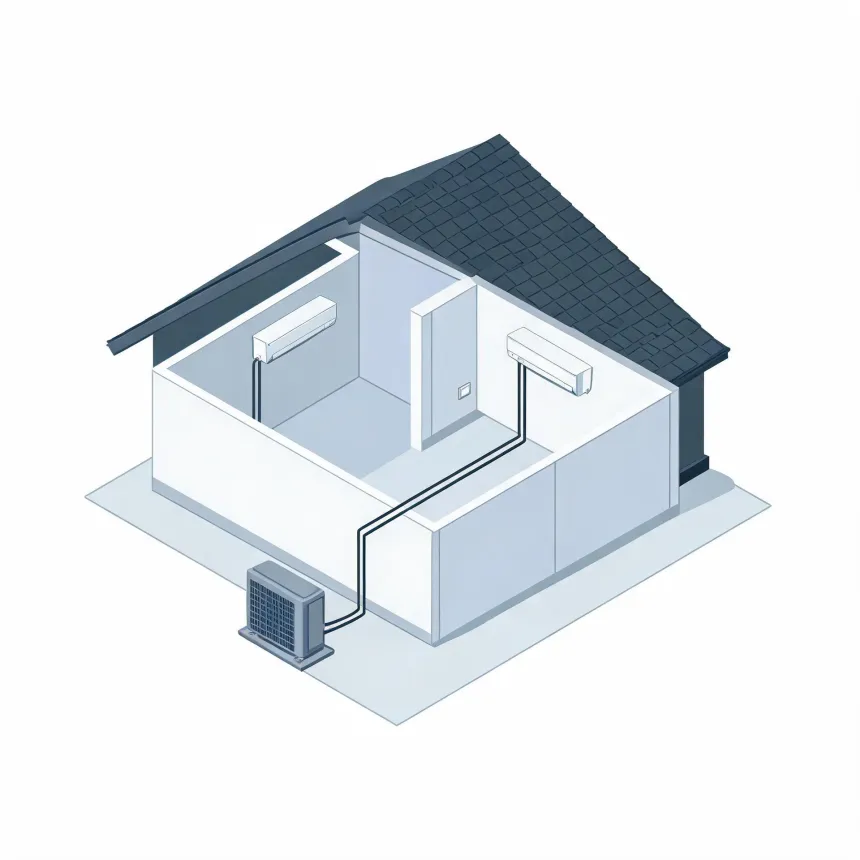
- A single outdoor unit can run one indoor head or several, depending on the system. Single-zone systems cover one room or open area. Multi-zone systems run several indoor heads off one outdoor unit, each with its own thermostat, so you can heat or cool different rooms to different temperatures at once. How many zones your house needs comes down to the number of rooms, the layout, and how they're used, which is something a contractor sizes for your house.
- Can a mini split heat a whole house?
- It can, if enough zones are installed and each one is sized for the room it heats. A multi-zone system with a head in every room can replace a furnace entirely, and mini splits are built to keep working in cold weather, which matters here with winter nights averaging 13°F. Whether that's the right call for your house depends on your layout and how it's built now, so have a contractor look at the whole house before deciding.