
Furnace Installation in Davenport, IA
A new furnace here will run from October through May every year. Tell us about the house, and a licensed contractor who covers Scott County will get in touch.
Tell us about the job
It takes about a minute.
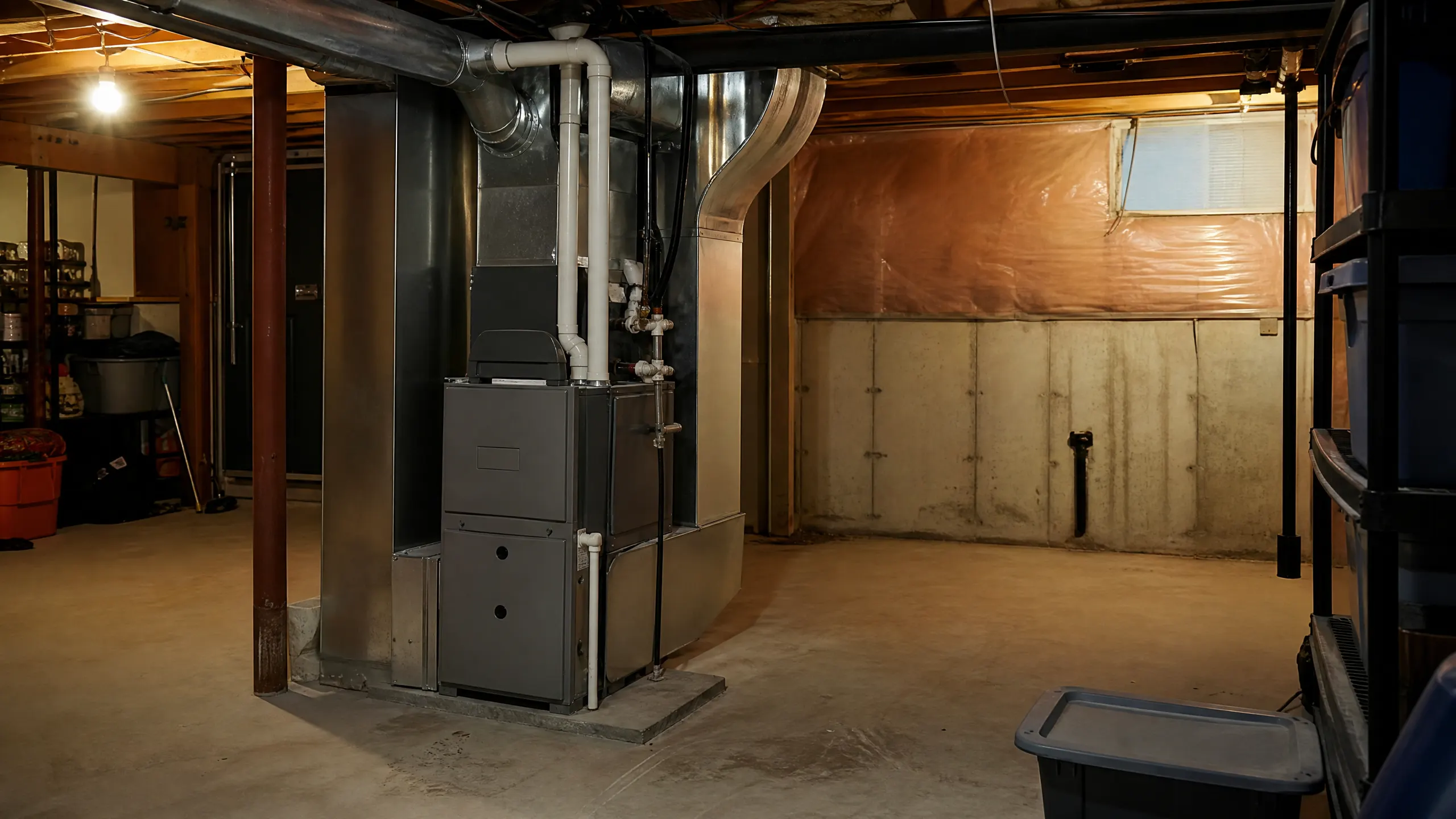
Eight months of heat, and winter nights near 17 degrees
Davenport homes need a working furnace from October through May. That is most of the year, and the coldest nights average 17°F, so a furnace here has to hold up night after night for eight straight months.
Most homes in Scott County heat with gas, and any new non-weatherized gas furnace built now has to reach at least 80 percent AFUE. That is the federal floor, not a ceiling, and a new installation is a chance to size the unit right for a house that will lean on it this hard every winter. Iowa also sees its share of winter storms and power gone out for a day or more, so how a furnace starts back up matters as much as how it runs.
- 8 months
- October through May, your furnace is on duty
- 17°F
- the average winter night it heats against
- 74%
- of homes here heat with gas, so most furnaces here burn gas
- 80% AFUE
- the federal minimum any new unit must meet
NOAA nClimDiv, 1991–2020 normals

A high-efficiency gas furnace would save about $90 a year to run in Scott County compared with a gas furnace.
Estimates for a typical Scott County home, from EIA household energy data, Iowa fuel prices and NOAA climate normals. Your home will differ.
Iowa requires HVAC contractors to hold a state license.
Iowa licenses HVAC contractors through the Iowa Plumbing and Mechanical Systems Board. The license is issued to the contractor, not to each job, so the state has tested that person or company and keeps a record of them, and that record stands behind every job they take on, not just this one.
For a furnace installation, that license is what's accountable for the work. In most cities and counties, a furnace replacement also needs a permit from the local building office and an inspection once the work is done. In Scott County, 74% of homes heat with gas, so this installation runs on the same gas line and venting a working furnace already used.
Sources: Iowa Legislature · Iowa Department of Inspections, Appeals and Licensing
- What size furnace does my house need?
- The right size comes from a load calculation, not from square footage alone. A contractor measures your walls, windows, insulation, and layout to figure out how much heat your house loses on a cold night, then matches the furnace to that number. A furnace that's too big cycles on and off too fast and never runs long enough to heat evenly. One that's too small runs constantly and still can't keep up when it drops to 17°F outside. Ask for the load calculation, not a guess based on the size of the last furnace.
- How do I know it's time to replace my furnace?
- Age is one sign. As a furnace gets older, repairs tend to get more frequent and the risk of a breakdown on a cold night goes up. Watch for uneven heat between rooms, a furnace that runs longer than it used to, or a repair bill that starts to rival what a new unit would cost. With heat needed here from October through May, a furnace that's struggling in the fall is one you don't want to gamble on through the winter.
- Is a high-efficiency furnace worth it?
- It depends on how much you heat and how long you plan to stay in the house. Every non-weatherized gas furnace sold new today has to reach at least 80 percent AFUE, so the real choice is between that baseline and a high-efficiency model that can reach the mid-90s or higher. With heat running eight months a year here, a more efficient furnace burns less gas over that stretch than a standard one. A contractor can walk you through the models that fit your house and price out the difference for your situation.