
HVAC Installation in Council Bluffs, IA
A new system here will heat from October through May and cool from June through September every year. Tell us about the house, and a licensed contractor who covers Pottawattamie County will get in touch.
Tell us about the job
It takes about a minute.

A system that works nearly every month of the year
Council Bluxs homes need heat or cooling almost year round. Heat runs October through May, eight months, and winter nights average 16°F. Cooling runs June through September, and summer afternoons average 84°F. A new system has to handle both ends of that range, not just one.
Most homes here heat with gas, and whatever furnace goes in has to meet the federal minimum efficiency rating. Storms are part of the picture too. Pottawattamie County has logged 16 winter storms and 56 damaging wind events over the past ten years, and 15% of Iowa households lost power for at least a day in 2024. A furnace or air conditioner installed here needs to hold up to that, and so does whatever backs it up when the power goes out.
- 8 months
- October through May, your system heats
- 4 months
- June through September, it cools
- 16°F
- the average winter night it heats against
- 84°F
- the average summer afternoon it cools against
NOAA nClimDiv, 1991–2020 normals
Iowa requires HVAC contractors to hold a state license.
The Iowa Plumbing and Mechanical Systems Board tests contractors before it licenses them and keeps a record of who holds one. That license belongs to the contractor, not to any single job, so it doesn't get reissued or checked off each time work is done in a home.
For a heating and cooling installation, the license tells you the contractor doing the work has met the state's standard. The permit is what covers the job itself. In most Iowa cities and counties, putting in a new furnace or air conditioner needs a permit from the local building office, and the finished work gets inspected before it's signed off.
Sources: Iowa Legislature · Iowa Department of Inspections, Appeals and Licensing
- When should I replace my HVAC system?
- Once your furnace or air conditioner is into its second decade and starts needing repairs more than once a year, replacing it makes more sense than keeping it going. Repair bills add up, and older equipment loses efficiency even when it's still running. Winters here get down to 16°F on average, so a furnace that struggles in December through February is worth replacing before it fails on the coldest night. A licensed contractor can look at the age and condition of your equipment and tell you whether repair or replacement is the better move.
- Should I replace my furnace and air conditioner at the same time?
- If both are original to the house and close in age, replacing them together is usually worth considering. A furnace and air conditioner installed at the same time are matched to work together, and a mismatched pair can run less efficiently than either would on its own. Homes here need the furnace from October through May and the air conditioner from June through September, so both units see heavy use all year. If only one has failed, a contractor can tell you whether the other is worth pairing with it now or replacing later.
- What happens during an HVAC installation?
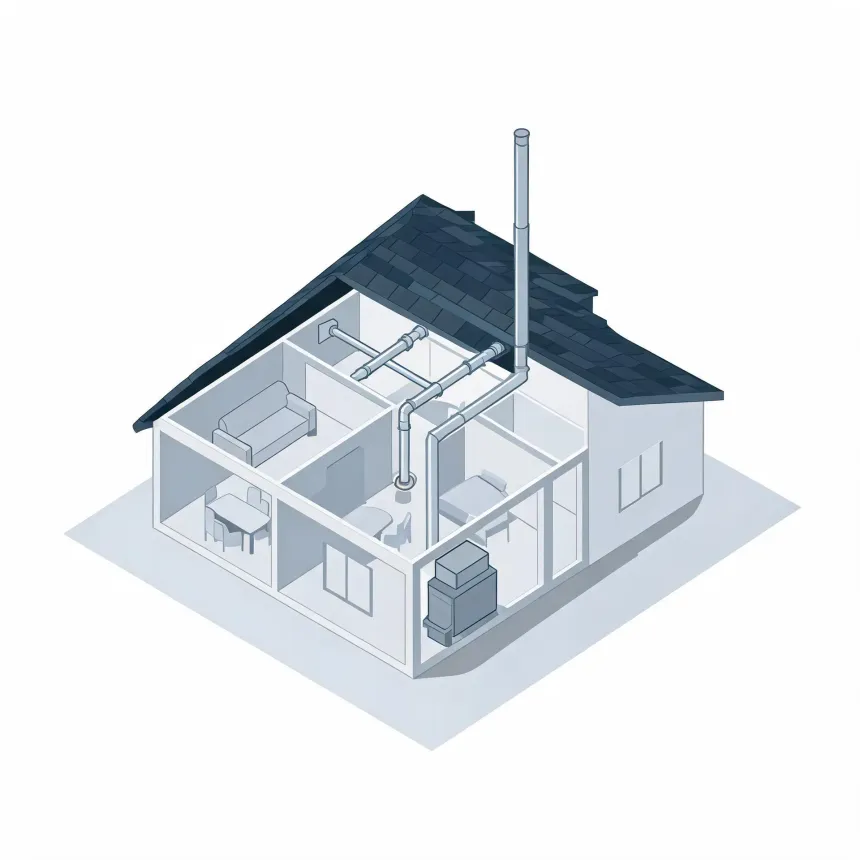
- A contractor removes the old furnace or air conditioner, sets the new equipment in place, and connects it to your ductwork, gas line or refrigerant lines, and electrical. Once it's connected, they test it to make sure it's heating or cooling correctly and check the airflow through your ducts. In Council Bluffs, replacing a furnace or air conditioner needs a permit from the local building office, and the work gets inspected once it's done. The contractor handles the permit and schedules the inspection as part of the job.