
HVAC Repair in Mason City, IA
Homes here need heat from October through May and cooling from June through August. If your system quits, tell us what it's doing and a licensed contractor who covers Cerro Gordo County will get in touch.
Tell us about the job
It takes about a minute.

Eleven months of work, most of it in the cold
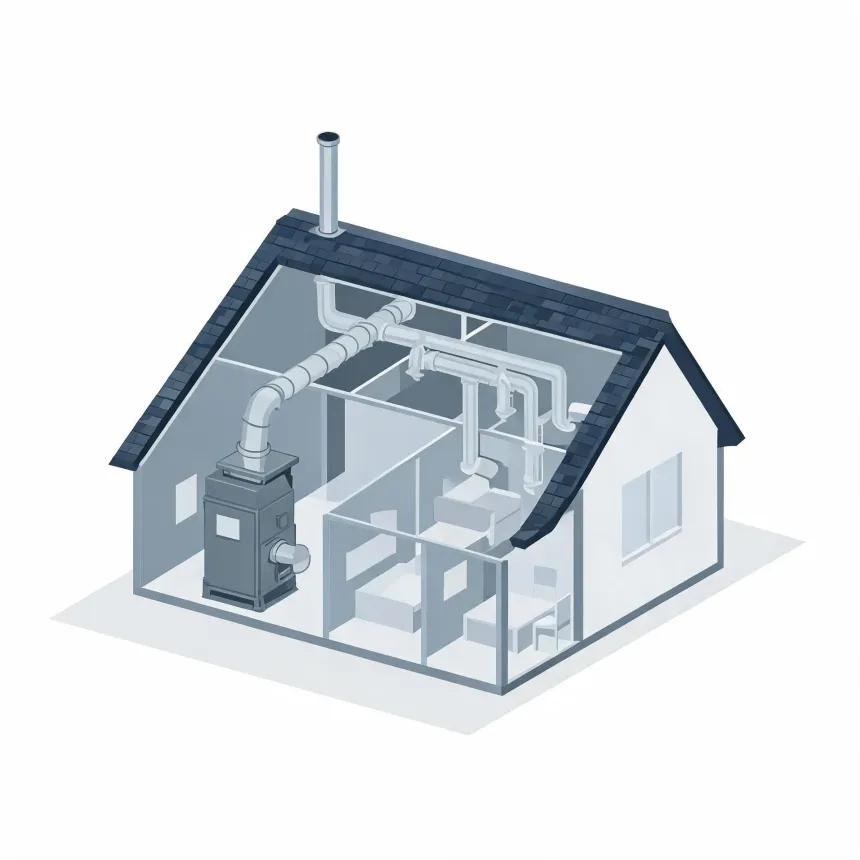
Your furnace carries the load here. Heat is needed October through May, eight months, and winter nights average 12°F. At that temperature the burner is cycling on and off most of the day and night just to hold the house steady, and every cycle puts wear on the igniter and the ignition control. When one of those fails, the furnace stops firing and the house goes cold fast, because outside is nowhere near warm enough to make up the difference.
Summer is shorter here, just June through August, with afternoons averaging 80°F. The air conditioner does not work as hard as the furnace does, but it still has to keep up on the warmest days, and a low refrigerant charge or a failing capacitor shows up as a system that runs long and cannot bring the house down to temperature. On top of both seasons, this area sees real storm activity, 38 winter storms and 76 damaging wind events over the last ten years, and outages that follow can knock a system out even when nothing inside it is broken.
- 8 months
- October through May, your system heats
- 3 months
- June through August, it cools
- 12°F
- the average winter night it heats against
- 80°F
- the average summer afternoon it cools against
NOAA nClimDiv, 1991–2020 normals
A new furnace and air conditioner would cut about $130 a year off heating and cooling for a typical Cerro Gordo County home.
Estimates for a typical Cerro Gordo County home, compared with an older unit built to the previous federal minimum, from EIA household energy data, Iowa fuel prices and NOAA climate normals. Your home will differ.
Repair makes sense when one part has failed.
Replacement makes sense when the furnace's heat exchanger is cracked, the air conditioner's compressor has failed, or repairs keep coming.
Iowa requires HVAC contractors to hold a state license.
The Iowa Plumbing and Mechanical Systems Board tests contractors before it licenses them, and it keeps a record of who holds one. That license belongs to the contractor, not to any single job, so the same license that lets someone install a furnace also covers a repair call like this one.
For a heating and cooling repair, that license is what stands behind the person working on your system. It means the state has tested this contractor and has a record of them, and that record follows the contractor from job to job, including this one.
Sources: Iowa Legislature · Iowa Department of Inspections, Appeals and Licensing
- Why is my heat not working?
- Start with the thermostat. Check that it is set to heat and the temperature is set above room temperature, and check the batteries if it has a screen that looks dim. If the thermostat looks fine, check the breaker for the furnace and the switch that looks like a light switch near the unit, since that shuts it off for service. A furnace that won't start at all is often an ignition problem, and that needs a contractor to diagnose. With winter nights here averaging 12°F, it's worth checking the vents outside too, since a furnace that vents through the wall can shut down if that vent gets blocked by snow or ice.
- Why is my system running but not cooling the house?
- Check the filter first. A filter clogged with dust blocks airflow across the coil, and a coil that can't get enough air across it can ice up, which makes the problem worse the longer it runs. Check that all the vents in the house are open, since closing too many forces the system to work against itself. If the filter is clean and the vents are open and the air coming out still isn't cold, the system likely needs a contractor to check the refrigerant charge or the coil itself.
- What can I check before calling for HVAC repair?
- Check the thermostat settings, the batteries if it has any, and the breaker for the unit. Check the filter, since a dirty filter causes problems for both heating and cooling and is easy to fix yourself. Check that outdoor vents and the outdoor unit are clear of leaves, snow, or anything blocking them. If you've done all that and the system still isn't heating or cooling right, a contractor will need to look at it, and telling them what you already checked helps them get to the actual problem faster.