Mini Split Installation in Mason City, IA
A new system here will heat from October through May and cool from June through August every year. Tell us about the house, and a licensed contractor who covers Cerro Gordo County will get in touch.
Tell us about the job
It takes about a minute.
Mason City asks a mini-split to run almost year round
Cerro Gordo County needs heat or cooling 11 months of the year. Winter nights average 12°F from December through February, and a mini-split has to keep pulling heat out of air that cold, night after night, from October to May. Come summer, afternoons average 80°F, and the same system switches over to cooling for June through August.
A mini-split installed new has to meet the federal minimum for a split-system heat pump, 14.3 SEER2 for cooling and 7.5 HSPF2 for heating. The county has logged 38 winter storms and 76 damaging wind events over the past ten years, and most mini-splits come back on by themselves once power returns, with nothing to reset.
- 8 months
- October through May, your system heats
- 3 months
- June through August, it cools
- 12°F
- the average winter night it heats against
- 80°F
- the average summer afternoon it cools against
NOAA nClimDiv, 1991–2020 normals
Iowa requires HVAC contractors to hold a state license.
The Iowa Plumbing and Mechanical Systems Board issues that license, and it tests and tracks the contractor, not the job itself. So the license tells you the person or company doing the work has met the state's standard, but it doesn't mean the state signs off on your particular installation.
That's where the local building office comes in. In most Iowa cities and counties, putting in a mini-split needs a permit, and the work gets inspected once it's done. The inspector is checking that the unit was installed correctly, including the electrical and refrigerant connections, on this job, at this address. That inspection is what covers the part the license doesn't reach.
Sources: Iowa Legislature · Iowa Department of Inspections, Appeals and Licensing
- Is a mini split worth it?
- For most homes here, yes, especially if you're heating with something expensive or cooling a room your ducts don't reach well. A mini split puts heat or cool air right where you need it, and it keeps working at winter temperatures that stop some older heat pumps cold. With lows near 12°F, look for a model rated for cold climates so it can still carry the heating load in January. A contractor can size it to the room or rooms you're trying to fix.
- How many rooms can a mini split cover?
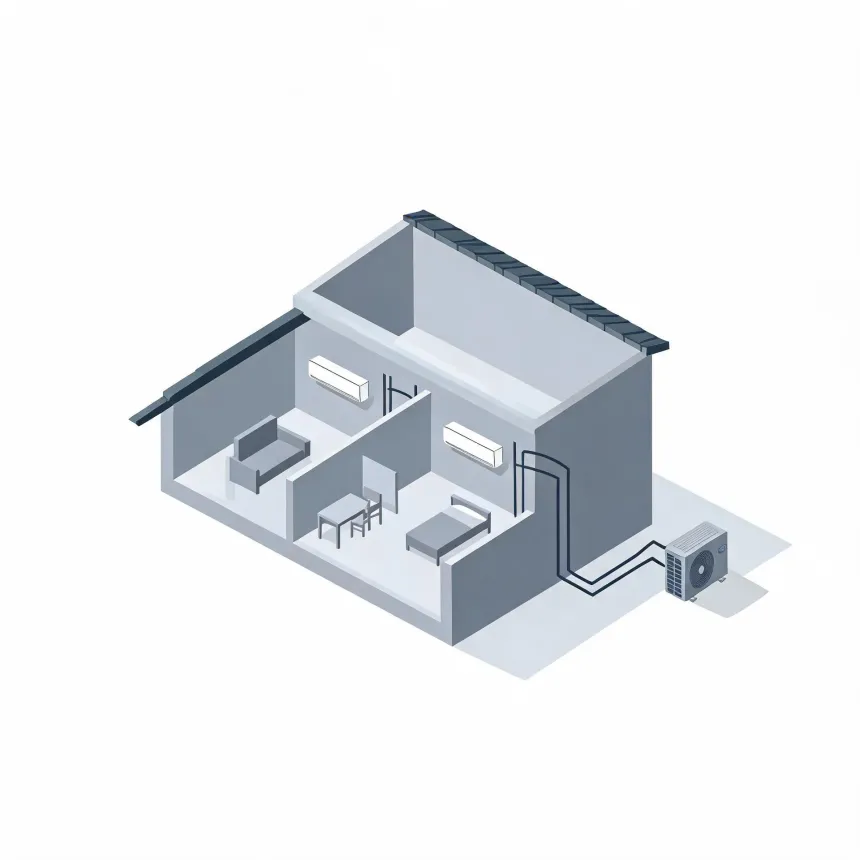
- One outdoor unit can run one indoor head or several, depending on the system. A single-zone system covers one room or open area well. A multi-zone system splits the output across two, three, or more indoor heads, each with its own thermostat, so you can heat or cool different rooms to different temperatures at once. How many rooms make sense on one outdoor unit comes down to the size and layout of the space, which is something a contractor works out room by room.
- Can a mini split heat a whole house?
- It can, but it takes the right setup, not just one indoor head. A multi-zone system with a head in each main room can carry the whole house through the winter, including the cold stretch from December through February when nights average 12°F. Most homes here still heat with gas, so a mini split is often added alongside an existing furnace rather than replacing it outright. Whether it can stand alone as your only heat source depends on how the house is laid out and how well it holds heat, which a contractor would need to look at.