How the vent actually fails
- The dryer's thermal fuse sits on the exhaust housing and cuts power to the heating element when airflow can't carry heat away fast enough.
- Gas dryers vent carbon monoxide along with moisture, so a blocked duct pushes combustion exhaust back toward the drum instead of outside.
- Rigid metal duct resists lint buildup better than the flexible foil or plastic accordion duct many older setups still have.
- The vent run should rise and exit as directly as possible, since every elbow and extra foot of duct gives lint more surface to catch on.
- A dryer that cycles on the thermal fuse repeatedly will eventually fail it for good, and that stops the dryer from heating at all.
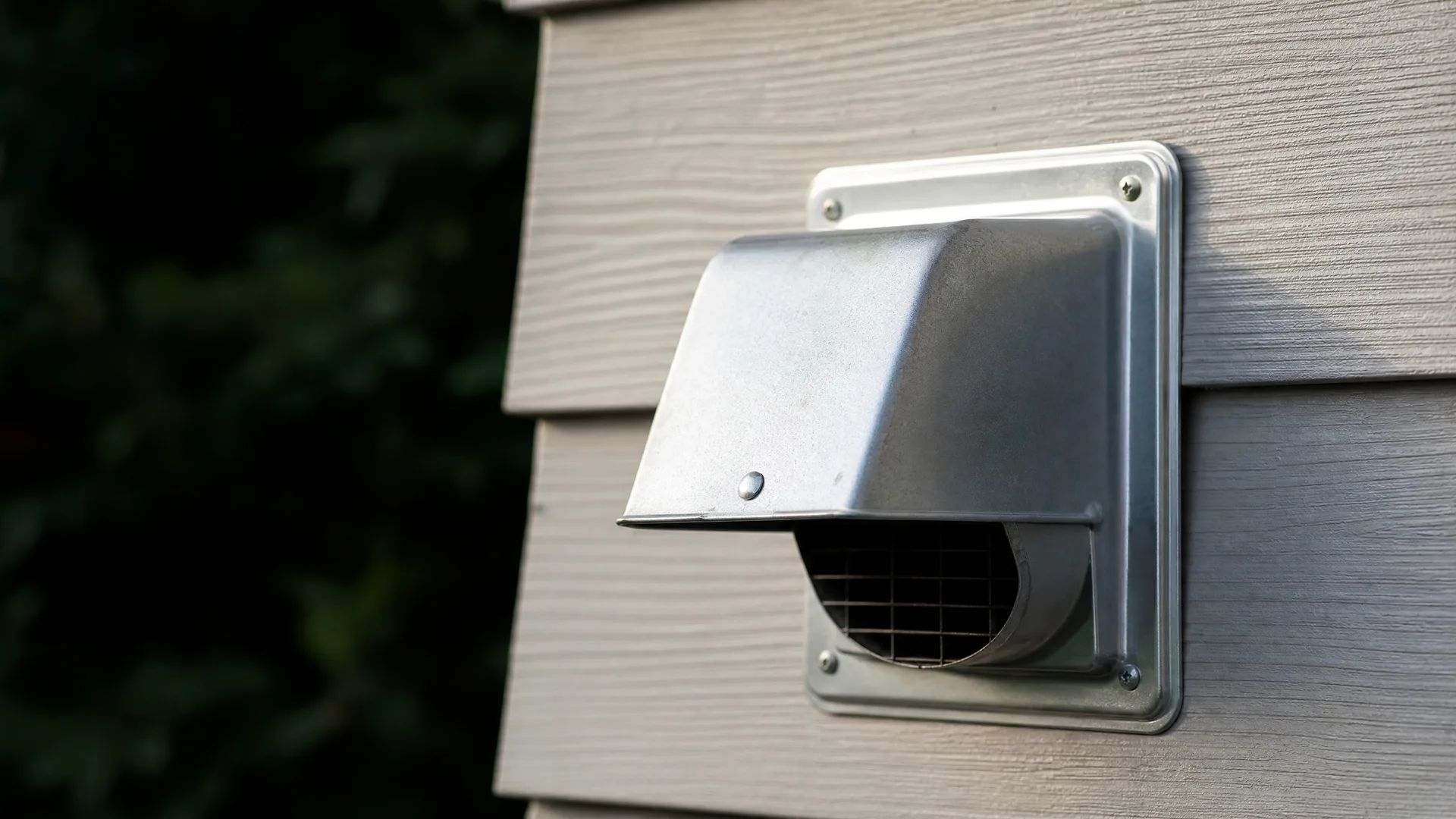
- The outside vent hood has a flap that's supposed to stay shut when the dryer's off to keep pests and cold air from working back up the duct.
A dryer vent doesn't just get dirty, it fails in a specific order. Airflow drops first, slow enough that you might not notice for weeks. Heat starts building in the exhaust housing because the air that would normally carry it outside is moving too slowly. Past a certain point, the thermal fuse trips and cuts power to the heating element. That's the dryer protecting itself, not breaking down. Run enough cycles like that and the fuse eventually fails for good, and then the dryer won't heat no matter what you do. If you have a gas dryer, there's a second concern riding along with the moisture: combustion exhaust, including carbon monoxide, needs that same duct to get outside. A blocked vent pushes it back toward the drum instead. The duct itself plays a part in how fast any of this happens. Rigid metal holds up better than the flexible foil or plastic accordion duct that's still common in older setups, since the ridges in that flexible material give lint more to grab onto. The path matters too. A vent run that climbs or turns through several elbows on its way outside gives lint far more surface area to catch than a short, straight shot. And at the end of that run, the outside hood has a flap that's supposed to stay closed between cycles. If it's stuck open, cold air and pests have a way in. If it's stuck shut or packed with lint, the dryer has nowhere to push air at all.