








Dryer taking too long to dry in Iowa City, IA

Get matched with a pro who works on dryer vents in Johnson County.

Request a pro

A dryer that runs through two or three cycles and still leaves clothes damp almost always comes down to one thing: the vent isn't letting the air out. Every dryer needs a clear path to push hot, wet air outside, and lint builds up inside that path whether you clean the trap every load or not. Once the vent is partly blocked, the dryer can't push air through fast enough to carry the moisture out, so it just keeps heating and tumbling without finishing the job. Longer runs that still end in damp clothes are the clearest sign. In Johnson County, winter makes this worse. Cold air holds less moisture, so a vent that's already restricted struggles even more to push air out against the cold coming back in. If this has been building for a while, it's also a fire risk, since trapped lint sits right next to the heat source. A full vent cleaning clears the line so the dryer can do its job in one cycle again.

A white plastic hooded dryer vent with a louvered opening mounted on gray horizontal lap siding, beside a plain light-colored wall surface.

Why the vent gets blocked here

Lint isn't the only thing that collects in a dryer vent. In Johnson County winters, warm moist air hits a cold vent run and some of it condenses before it ever reaches outside. That damp lint sticks to the inside of the duct instead of blowing through, and it builds faster than dry lint would. A vent that cleared fine in July can be half shut by February.

A white hooded dryer vent cover screwed to beige horizontal lap siding on an exterior house wall, with a blank wall at left.

What a clogged vent costs the motor

A dryer is built to push air out through a short, clear run. When lint narrows that path, the motor and heating element both have to work against the blockage every cycle. Heat has nowhere to go but back into the drum, cycle after cycle, so clothes stay damp no matter how long you run it. Left alone, that extra strain wears on the heating element and the motor itself.

A woman in a cream sweater and jeans stands in an open black front door of a white stucco house, viewed over the shoulder of a man in a navy jacket in the foreground.

What a slow dryer is doing to your house

Run two or three cycles every time you dry a load and you'll see it on the power bill, since power here is cheap but the meter still turns the whole time that drum is spinning. You'll also notice the laundry room getting warmer and more humid than it should, especially in summer when the air outside is already sticky and the last thing the room needs is more moisture trapped in it. Clothes that come out still damp or smelling faintly musty are another sign the air isn't actually leaving the house, it's just circulating.

A dryer working that hard also runs hotter than it was built to, and a vent packed with lint is the kind of thing that eventually stops a dryer from running at all. If the blockage has been building for a while, it's worth having someone look at the whole run, not just the end near the wall. A local contractor who works on vent systems through Johnson County winters knows where the damp lint tends to collect in a cold duct run, and you'll be matched with one contractor so you're dealing with one person who already knows what to check, not a handful of companies calling.

A light gray sofa with gray and beige textured throw pillows and a cream knit blanket beside a white-framed window, with a small round side table holding a ceramic vase and potted greenery.

Why is your dryer running longer than it used to?

  • 2.34 people per household on average

    A household here runs 2.34 people on average, so the dryer often goes several loads a day. A blocked vent turns every one of those into a long one.

  • Half the homes here were built by 1992

    Half the homes in Johnson County went up by 1992, and a vent run that old has had decades to pack with lint before anyone thinks to check it.

  • Power here costs 13.00 cents per kilowatt-hour

    Power here runs 13 cents a kilowatt-hour. A dryer fighting a clogged vent draws that power for an extra cycle or two, load after load.

ACS 2020-2024 · EIA-861 2025

A woman in a gray turtleneck sweater stands near a window with snow outside, in a dimly lit living room with a lit Christmas tree, table lamp, sofa and bookshelf.
A woman in a cream knit sweater with her hair in a bun stands in a dimly lit living room looking out a large window at snow-covered evergreen trees, with a lamp, sofa, framed picture and lit candle behind her.
A woman in a thick gray knit sweater stands beside a window looking out at falling snow, with a dimly lit living room containing a lamp, sofa, string lights and a candle behind her.
A woman in a gray turtleneck sweater stands in a dimly lit room with a lit table lamp, framed picture and sofa, looking toward a window with snow outside.

Get matched with a dryer vent pro in Johnson County

A dryer that keeps running long after it should be done usually isn't worth chasing room by room. Lint traps and dryer sheets only explain so much, and by the time you've pulled the trap, wiped it down, and run another cycle to find the clothes still damp, you've spent more time than the problem was worth. The vent run itself, especially where it bends toward the outside wall, is something you can't see or clean from inside the laundry room. A contractor who works on vents across Johnson County every winter knows where ice and lint tend to pack in homes built like yours, and has the equipment to clear the full run instead of just the first few feet. That's a different job than what you can do with a brush from the hardware store. Getting someone local who already knows this area's houses out to look at it means you stop guessing at the cause and start drying a load of towels in one cycle again, before another winter month runs up the bill.

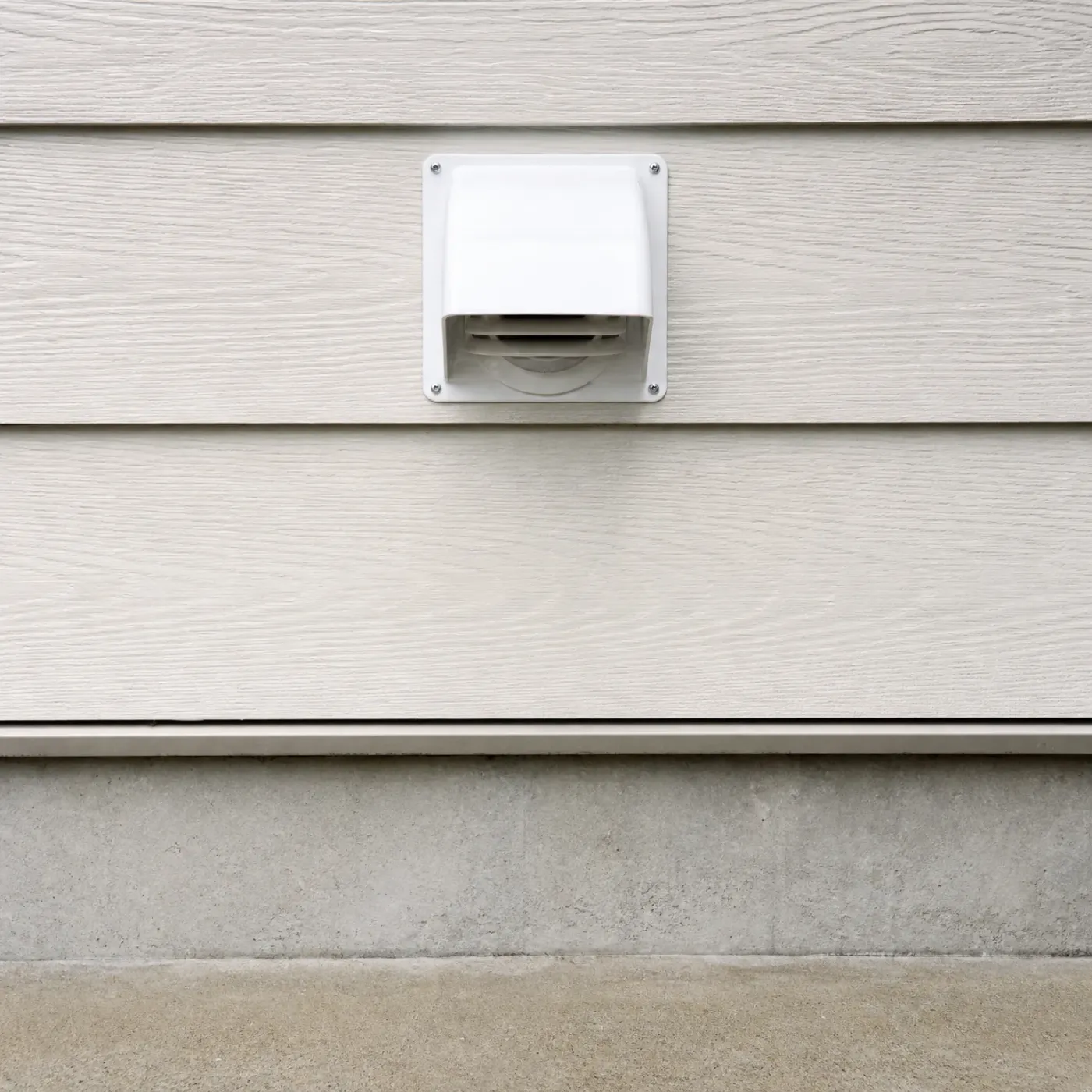
A white hooded dryer vent with a louvered flap mounted on beige horizontal lap siding above a concrete foundation wall.

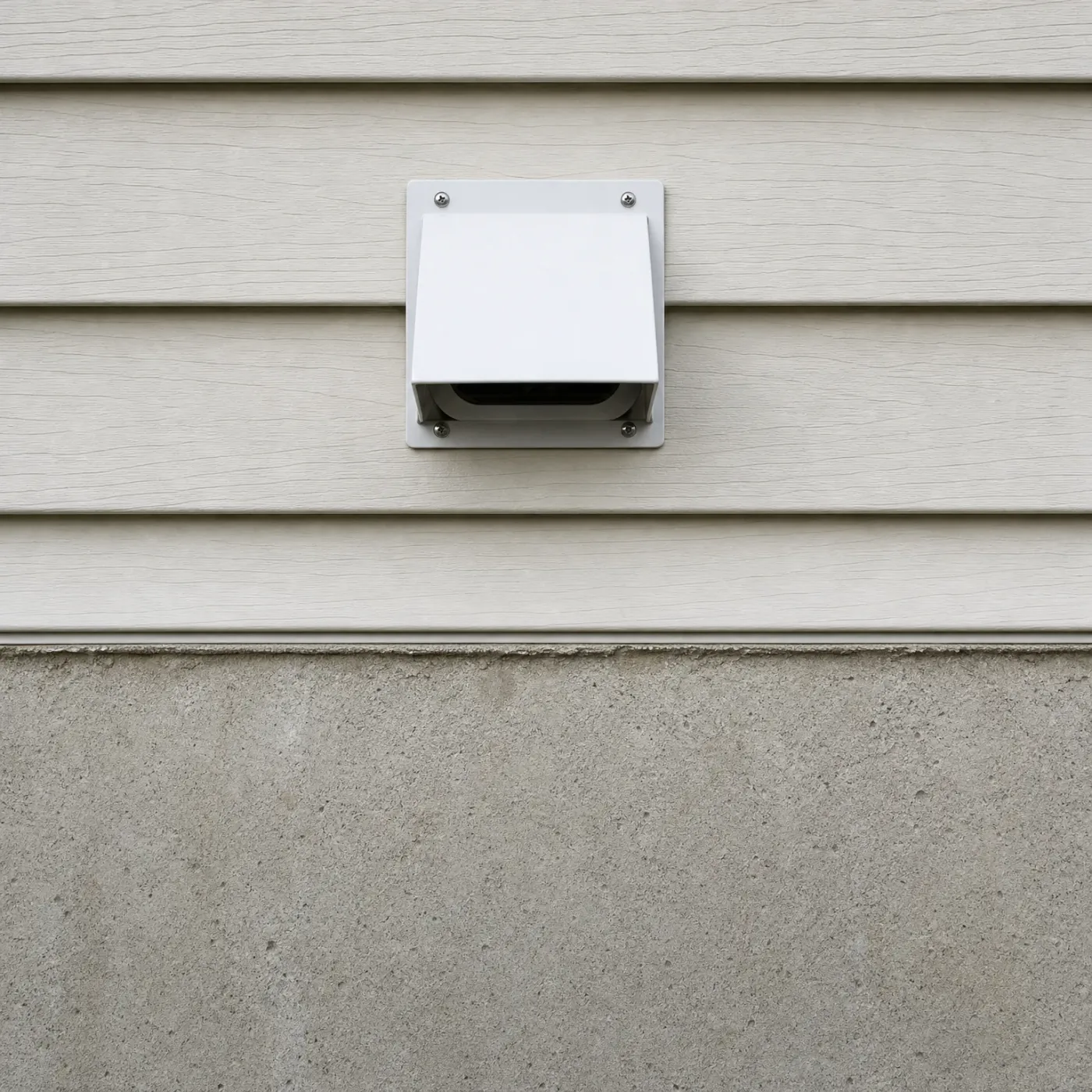
The vent clear

This is what the outside of your dryer vent should look like. The flaps open when the dryer runs and fall shut when it stops, and the cap stays mostly clean because air is moving through it at full force, carrying the lint on outside with it.
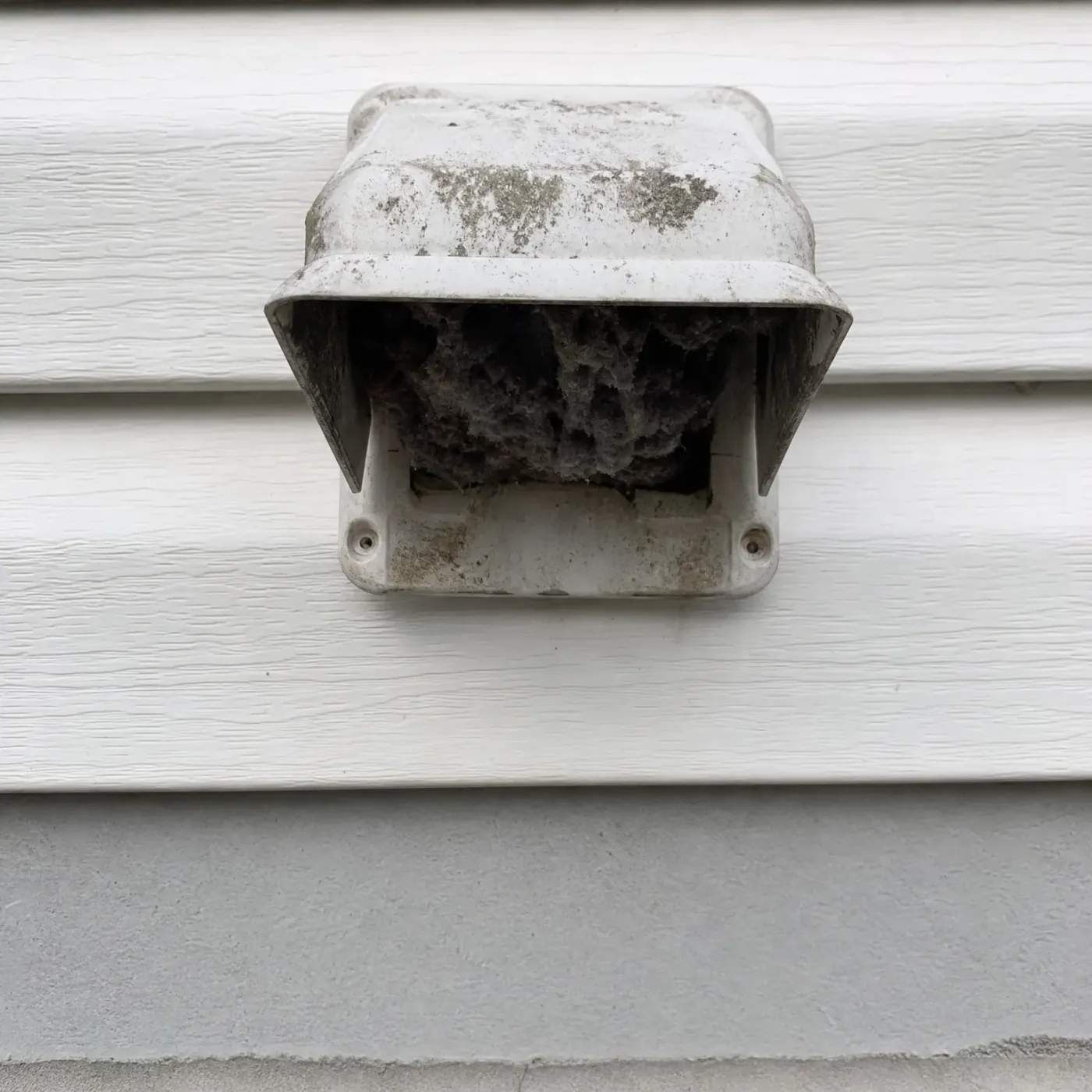
A white plastic dryer vent hood on horizontal lap siding, clogged with thick gray lint and dirt, above a lighter concrete foundation wall.

The vent clogged

Here the flaps can't even close all the way. Lint has packed the opening solid, and what the dryer is pushing out now barely makes it past the cap. The dirt and mildew on the plastic tell you moisture has been sitting right there for a while.

How does a clogged vent actually make the dryer take longer?

How does a clogged vent actually make the dryer take longer?

It traps the moisture instead of removing it

A dryer doesn't dry clothes with heat alone. It dries them by pulling moist air out of the drum and pushing it through the duct and out the vent cap, while pulling in fresh air to heat and send through again. When lint narrows that duct, less air moves through per minute. The drum fills with warm, damp air that has nowhere to go, so the clothes sit in it instead of giving up their moisture to it. The heating element or burner keeps running because the dryer's thermostat still senses the drum isn't up to temperature. It just never catches up, so the cycle ends and the clothes are still wet.

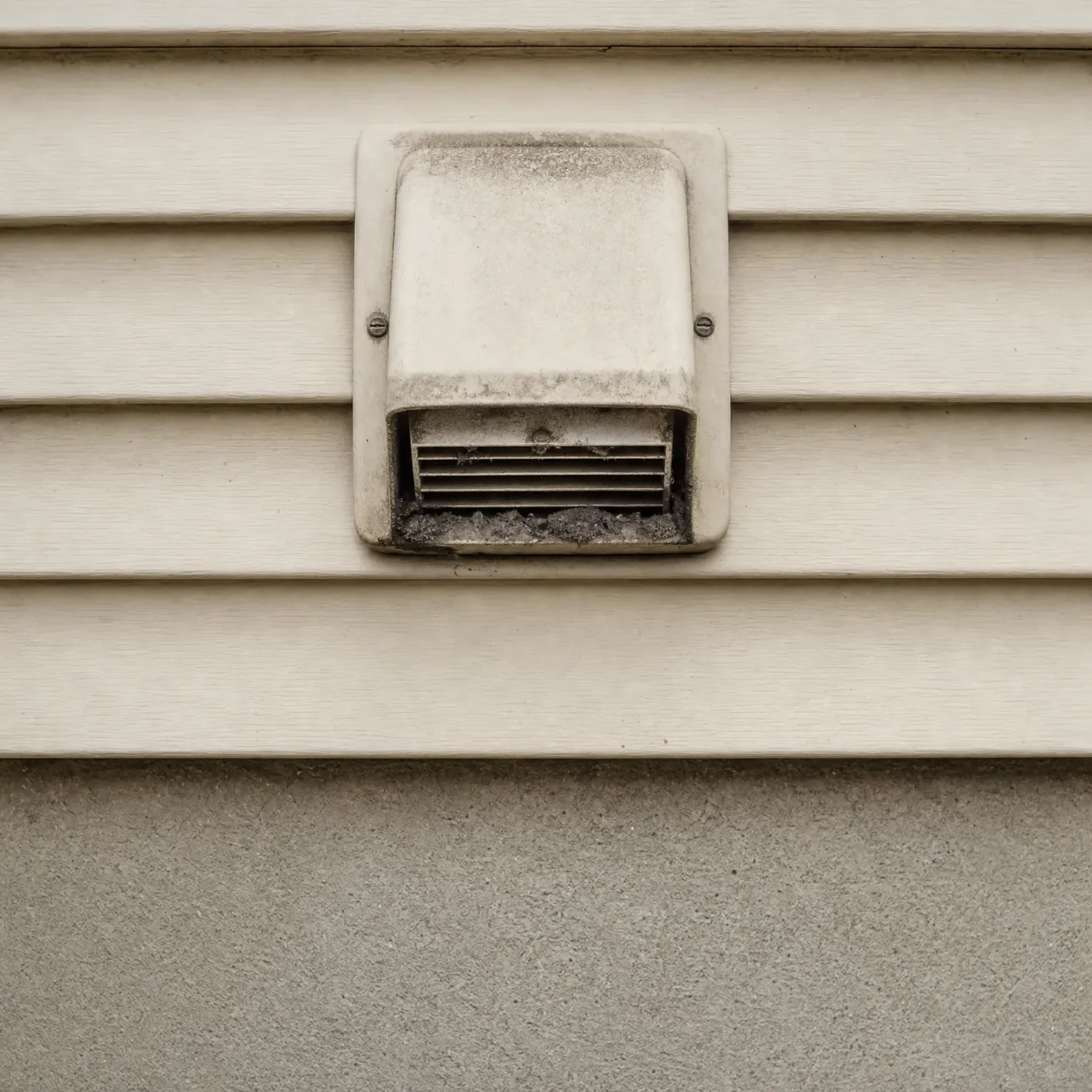
A dusty plastic louvered dryer vent hood screwed into beige horizontal vinyl siding above a gray stucco foundation wall, with lint buildup around the slats.
Before you get your dryer vent cleaning
A white hooded dryer vent with a square mounting plate fastened to beige horizontal lap siding above a concrete foundation wall.
After you get your dryer vent cleaning
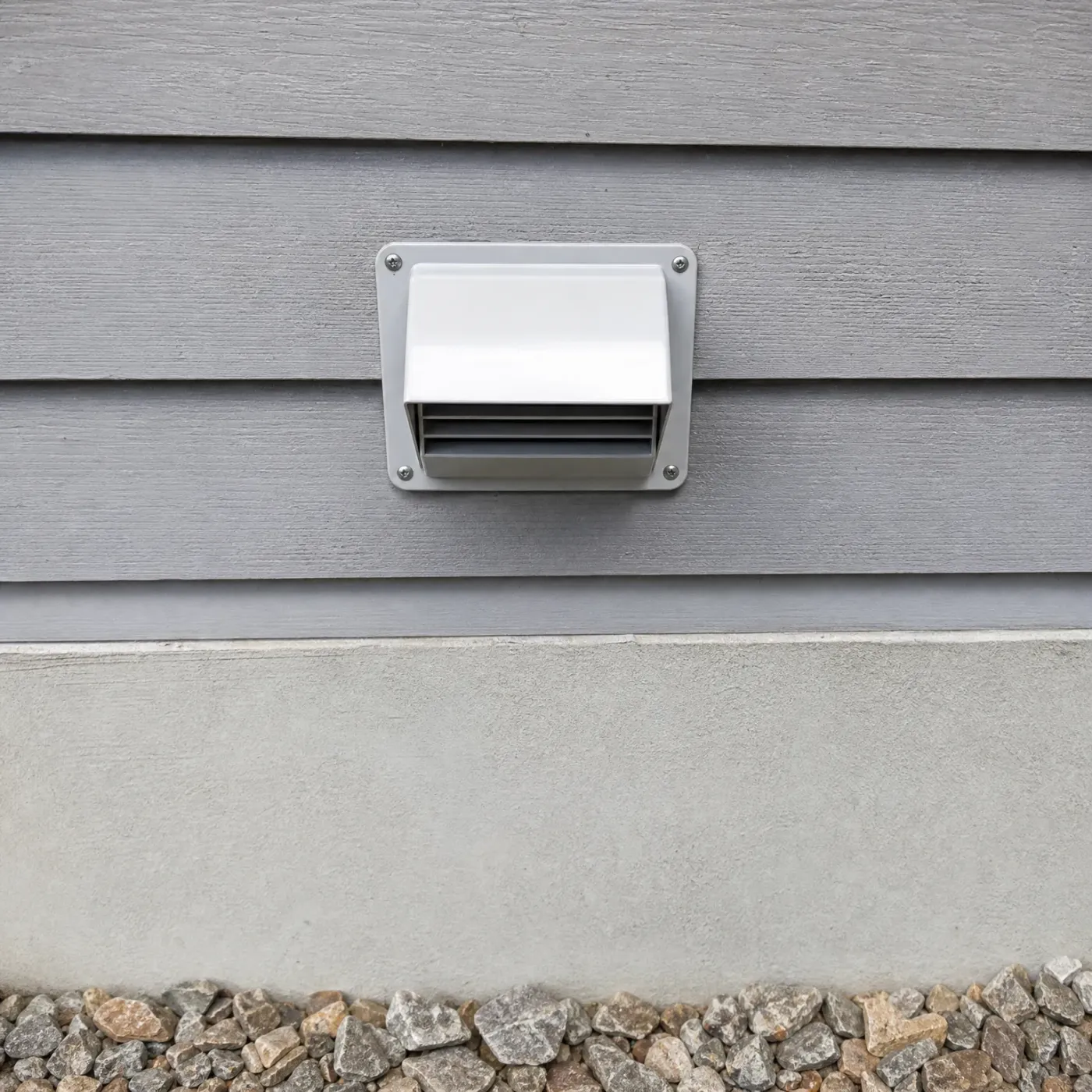
A white hooded louvered vent screwed to gray horizontal lap siding above a concrete foundation wall, with gravel along the ground.

Vent working right

Air pushes those flaps open every time the dryer runs, and they fall shut the second it stops. The cap stays clean because the airflow is strong enough to carry lint on past it instead of letting it settle. A load or two gets clothes dry.

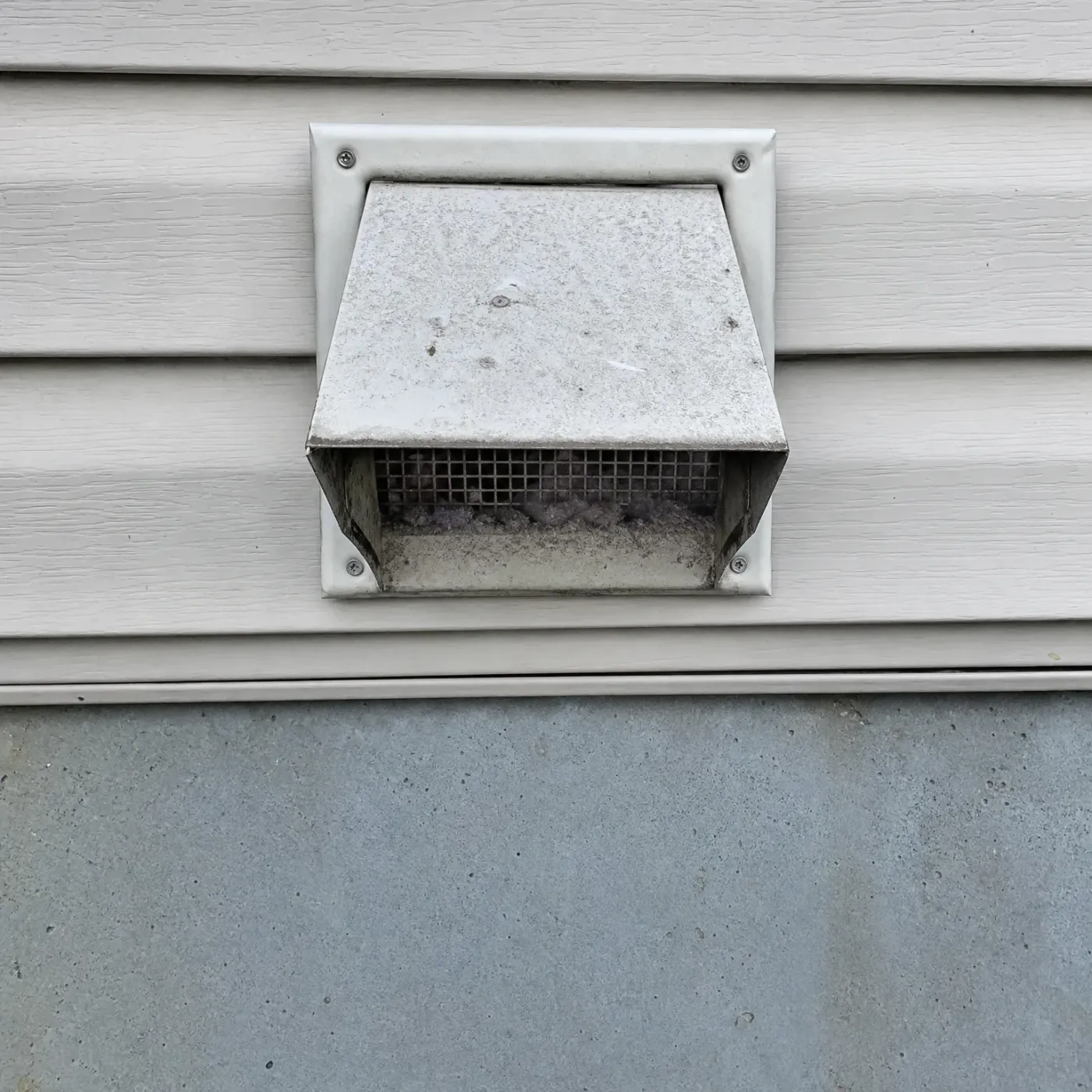
A metal dryer vent hood with a screened opening clogged by gray lint, mounted on light gray horizontal vinyl siding above a concrete foundation wall.

Vent clogged

Lint has built up across the cap and the screen behind it until the opening is almost sealed. Air can barely get out, so the moisture it's supposed to carry away stays in the drum. That's why the dryer runs long and the clothes still come out damp.

2.34 people per household on average

With 2.34 people in the average household here, most homes run a load or more a day. That's a lot of air trying to push through the same vent run, and a partial clog shows up fast when the dryer barely gets a rest between loads.

ACS 2020-2024

A bearded man in a plaid flannel shirt stands indoors looking out a condensation-covered window at a snowy landscape, with a speckled mug on the sill and kitchen shelves behind him.
A bearded man in a dark t-shirt sits on a light sofa, smiling and looking down toward a laptop screen visible at the bottom edge of the frame, with a blurred living space behind him.

The vent is the fix

  • A dryer taking two or three cycles to finish almost always means the vent is blocked, not the machine itself.
  • Clearing the vent restores the airflow that carries moisture out, so a load goes back to drying in one cycle.
  • A contractor who works on vents through Johnson County winters knows where lint and condensation settle in a duct run like yours.
  • You get matched with one licensed local contractor, so you're not fielding calls from several companies about the same job.
  • Checking the vent cap outside is a quick way to see if air is moving the way it should.
  • Leaving a blocked vent alone tends to cost more over time than having it cleared out.

A dryer that needs two or three cycles to finish a load is telling you something about the vent, not the drum or the heating element. Clear that path and the dryer goes back to doing what it was built to do: pull moist air out in one pass, so clothes come out dry the first time. That's the whole answer. Nothing about your habits or your laundry routine needs to change once the air is moving the way it should.

Getting there means someone who knows what a duct run looks like after a Johnson County winter, where lint catches and where damp air tends to condense before it reaches the cap outside. That's not guesswork for a contractor who works on vents in this area every season. They've opened up enough of these runs to know where a blockage usually sits and what it takes to clear it properly, not just at the trap but the whole way out.

When you request a match through this page, it goes to one licensed local contractor, not a handful of companies competing for the job. That means one call back, from someone who actually services this equipment nearby, instead of sorting through bids from strangers. You can check the cap outside yourself in the meantime. If the flaps aren't moving much air when the dryer runs, that's confirmation, not a surprise. Left alone, a blocked vent doesn't fix itself, and the longer it runs that way, the more it costs you in cycles, time, and wear on a machine that was never the problem to begin with.

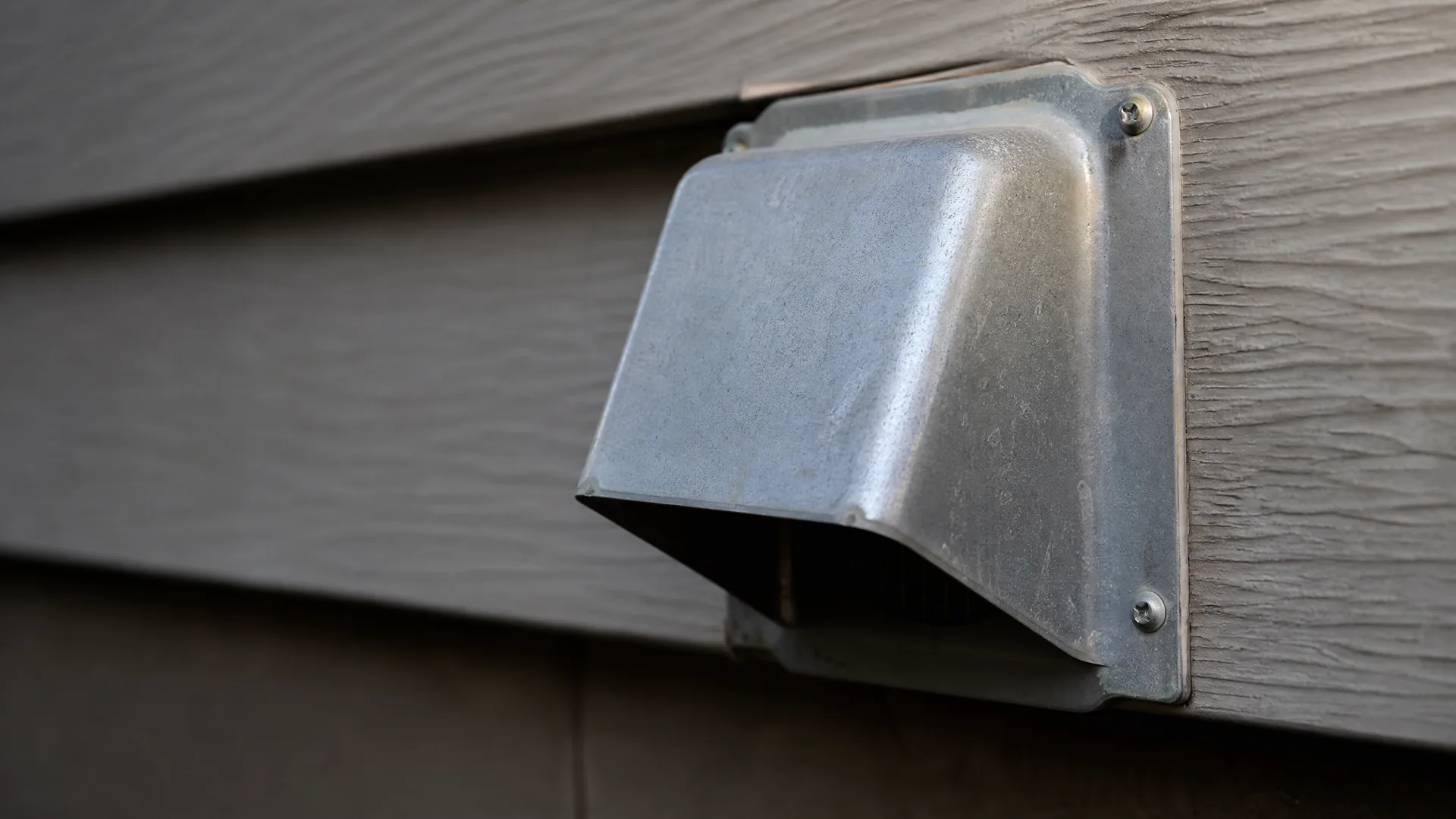
A galvanized metal hooded dryer vent screwed to gray lap siding on an exterior wall.

Find a dryer vent cleaning pro in Johnson County

Duct and vent cleaningJohnson County, IA
Step 1 of 3

What kind of equipment?