

How long an AC takes to cool a house in Iowa
A central air conditioner in Iowa usually brings a house down to temperature in two to three hours, starting from a hot afternoon closer to 90. The muggy air here is part of why. Your AC has to pull moisture out of the air as well as drop the temperature, and that takes longer than cooling dry air the same number of degrees. A unit that's sized right for your house and clean inside gets there within that window. One running much longer than that, or never quite catching up on a sticky July day, is usually telling you something: a dirty coil, a low refrigerant charge, or a filter clogged enough to choke the airflow it needs. Those are the kind of small problems that are easy to catch before they turn into a system that runs all afternoon and still can't keep the house comfortable.

Why the thermostat lags the room
Your thermostat reads the air right where it sits, not the whole house. A window unit or a return far from the kitchen can show you're still five degrees off long after the living room feels fine. Central air pulls return air from several spots, so the number on the wall is a closer average. That's one reason the two to three hours holds up across different floor plans, as long as the ductwork is moving air the way it was designed to.

What a dirty coil costs you
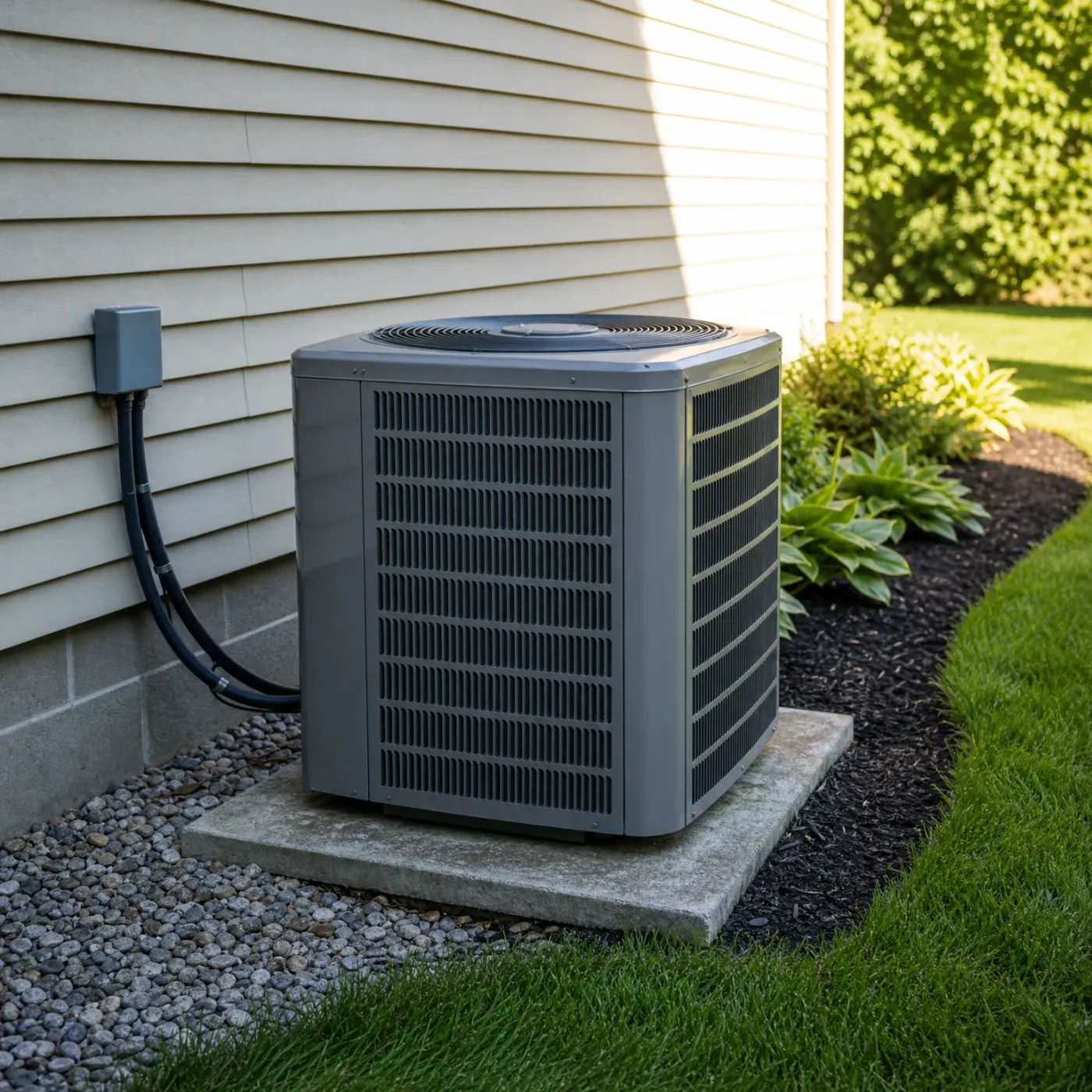
The outdoor coil gives up heat to the air outside. When it's coated in cottonwood fluff or cut grass, it can't shed that heat as fast, so the refrigerant stays warmer than it should and the system works longer to pull the same heat out of your house. A coil that's been hosed off every spring or two keeps that two to three hour window honest instead of stretching it into four.
Why is my house still warm after two hours
If the house still feels thick after a couple hours, check what the system is doing. The air coming out of the vents should feel cold on your hand, not just moving. If it feels cool but not cold, the coil or the charge is behind. Listen for the outdoor unit cycling on and off every few minutes instead of running a steady stretch. That short cycling is a sign something is off, and it means the unit is working harder for less cooling. On a sticky Iowa afternoon, a system losing ground like that can run most of the day without ever catching up, and the extra strain tends to show up on the power bill before it shows up as a breakdown.




It's off your list after this
A system that's keeping up should get your house cool within that two to three hour window every time, not just on mild days. If yours is sliding past that, running longer, or leaving the house muggy even when the air coming out feels cold, something's making it work harder than it should. A dirty coil, a low charge, a blower that's lost some strength, any of those will stretch out the time it takes, and in Iowa's humidity you feel that lag as stickiness as much as heat. Maintenance is what catches this before a hot stretch turns it into a no-cool call. A local contractor who services this equipment all summer knows which of those problems shows up first in a system your age, and your request goes to one of them, not a handful of companies competing for the job. That's one less thing to sort out while your house sits warm.

Summers here run humid. Averaged across Iowa homes, the summer dew point sits at 62°F, the kind of air that feels heavy even when the temperature itself isn't that high. That's from NOAA's climate data. For your AC, that moisture is a second job on top of cooling the air. The unit has to wring the water out before the house feels comfortable, and that takes time the thermometer alone won't show you. You'll notice it as air that still feels damp on your skin even after the vents are blowing cold, or a system that runs longer than you'd expect for the temperature outside. It's one more reason a short cycle here doesn't mean the house is actually dry yet.
NASA POWER T2MDEW county cells weighted by homes


What a Working System Looks Like
- Two to three hours is the normal window for an Iowa home to cool down on a hot, humid afternoon.
- A system sliding past that window, or leaving the air clammy, is usually telling you something before it fails outright.
- A tech who services Iowa systems all summer knows the humidity load here is part of the job, not an exception.
- Catching a weak capacitor or a dirty coil in spring keeps it from turning into a no-cool day in July.
- Your request goes to one licensed local contractor, not a batch of competing bids clogging your phone.
- Someone who works this equipment in this climate every season has a good sense of what tends to give out first.
Two to three hours, cold air at the vents, and a house that actually feels dry by the time it's done. That's the whole answer. Everything else on this page is about what happens when one of those pieces goes missing.
Most of the time, a system that's starting to slip still runs. It just runs longer, or it cools the air without pulling the moisture out, or it holds steady at five degrees off what the thermostat says. Those are small failures, and small failures are cheap to catch. A capacitor that's weak in May is a part swapped on a service call. The same capacitor, ignored, is a system that won't start at all on a hundred-degree day in July with your family home and nowhere cool to go.
That's the case for looking at it now rather than waiting. A tech who works on Iowa systems all summer has seen what the dew point here does to a coil, a drain line, a condenser that's been running flat out since April. They know what tends to go first, because they've pulled the same failed parts out of houses like yours before.
Send the request once and it goes to one licensed contractor local to you, not a handful of companies racing to call first. Someone who already knows this climate looks at your system, tells you what they see, and you know where you stand.
Stop chasing an air conditioner pro
The pro who reaches out is licensed in Iowa.
No fee to send it, and nothing to sign.