A local pro who services air conditioners gets in touch about the tune-up.
Dust coming out of your vents usually means your filter isn't catching what it should, or air is getting into the ducts from somewhere it shouldn't. A filter that's clogged or the wrong size lets fine dust slip past it instead of trapping it. A loose duct joint in the attic or crawlspace pulls in dust from spaces that were never meant to feed your air. Either way, the dust you're seeing is a sign of what's happening behind the walls, not just on the register cover.
In Iowa, the AC runs hard through the sticky months, and that steady airflow is what carries the dust through the house and makes it obvious. A system that's circulating air nonstop will show a dust problem faster than one that barely runs.
This isn't something to guess at from the living room. Finding the actual source, whether it's the filter, a duct seam, or something in the system itself, takes someone who can get into the ducts and the unit and look.
Once you request a contractor through this page, the work of tracking down who's available and qualified for this near you is off your plate. You're not left searching reviews or making calls yourself. A contractor who takes on jobs like this in your area gets your information and follows up with you directly.
That handoff is the point. You don't have to know whether this is a maintenance issue, a duct problem, or something else before you reach out. You just have to describe what you're seeing. The contractor who contacts you will ask the right questions and look at what's actually going on in your home, in your system, before anything gets decided.
What happens next is between you and that contractor. But getting to that conversation, the part where someone with the right background is actually looking into your specific situation, starts with the button below.
Why is my AC blowing dust into my house in Iowa?
You've noticed dust settling faster than usual, or a fine layer around the vents themselves, and it only started once the AC was running regularly. You want to know if this is a filter problem, a duct problem, or something wrong with the unit itself before dust keeps building up on furniture and floors all summer.
Usually it's the filter, not the air conditioner itself
Most of the time the filter is either clogged or not sized right for the system, so fine dust gets pulled past it instead of caught. A filter that's been in place since spring, running against humid Iowa air day after day, loads up faster than people expect. Once it's packed with debris, air finds the path of least resistance around the edges instead of through it. If the filter looks clean and this is still happening, the dust is likely coming from a gap in the ductwork, often where a joint has loosened or a connection was never sealed well to begin with. Either way, the fix starts with checking the filter first since that's the simpler and more common cause.
Filter and airflow in good shape
The filter is seated right and sized for the return, so it's catching dust instead of letting it slide past. Air moves through the ducts without pulling in anything from outside them. The coil stays clean, and what comes out the vents is just cooled air.
Dust working its way in
A gap at the duct connection or a filter that doesn't fit tight can let dust from the attic or crawlspace into the airstream. Once it's in the ducts, the AC pushes it straight into the house. A coil caked with dust can add to it, shedding fine particles every time the unit runs.
What a dirty filter lets through
A filter rated too low for fine dust will pass it straight through even when it looks clean. Filters carry a MERV rating, and the higher that number, the finer the particles it stops. A low-rated filter catches lint and large debris but lets fine dust through on every pass of air. Once dust gets past the filter, it settles on the coil, and from there it rides the airflow straight into your ducts and out the vents. Checking the rating printed on the filter's edge tells you more than checking how dirty it looks.
Why loose ducts pull in dust
Ductwork runs through attics, crawl spaces and the gaps around a furnace cabinet, and any of those are dusty on their own. A joint that has come loose or a seam that was never sealed tight gives the air a path to pull dust in before it ever reaches a vent. This matters more on the return side, where the system is pulling air in rather than pushing it out, so a gap there draws straight from whatever space the duct runs through. A contractor checking for this looks at the duct run itself, not just the vents and filter.
Before you get your air conditioner maintenanceAfter you get your air conditioner maintenance
Get the right pro for your air conditioner
Send the form and the air conditioner tune-up stops being something to remember.
A local pro who knows air conditioners gets your details and gets in touch.
It costs nothing to send, and you don't have to hire anyone.
Duct Leak or Filter Problem
Duct leak
Dust shows up at vents far from the return, not just the ones nearest the air handler.
You can sometimes feel a draft or find dust collecting at a seam when you run a hand along a duct joint.
It tends to get worse in rooms that sit over a crawlspace or run through an attic.
A contractor can pressure test the ducts or check joints by hand to find where air is getting pulled in.
Sealing the leak stops the problem at the source instead of just catching more dust at the filter.
Filter and airflow
Dust is more even across every vent in the house rather than concentrated in one area.
The filter looks dirty sooner than it should, or dust is visible on the vent covers themselves within days of cleaning.
Swapping in a filter with a higher MERV rating, sized right for the return, often clears it up on its own.
A filter that's hard to pull out or doesn't sit flush against the frame is letting air bypass it on the edges.
If the coil behind the filter has a layer of dust on it too, the filter's been letting it through for a while.
Running clean
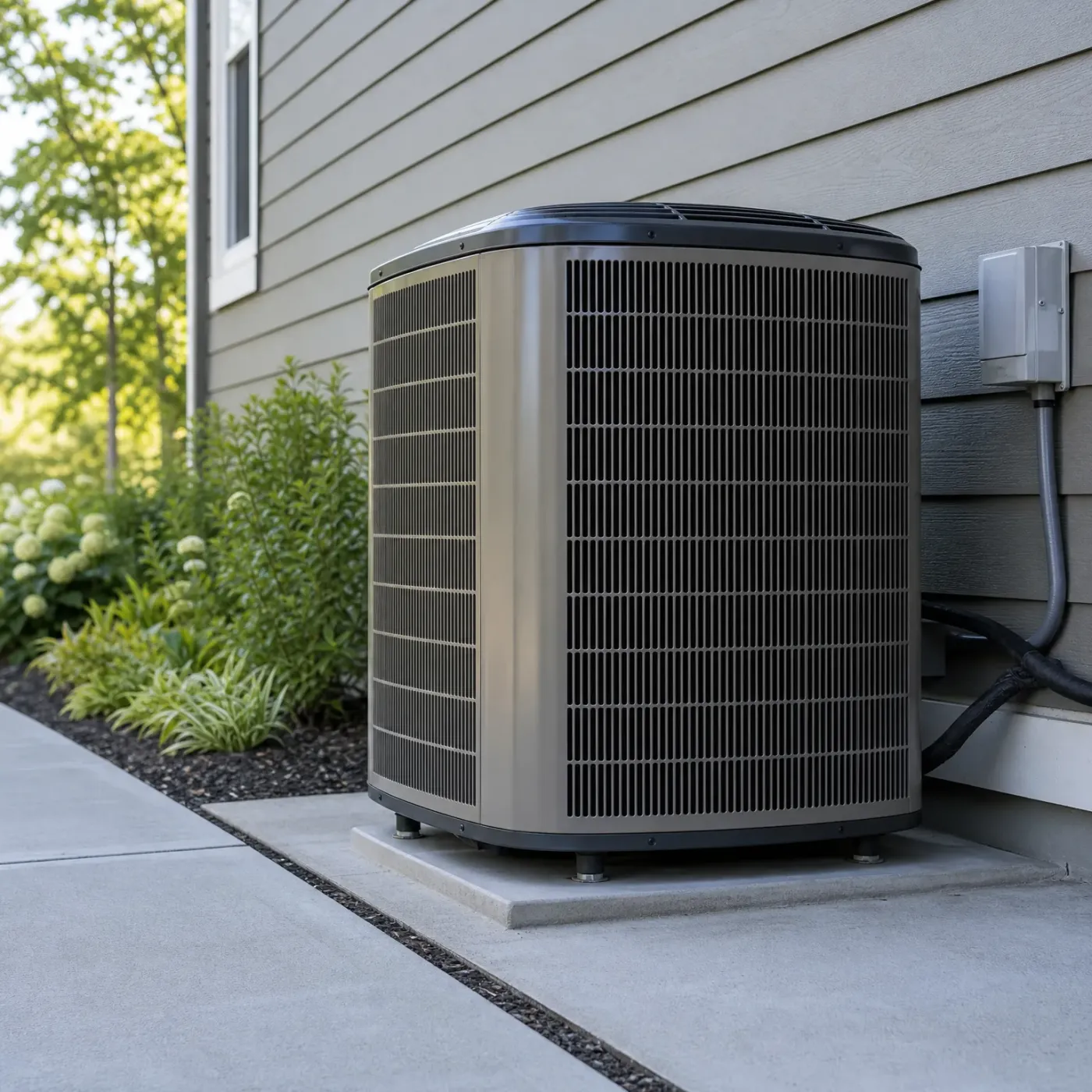
The condenser sits on its pad doing its job. Air moves through it and back into the house without picking up anything extra. The filter is catching what it should, so the dust in the ducts stays out of your vents.
Running dirty
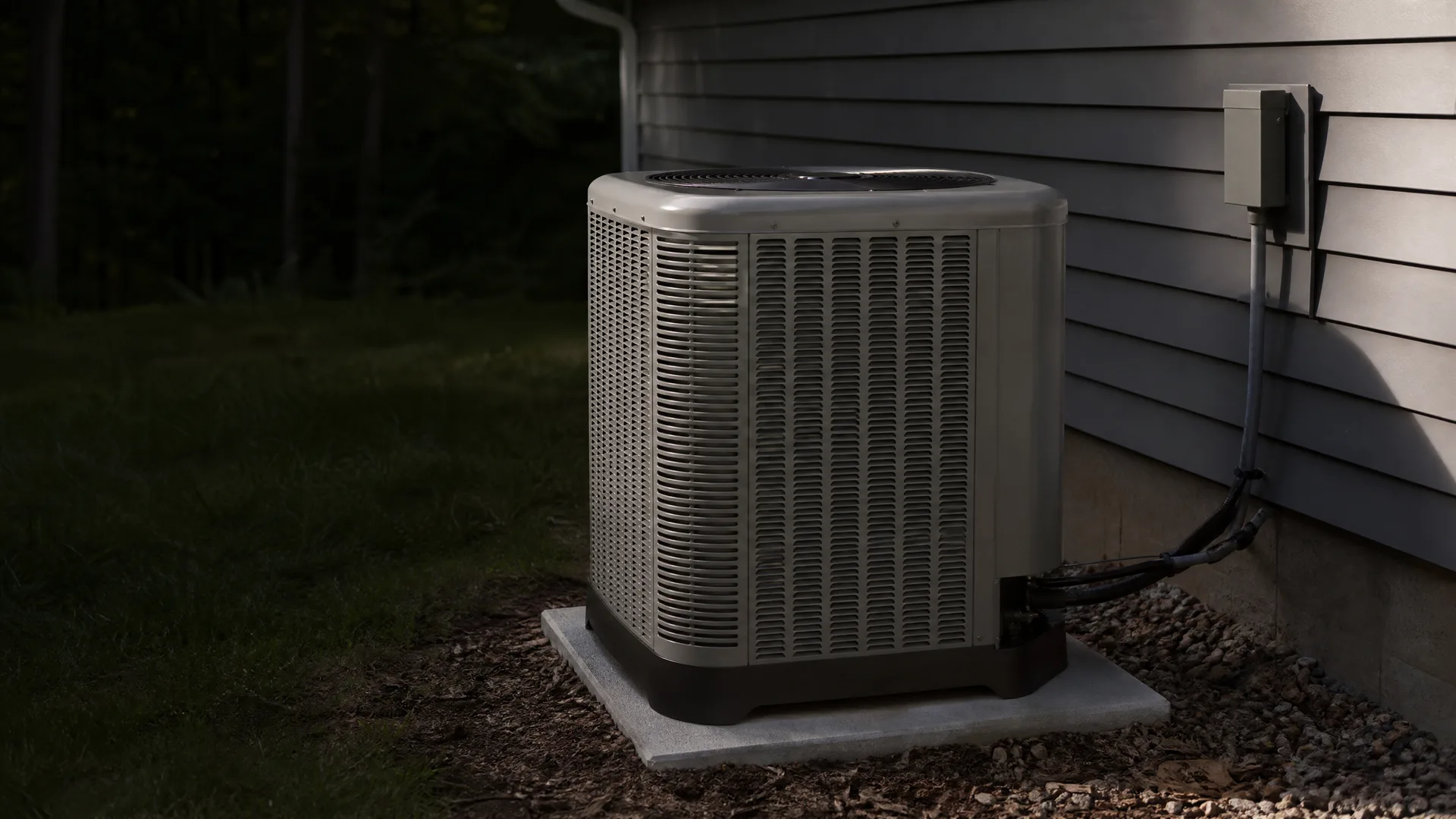
The unit outside can look fine and still be part of the problem. If the coil inside is caked with dust or the filter behind it has given up, the air coming through those vents keeps bringing dust with it, load after load.
What keeps happening in your house
You wipe the shelves down and by the next week there's a film on them again. Vent covers show gray buildup faster than the rest of the room gets dusty. If anyone in the house has allergies or asthma, this is the kind of air that sets it off, since the fine dust is exactly what a weak filter lets through. The AC keeps running the same as always, so nothing about how it sounds or feels tells you this is happening, only what's settling on the furniture.
What it's doing to the system itself
Dust that gets past the filter doesn't stop at the vents. It settles on the evaporator coil inside the air handler, and a coated coil doesn't move heat the way a clean one does. The blower wheel can pick up the same film, which throws it slightly out of balance over time. None of this shows up as a sudden breakdown. It shows up as the system working harder to do the same job, running longer to hit the temperature you set it to.
Power costs 13.62 cents per kilowatt-hour statewide
At 13.62 cents a kilowatt-hour, running your AC longer than it needs to because a dirty filter is forcing it to work harder adds up over a muggy Iowa summer. A tech can check the filter and airflow during maintenance so the unit isn't straining, and your bill isn't covering for it.
EIA-861 2025 statewide residential average
The condenser outside sits clean, with open space around it and nothing blocking the fins, so it can pull air through the coil the way it's supposed to.
When a condenser gets this worn and grimy, the coil underneath is often caked too, and a dirty coil struggles to move the air your ducts depend on.
What are you noticing around the house right now?
Shelves and end tables need wiping more often than they used to, and the dust comes back within days. Vent covers show a gray ring that wasn't there before the AC started running regularly. You might catch a musty or dusty smell when the air first kicks on. Some rooms seem worse than others, especially ones farther from the return. If a filter isn't catching what it should, that dust is getting pulled into the air you breathe all day, and it builds up on the coil inside the unit too. Left alone, that makes the AC work harder to move air through the house, and it's harder on anyone in the house with allergies or asthma.
Iowa summers run a dew point around 62°F, averaged over June, July and August where homes here sit, going by NOAA data. That's heavy, sticky air, and your AC has to pull a lot of moisture out of it to keep the house comfortable. All that extra moisture passing through the system gives dust more to cling to as it settles in the ducts and around the coil. A clean filter and clear airflow matter more in air this damp, since there's more for dust to stick to and less room for anything to slip by unnoticed.
NASA POWER T2MDEW county cells weighted by homes
So that's the dust you're seeing
Either the filter isn't stopping what it should, or the ducts are pulling in air from somewhere they shouldn't, or the coil's gotten dirty enough to add to the problem. A tech working through your system during maintenance can tell you which one it is in your house, and catch it before another summer of running the AC makes it worse.
You don't have to figure out which cause fits before you ask for help. Once you send the form, you're matched with a contractor who takes it from there, and they'll reach out to sort out what's actually going on in your ducts and your unit. That part stops being something you have to carry.