


A dark gray furnace with two access panels stands in a basement, connected to galvanized sheet-metal ductwork and PVC pipes, with exposed wood framing and a bare bulb light in the background.

A local pro for your furnace maintenance

Why your furnace is blowing dust in Iowa

Dust coming out of your vents usually means a furnace that isn't sealing air the way it should, or a filter that's been let go too long. This page gets into what causes it and what to check first before it's worth a call. Keep reading, then get matched with a contractor who can take it from there instead of spending your afternoon on the phone explaining the same thing twice.

Get matched

A furnace blowing dust usually means a dirty filter, a leaky duct, or a cracked heat exchanger stirring up what's inside the system and pushing it into your rooms. Once a furnace kicks on for the winter after sitting idle most of the year, it pushes out whatever settled in the ducts and in its own cabinet. A clogged filter makes this worse because air starts finding other ways through the system, past the filter instead of through it, carrying dust with it. Loose duct joints pull in attic or basement air and send that straight into your living room. A cracked heat exchanger is the one that matters most, since it can also let combustion byproducts into the air you breathe. Dust in the first week of heating season is normal. Dust that keeps showing up after you've changed the filter is worth having a furnace looked at.

A gray-haired bearded man in a dark coat and scarf dusted with snow stands smiling in a dimly lit entryway with a white front door, a side table with a lit lamp, an oval mirror, and a patterned rug.
An older bearded man in a dark snow-dusted coat and gray scarf stands just inside a dimly lit home entry, with a framed picture, lit table lamp, and an adjoining room with a fireplace behind him, and snow visible through the open door.
A gray-haired, bearded man in a dark snow-dusted coat stands smiling in a dimly lit entry hall with a staircase, a lit table lamp, a framed picture, and a living room visible through a doorway.
An older man with gray hair and a beard, wearing a dark jacket dusted with snow, stands smiling in a dimly lit hallway with lamps and a living room visible behind him.

Does a dirty filter really cause dust all over the house?

A dirty filter sounds too simple to explain dust coating your furniture and showing up on the TV screen a day after you dust it. You want to know if that thin piece of cardboard and fiber really does that much, or if something else in the furnace is at fault and the filter is just getting blamed for it.

Yes, and it's often the first thing worth checking

A filter clogged with lint and pet hair doesn't stop pulling air, it just stops filtering it well. Air finds the path of least resistance, slipping around the edges of the filter instead of through it, carrying dust straight into the blower and out through your vents. In Iowa, a furnace runs for months at a stretch once the cold sets in, and a filter that was fine in October can be packed solid by January. Gas furnaces move a lot of air across that filter every time they cycle on, so a few months of neglect shows up fast as dust on every surface in the house. Checking the filter costs nothing and takes a minute.

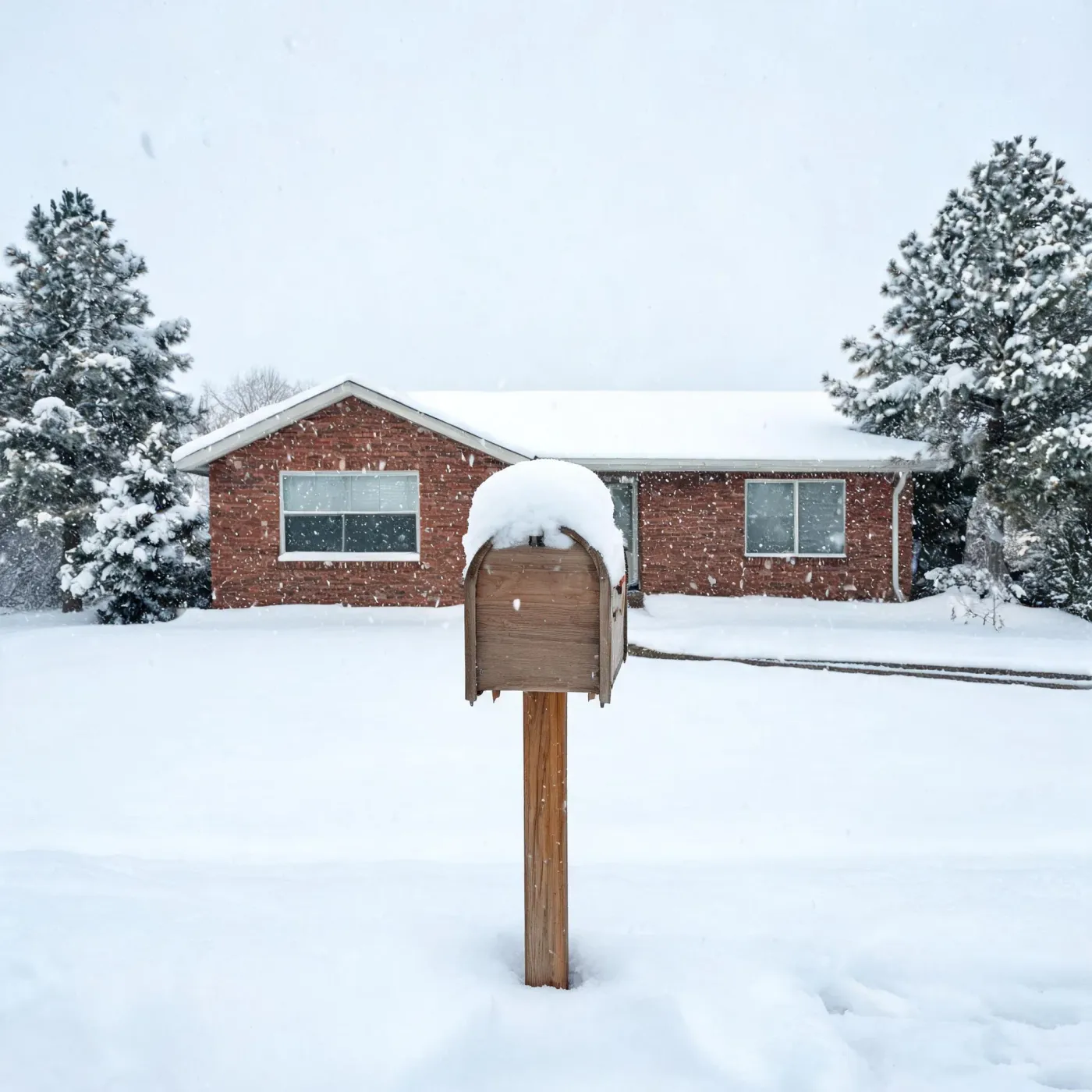
A wooden mailbox on a post topped with a thick layer of snow stands in a snow-covered yard in front of a single-story brick house with a snowy roof, flanked by snow-laden evergreen trees during falling snow.

Winter nights average 15°F across Iowa, according to NOAA climate data. At that temperature your furnace is running long, frequent cycles just to hold the thermostat setting, and every cycle pushes air through the filter and the ducts. A filter that's overdue or a duct joint that's come loose gets worked harder on a night like that than it would on a milder one, and more of whatever it's holding back ends up in the air moving through your house. That's often when you'll notice dust settling fastest, on the coldest nights, right when the furnace can least afford to be straining against a clogged filter or leaking air it's already paid to heat.

NOAA nClimDiv 1991-2020 county normals weighted by homes

A gray furnace with two access panels stands on a concrete basement floor beside sheet-metal ductwork, with pipes, flexible conduit and an electrical box on the concrete wall to the left.
Before you get your furnace maintenance
A gray high-efficiency furnace stands on a concrete basement floor beside galvanized sheet-metal ductwork, white PVC vent pipes, copper and black piping, and unfinished wood stud framing.
After you get your furnace maintenance

Why the first weeks are worst

A furnace that's sat idle since spring collects dust on the burners, the blower wheel, and inside the ductwork itself. The first time it fires up for the season, that dust burns off the heat exchanger and gets thrown into the air before anything else happens. That's one reason the dust seems worse right when the weather turns. It's also why a furnace that's been maintained before the season starts, with the blower wheel and burners cleaned, has less built up to blow out in the first place. A furnace that never gets that attention keeps adding to what's sitting inside it year after year.

What a blower wheel does

The blower wheel is the fan that pushes heated air through your ducts and out the vents into every room. Dust and debris stick to its blades the same way they stick to a box fan left running in a dusty room. A blower wheel caked with buildup doesn't just add to what gets pushed through your house. It also has to work harder to move the same amount of air, which puts more strain on the motor behind it. A technician checking a furnace for dust problems looks at this wheel directly, since a filter alone won't catch what's already past it.

Winter nights average 15°F statewide

At 15°F your furnace can run half an hour or more at a stretch before the thermostat is satisfied. That's a long path for air to travel past a dirty filter and through ductwork that's held a winter's worth of dust, and it shows up fastest in the rooms farthest from the furnace.

NOAA nClimDiv 1991-2020 county normals weighted by homes

A gray high-efficiency furnace with white PVC vent pipes stands beside sheet-metal ductwork and a water heater in an unfinished basement with concrete walls and wood framing.

Furnace sealed and clean

This is a furnace with tight metal ductwork and a clear PVC flue, set up so air moves where it should instead of leaking into the basement. A filter changed on schedule catches what's in that air before it reaches your rooms. Nothing here is feeding dust into your vents.


A beige gas furnace with a metal flue pipe stands in a basement against concrete block walls, beside sheet-metal ductwork, copper and white plastic pipes, and a water heater at right.

Furnace losing ground

This older furnace runs galvanized ductwork and a return-air plenum that have had years to develop gaps at the seams. Dust sitting in a basement like this gets pulled into the return and pushed right through the house. A furnace in this shape is the one blowing dust onto your furniture.

What does the dust in your house actually look like right now

Check the supply vents closest to the furnace and the ones farthest away. If the far rooms are dustier, that points to the ducts picking up dirt along the way, not just the filter. Look at the return air grille too. A gray, matted buildup there means air is dragging dust through before it ever reaches the filter. Run a finger along a windowsill or the TV screen a day after cleaning it. If it's coated again that fast, your furnace is moving more dust through the house than it's catching. Left alone, that dust keeps landing in the blower and on the heat exchanger, and a furnace working through that buildup wears harder than one that isn't.

A woman wrapped in a thick beige fleece blanket sits on a sofa with an open book on her lap, beside a lit table lamp, with a frost-covered window behind her.
An older woman with gray hair in a bun and glasses, wearing a beige knit sweater, smiles while looking to the side in a warmly lit kitchen, with a loaf of bread on the counter in the foreground and a snowy scene outside the window.

Get the right pro for your furnace

Fill out one form instead of calling around for a furnace tune-up.

It costs nothing to send, and you don't have to hire anyone.

What's actually moving the dust

  • The blower motor has a run capacitor that weakens over years of cycling and pushes less air once it's worn, so dust settles in the ducts instead of blowing through.
  • A squirrel cage blower wheel collects dust and lint on its fins, and once enough builds up it throws loose debris into the airstream instead of moving clean air.
  • The flame sensor and igniter sit right in the burner compartment, and the dust that burns off them in the first weeks of the season travels straight into your supply ducts.
  • Return air ducts pull air from inside the house, and any gap where a duct joint has pulled loose draws dust and insulation fibers from the attic or basement into the system.
  • A heat exchanger with a hairline crack lets combustion byproducts mix with the air moving through the blower compartment, which can carry fine soot into your rooms along with ordinary dust.
  • Static pressure builds up in a system with a clogged filter or undersized return, and that extra pressure can force air and the dust it carries out through duct seams instead of the vents.

A furnace is a sealed loop of moving air, and dust gets in wherever that loop isn't tight. The blower pulls air in through the return, pushes it across the heat exchanger, and sends it back out through the supply ducts. Every part in that path can be the reason dust ends up on your furniture instead of staying inside the system. A run capacitor that's lost strength over years of cycling won't spin the blower wheel as fast, so air moves slower than it should and settles dust in the ducts rather than carrying it through. That same blower wheel has fins that collect dust and lint over time, and once enough has built up, it stops moving clean air and starts throwing loose debris into the stream instead. The flame sensor and igniter sit down in the burner compartment, and whatever has collected on them over the summer burns off the first few times the furnace fires, traveling straight into your supply ducts. None of that requires anything being broken. A duct joint that's worked loose pulls in dust and insulation fibers from wherever it's exposed, a cracked heat exchanger can mix soot in with the air, and a clogged filter raises the pressure in the system enough to force dust out through seams instead of the vents. Each of these has a different fix, and most aren't things you can see from a supply vent.

A beige high-efficiency furnace in an unfinished basement, with white PVC vent pipes, a yellow gas line, metal ductwork, and exposed wood framing on a concrete floor.
A sealed system like this moves air through clean ducts and a tight flue, so dust stays caught in the filter instead of your rooms.
An older beige furnace with two louvered vent panels stands on a concrete basement floor, connected to galvanized ductwork and a metal flue pipe, with gas piping and flexible conduit on the wall behind.
Older iron gas lines and a worn flue like this often come with ducts that have gone just as long without a look.
  1. The thermostat calls for heat and the inducer motor starts.

  2. The igniter glows and the burners light inside the heat exchanger.

  3. The blower wheel turns and pulls air through the return duct and filter.

  4. Air passes over the heat exchanger and picks up warmth.

A man seen from behind raises his hand to wave at a woman standing in the open front doorway of a single-story house with gray shingle siding, white columns and a gabled porch entry.

Dust from a furnace has a reason behind it

A dirty filter, a leaky duct run, or dust burning off parts that sat untouched since spring. That's what's behind the dust settling on your furniture and showing up on your vents. None of it is a mystery once you know where to look, and most of it is something a filter change and a look at the ductwork can catch before another cold snap sets in.

What you don't have to do is figure out which of those it is on your own, then start calling around Iowa to find someone who'll look at it. Getting matched means a contractor who handles furnace maintenance reaches out to you directly, already knowing what you're dealing with, instead of you explaining the same thing to three different companies and sorting through quotes to see who actually answers the phone.

A living room corner with a beige upholstered armchair holding navy and striped cushions, a small round wooden side table with a carved bowl and a potted green plant, a framed landscape picture on a pale wall, built-in shelving, and a curtained window.
At dusk, a dark board-and-batten house with a standing-seam metal roof and lit entry walkway of stone pavers, with two large outdoor heat pump units on a stone-walled pad at right and trees and hills in the background.

Furnace Maintenance

A pro who works on furnaces

Tune-up, service, or cleaningFurnace or heatingIowa
Step 1 of 2

What ZIP code is the job in?

  • A corner of a room with an upholstered wood-framed armchair holding a floral pillow, a round side table with a ceramic lamp, books and a vase of greenery, a framed landscape painting on the wall, a patterned rug, and a sunlit multi-pane window.
    • A local pro who knows furnaces gets your details and gets in touch.
    • A local pro who services furnaces gets in touch about the tune-up.
  • Interior corner with a wood-framed window showing green foliage outside, a framed landscape print on a beige wall, and a rounded stone vase of leafy branches on a wooden cabinet.
    • Once you send the form, finding a pro is off your list.
    • After you send the request, you're done searching.
  • A pale ceramic vase holding olive branches sits on a dark wooden countertop beside a carved wooden dough bowl, next to a wood-framed window and a light painted plank wall.
    • Skip searching for a furnace pro and answer a few questions instead.
    • One form replaces the calls you'd make to find a furnace pro.
  • A dark wood round side table holding a brass lamp with a cream shade, a blue-and-white patterned bowl, and a white textured pot of greenery, beside an upholstered chair with a gray patterned cushion and a white-framed window showing green trees and flowering shrubs.
    • Only one pro gets your request, so you hear from one company.
    • Your request stays with one local pro.