

Why your house is so dusty in Iowa

One request and the duct cleaning stops waiting on you.

Duct and vent cleaningDucts or ventsIowa
Step 1 of 2

What ZIP code is the job in?

The dust is coming from your own ducts. Every time the furnace or the AC kicks on, air moves through sheet metal runs that collect dust, pet hair and fine debris, and that air gets pushed right back into your rooms. Iowa summers get sticky enough that the AC runs long hours pulling moisture out of the air, and all that extra runtime means more air cycling through ducts that haven't been cleaned. Gas furnaces add to it too, since the blower moves a lot of air across the whole house every time the heat kicks on. If the ductwork has years of buildup sitting in the bends and joints, the system is stirring that dust into the air every single day instead of just filtering it out. A duct cleaning clears that buildup out at the source instead of leaving your filter to fight a losing battle against it.

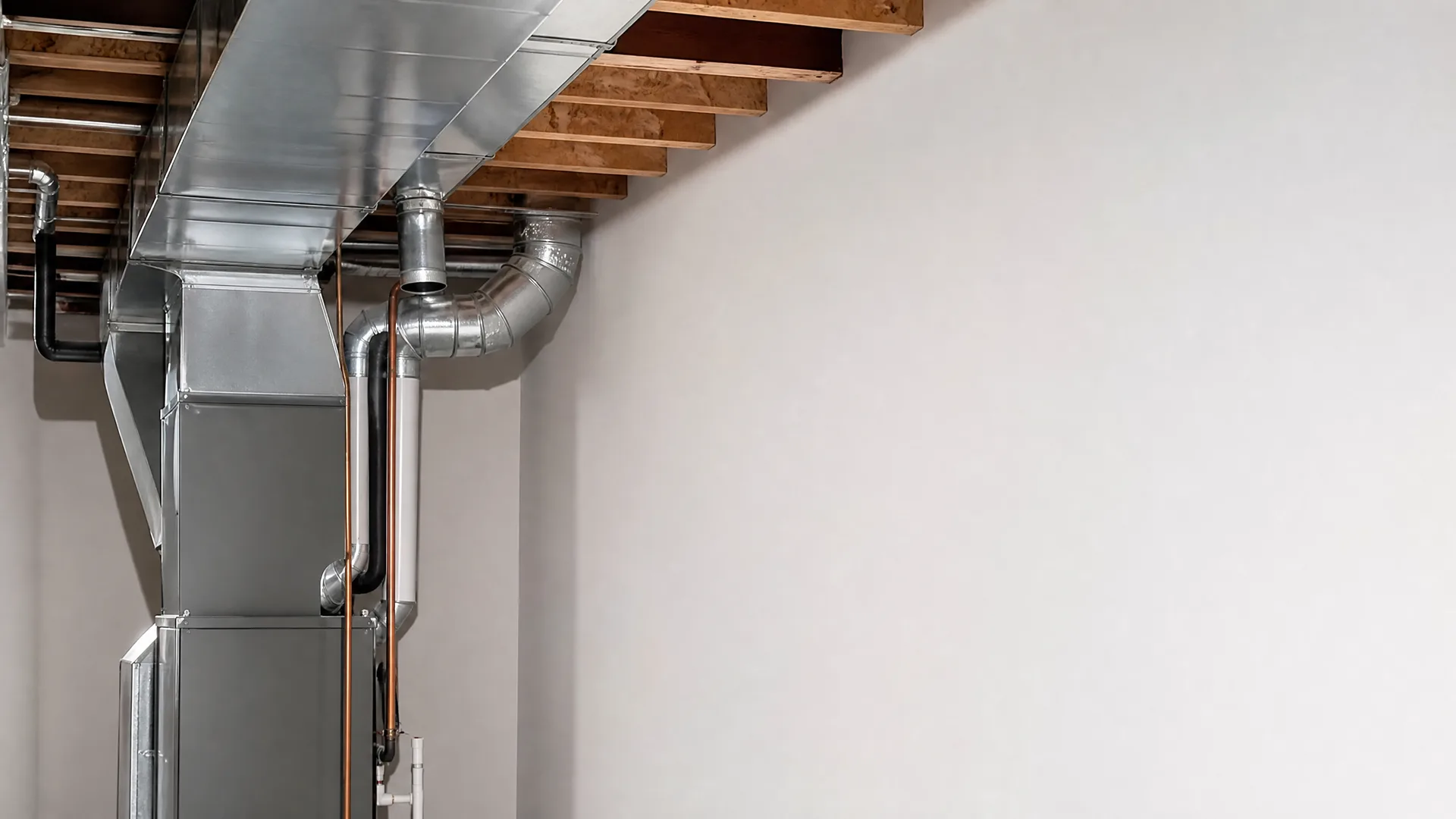
Basement interior showing a furnace with sheet-metal ductwork, a round flue pipe and copper lines running beneath exposed wooden floor joists next to a plain light-colored wall.

Why humid air makes it worse

Sticky summer air carries more moisture, and dust sticks to damp surfaces instead of settling flat. Inside a duct, that moisture mixes with fine debris and clings to the sheet metal walls. Every time the AC cycles on, some of that film breaks loose and rides the airstream back into your living room. A dry duct sheds less. A humid one keeps feeding your rooms.

Interior corner of a building with a large blank white wall beside an unfinished ceiling showing wood joists, galvanized sheet-metal ductwork, and white and copper pipes.

What a gas furnace adds to it

Most furnaces here run on gas, and the blower pushes a lot of air through the same ducts winter and summer. That constant airflow is what carries dust out of the vents in the first place. A furnace that runs hard through an Iowa winter moves more air through dirty ductwork than one that barely runs, which means more passes over the same buildup and more dust reaching your rooms before spring.

Why does your house need dusting every few days

You wipe a shelf clean and by the weekend there's a film on it again. You notice it on the TV screen, on ceiling fan blades, in the corners of rooms you don't use much. Register covers look gray even after you've vacuumed around them. Someone in the house might be sneezing more than usual, or the air just feels thick a few minutes after the furnace or AC shuts off. That's dust and debris riding the air coming out of your vents, and with gas heat running the blower hard through an Iowa winter, it moves through the house a lot. Left alone, it keeps settling back on every surface you just cleaned, and anyone with allergies or asthma in the house feels it first.

A basement with a gray furnace on a concrete pad connected to large sheet-metal ducts running along an exposed wood joist ceiling, with PVC pipes and plastic sheeting on the walls.

Ducts moving clean air

This is what a duct system looks like when it's doing its job. Sheet-metal trunk lines run tight off the furnace, flex ducts branch out overhead, and the whole run stays sealed end to end. Air moves through without picking up anything extra along the way.


Galvanized sheet metal HVAC ductwork with a vent grille running along a wooden joist ceiling above a bare concrete wall.

Ducts shedding dust into your rooms

Here the ducts are exposed under the floor joists, branching past wiring and open seams with nothing sealing them off from the crawlspace air. Dust and debris get pulled in at every gap, and the furnace pushes it straight out through the registers into your living room.

Clean the Ducts or Keep Wiping Surfaces

Duct Cleaning

  • A contractor runs a brush and a vacuum line through the trunk and branch runs, pulling out what has built up on the sheet metal walls.
  • The dust sitting in your ducts right now gets removed instead of recirculating every time the furnace or AC cycles on.
  • Register covers come off and get cleaned too, so the air coming into each room isn't picking up debris on the way out.
  • Once the ducts are clear, the furnace filter has less to catch between changes, since it isn't working against dust already loose in the system.
  • This addresses the dust that's already built up, not what collects on surfaces after the fact.

Keep Dusting

  • You wipe shelves, screens and fan blades, and in a few days the film is back because the source in the ductwork never got touched.
  • Iowa's sticky summers mean dust sticks to damp surfaces fast, so the cycle of dusting repeats more often than it would in a drier climate.
  • Filters get changed on schedule, but a filter only catches what passes through it, it doesn't remove what's already coating the inside of the ducts.
  • Every time the system kicks on, the same debris gets pushed back into the rooms you just cleaned.
  • The chore keeps costing you evenings, while the ducts themselves stay exactly as dirty as before.
A smiling bearded man in a dark blue henley shirt sits leaning back on a light grey sofa in a living room, with a bowl of popcorn on a wooden coffee table and a large window behind him.
A bearded man in a dark quarter-zip sweater sits smiling on a brown sofa in a dimly lit living room, with a bowl of popcorn and a mug on a table in the foreground and a potted plant near a window behind him.
A smiling man with graying dark hair and a beard, wearing an olive sweater, sits on a sofa in a living room beside a bowl of popcorn on a wooden table.
A smiling man in a dark green henley shirt sits on a gray sofa in a living room with a lit table lamp, wooden shelving unit, and a bowl of popcorn in the foreground.
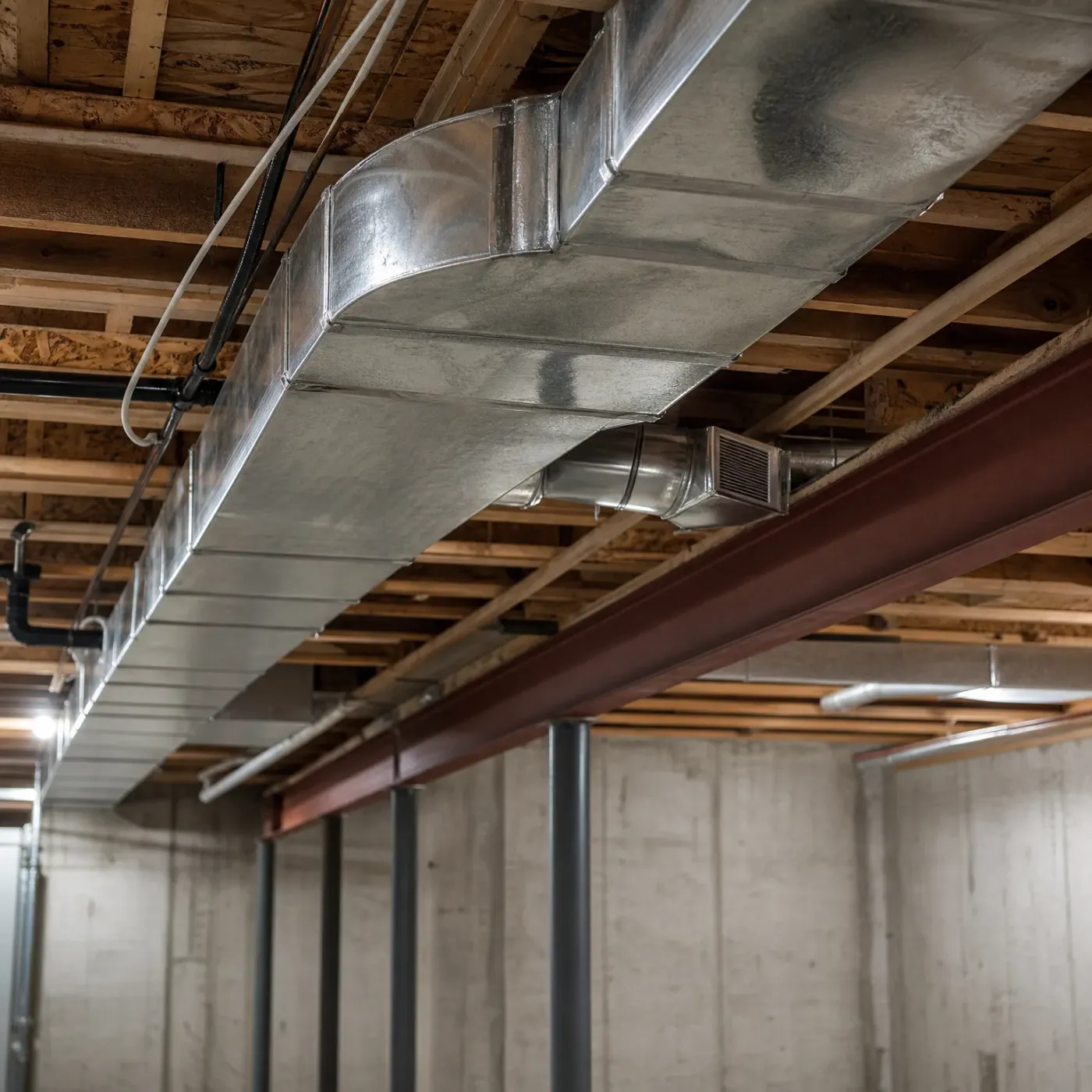
Galvanized sheet metal trunk ductwork with a round branch and register running beneath wood floor joists in an unfinished basement, alongside pipes, wiring, a steel beam and concrete walls.

Stop chasing a duct system pro

One form replaces the calls you'd make to find a duct system pro.

Once you send the form, finding a pro is off your list.

Fill out one form

Sending the form costs nothing.

Unfinished basement with galvanized sheet-metal rectangular and round ductwork running along a wood-joist ceiling, two steel support columns, a small window, and a furnace unit against the far right wall.
Clean runs like this move air without adding anything to it, which is why a well-kept system doesn't stir up dust in the first place.
An unfinished basement with bare concrete walls and floor, showing exposed wooden floor joists, pipes, wiring, and metal HVAC ducts with a vent grille overhead.
Once debris packs into the joists and plenum like this, every cycle feeds more of it straight into your rooms.

Power costs 13.62 cents per kilowatt-hour statewide

At 13.62 cents a kilowatt-hour, running the blower longer than it needs to costs you something real. A duct system packed with debris makes the furnace and AC push harder to move the same air, and that extra runtime shows up on your bill.

EIA-861 2025 statewide residential average

A house you keep up with

You're not the kind of homeowner who lets things slide. You get to the shelves, the blinds, the baseboards, most evenings, and you still end up back here searching for why the dust keeps winning. That's not about effort. A duct system holds onto what it collects, and nothing you do with a cloth or a vacuum upstairs reaches the sheet metal runs behind your walls and under your floor. The furnace and the AC cycle that air all day, and the house just keeps restocking itself from a supply you can't get to.

What changes once it's handled

Right now, fixing this means finding a contractor who actually does duct cleaning, not just furnace repair, checking they're licensed, calling a few, explaining the same thing about your dust and your vents three or four times, then sitting with quotes trying to tell a fair price from a lowball one. Send the form here and that whole list is gone. You're not the one tracking down who's available or qualified anymore. A contractor who handles this work gets matched to you, and the search that was sitting on your evening list moves off it.

A woman in a dark knit turtleneck sweater reclines on a couch under a cream knit blanket, looking down at an open book, with a lit table lamp and framed pictures behind her.
A smiling middle-aged man in a dark green sweater sits at a candlelit table with wine glasses and a plate of greens in a dimly lit interior.

Where the dust actually stands

  • The dust comes from your ducts, not from anything you're doing wrong in the house itself.
  • Sticky summers make dust stick to the inside of the ductwork instead of settling flat and staying put.
  • A furnace or AC that cycles on and off all day keeps pushing that trapped debris back into your rooms.
  • Clean trunk and branch runs move air without adding anything to it; packed ones feed every cycle.
  • Running the blower harder than it needs to shows up as extra cost at 13.62 cents a kilowatt-hour.
  • The fix is getting the ducts themselves cleaned out, not wiping the same shelf again next week.

You came here wondering why your house won't stay clean, and the answer is sitting in your ductwork, not in anything you've missed. Iowa's humid summers give dust something to stick to inside the trunk and branch runs, and your furnace or AC does the rest, pushing that buildup back into your rooms every time it cycles. That's dozens of cycles a day across a hot summer or a cold stretch of winter. Clean ducts move air without adding anything to it. Ducts packed with debris hand some of it off on every single run, which is why the shelf you wiped on Tuesday has a film on it again by Saturday. It also means the blower runs longer than it should to move the same volume of air, and at 13.62 cents a kilowatt-hour, that extra runtime is a real cost, not a small one you can ignore.

None of this gets fixed by dusting harder or more often. The ducts themselves need to be cleaned out, and that's a job for a contractor with the right equipment, not something a vacuum attachment reaches. What usually stands between a homeowner and getting that done is the search itself: finding someone licensed to do duct work, calling a few numbers, explaining the same gray-film, dusty-shelf problem more than once, then sitting with quotes trying to sort out who actually knows what they're doing. That part is what disappears once you send the form on this page. The rest, the actual cleaning, still takes a contractor's time and tools. But finding one stops being something you have to carry.

A lit ceramic table lamp with a linen shade sits on a round wooden side table with a small vase of greenery and a dark shallow bowl, beside a beige upholstered sofa with a cushion and knit throw, below a framed artwork on a pale wall.
Corner of a beige linen sofa with a large woven cushion and a fringed knit throw, beside a potted leafy tree in a woven basket against a neutral wall.
Sunlit interior corner with a wood-framed armchair with beige cushions and a striped pillow, a leafy plant in a tall ceramic pot, a window with wood sill showing green foliage outside, and dark wood flooring.
A lit black path light beside a stone walkway leading to a dark front door of a white clapboard house, with shrubs and flowering plants in the bed at dusk.
A covered porch at dusk with a wooden front door, a lit lantern wall sconce on gray horizontal siding, a black rocking chair with a cream throw, a potted white flowering plant, a coir doormat, and a window showing a lit interior lamp.

Send one request and you're done looking

Skip calling around for someone who cleans ducts.

Skip the search

You're not committing to anything by asking.