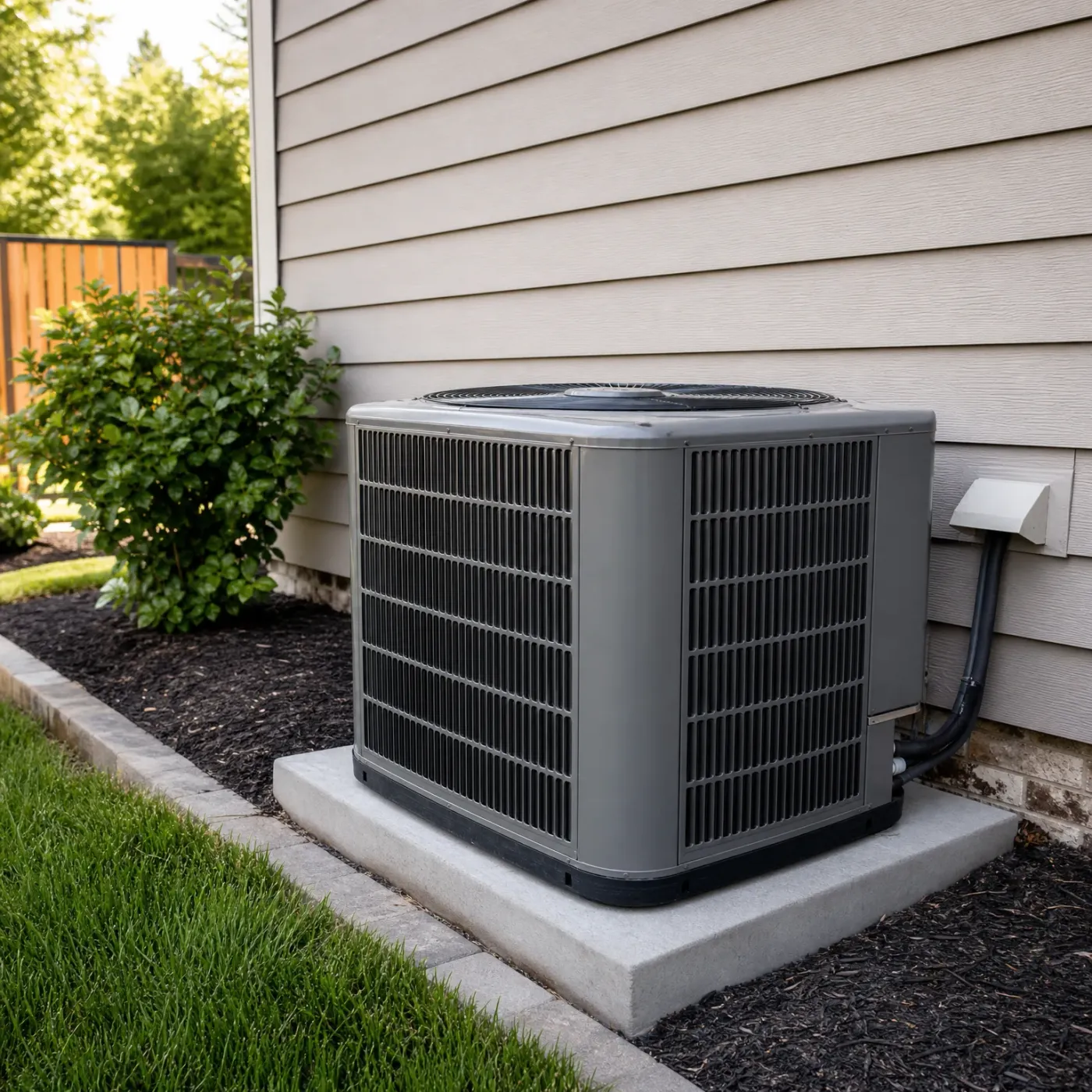
Coil running clean
That gravel bed and the clear space around the unit let air pass through the coil the way it's supposed to. Suction line temps stay normal, so the duct inside stays close to room temperature and the vents stay dry.

You've noticed water beading up around your AC vents or dripping onto the ceiling. With how sticky Iowa summers get, your system is pulling a lot of moisture out of the air, and when something's off, that moisture ends up outside the ductwork instead of in it. You want to know if this is a quick fix or a sign of something worse before it stains your ceiling or ruins drywall.
Your vents sweat when warm, moist air touches cold metal and condenses, the same way a glass of ice water beads up on a humid day. Usually that means the duct isn't insulated enough for how much moisture is in the air around it, or the system is running colder than it should because of a dirty filter, a low charge, or ductwork that doesn't seal tight. In Iowa, summer humidity makes this worse than it would be in a drier climate, so a small insulation gap that never showed up in May can start dripping by July. Left alone, that moisture soaks into drywall or insulation and causes real damage, so it's worth having a contractor look at the duct and the system together rather than just wiping it down.




Your ducts carry air chilled down by the coil, often well below the temperature of the room around them. That cold surface meets warm, humid air sitting outside the ductwork, and wherever the gap between those two temperatures is wide enough, moisture in the room air turns to water on contact. Insulation around the duct is what normally keeps that from happening. Where it's thin, torn, or missing, bare metal is exposed, and bare metal is cold enough to sweat fast. A dirty filter or a return leak makes the problem worse before it even starts, because both push the coil colder than it needs to run or load it with extra humidity from an attic or crawlspace. Low refrigerant charge does something similar from the other direction, dragging coil temperature down past where the duct surface stays dry. Vents closest to an exterior wall or sitting above an unconditioned attic usually sweat first, simply because that's where the temperature difference is greatest.


Left alone, that moisture does not stay at the vent. It soaks into the drywall around it, and what starts as a damp ring turns into a brown stain or a soft spot you can push a finger through. Water running along a duct in your attic or crawlspace drips onto insulation and keeps it wet long after the duct dries out, so the insulation stops doing its job in exactly the rooms you're trying to keep comfortable. If the vent is near a light fixture or an outlet, that water has somewhere worse to go. And the humidity causing all this is still in your house, so the air feels heavier than the thermostat says it should, even with the AC running most of the day. None of this needs a full system overhaul to fix. But the longer a sweating vent runs, the more of your house it touches on the way to getting fixed.


Your request goes to one pro, not a list of companies.
Describe your air conditioner job, and a local pro who handles it gets in touch.
You're not committing to anything by asking.
Look closer and you'll usually find more than the vent itself. A ring on the ceiling tile a few feet away, a dark spot in the corner where two walls meet, or a musty smell in the room when the AC kicks on. If the vent sits near a closet or a bedroom, you might find the carpet or baseboard underneath slightly damp without ever seeing a drip. Metal vent covers can rust at the edges after a season or two of this. None of it stays put. Water that starts at the vent travels along whatever it touches first, drywall, wood framing, carpet padding, and it keeps feeding mold as long as the sweating keeps happening.

That gravel bed and the clear space around the unit let air pass through the coil the way it's supposed to. Suction line temps stay normal, so the duct inside stays close to room temperature and the vents stay dry.

That buildup on the grille is blocking airflow across the coil. The system still runs, but it runs colder than it should, and that extra cold is what's sweating through your vents and onto the ceiling.



This is what a condenser should look like: clear gravel around it, nothing blocking the fins, the disconnect box right there for service. Air moves through the coil the way it's built to, suction line temps stay normal, and the duct inside stays close to room temperature.

Years of grime on the fins choke off airflow across the coil. The suction line runs colder than it should, and that extra cold is what's showing up as sweat on your vents. A local contractor who services these units every summer can tell you from the buildup alone whether this is your problem.
At 13.62 cents a kilowatt-hour, running your AC harder than it needs to shows up fast on the bill. A dirty coil or low charge makes the system work overtime and sweat those vents, so fixing the cause saves power, not just your ceiling.
EIA-861 2025 statewide residential average

A dirty coil or a low charge pulls suction line temps down further than they need to go, and that extra cold is what shows up as water on your vents. Fix the cause and the duct inside stays close to room temperature, the way it's supposed to, and the sweating stops. That's the whole answer. Everything else is where to look for it in your own house.
A contractor local to Iowa who services AC systems all summer has seen this exact problem on plenty of other houses here and knows where to check first, your condenser or your ductwork, before touching anything. Once you request a repair, you'll be matched with one contractor suited to what you're dealing with, not a handful of companies competing for your callback. They'll reach out and take it from there.






The pro who reaches out is licensed in Iowa.
It costs nothing to send, and you don't have to hire anyone.