




How often to clean a dryer vent in Des Moines, IA

One form replaces the calls you'd make to find a dryer vent pro.

Describe it once

Clean your dryer vent once a year. That holds for most homes in the Des Moines area, whether you run the dryer a couple of loads a week or every day. Lint builds up inside the duct work over months of normal use, and it doesn't matter how often you clean the lint trap, it never catches all of it. What gets through settles in the vent and narrows it, and a narrow vent means your dryer has to push air harder to get wet clothes dry. You'll notice it first as longer drying times, or a dryer that runs hot to the touch. Once a year keeps that from turning into something worse, since a blocked vent is a known cause of house fires. If your dryer runs most days, or the vent run is long, cleaning it twice a year is the safer call. A duct cleaning crew can tell you which case you're in once they see the setup.

A smiling woman with long brown hair in a dark sweater sits at a light stone kitchen counter with a glass of red wine, with a dimly lit living room in the background.
A smiling woman with dark hair pinned up, wearing a beige sweater, sits looking off to the side in a kitchen with a glass of red wine in front of her, a stainless steel refrigerator, marble counter and a potted plant behind her.
A smiling woman with dark shoulder-length hair in a navy sweater sits at a kitchen counter with a glass of red wine, with a lit living room and pendant lights behind her.
A woman in a dark gray sweater laughs while seated at a white marble counter with a glass of red wine, with a blurred living and dining room behind her.

Once a Year or More Often?

Clean once a year

  • Works for most households in the Des Moines area, even if the dryer runs daily.
  • A yearly cleaning catches lint before it packs tight enough to slow the airflow out of the duct.
  • Keeps the vent hood flap outside working so it can still close against winter wind.
  • Fits a schedule you can tie to something easy to remember, like a birthday or a furnace checkup.
  • Costs you one visit a year instead of guessing at the right interval.

Clean more often

  • Makes sense if you dry heavy loads often, like towels, bedding or clothes from kids' sports.
  • Needed if your duct run is long or has several bends, since lint collects faster at each turn.
  • Worth doing if you've noticed clothes taking longer to dry or the outside hood barely moves air.
  • A good idea if you added a dryer after moving into a house that already had the duct in place.
  • Matters more if lint has ever caught fire or scorched near the vent, even a small scare.
A white hooded dryer vent with a square screwed-on flange mounted on gray horizontal lap siding, above a concrete foundation wall edged with gravel stones.

Vent clear and open

This is what a clear vent looks like from outside. The flap hangs loose and closes on its own between loads, and air pushes it open with some force when the dryer runs. Screws and siding stay free of lint. If yours looks like this, the duct behind it is doing its job.


A lint-clogged hooded dryer vent mounted on light gray horizontal lap siding above a concrete foundation wall.

Vent clogged with lint

Lint has packed the hood solid and pushed the flap open for good. Air from the dryer barely gets outside anymore, so it backs up into the duct and the dryer itself. A flap that won't close, or lint you can see from the yard, means it's overdue, no matter when it was last done.

How do I know if my dryer vent actually needs cleaning?

A yearly schedule is a good default, but it's not the only signal. You might be wondering if your vent needs attention sooner than the one-year mark, or if you've gone a little past it and it's still fine. There are a few things you can check yourself, on the dryer and at the outside vent hood, that tell you more than the calendar does.

Check the dryer's drying time and the outside vent hood

If a load that used to take 40 minutes now takes over an hour, or you're running clothes through twice to get them dry, air isn't moving through the duct the way it should. Go outside while the dryer runs. The vent hood flap should swing open and you should feel a steady push of warm air against your hand. A weak flutter, or a flap that barely moves, means lint has built up enough to choke the airflow. The top of the dryer getting hot to the touch is another sign. Any one of these means it's worth cleaning now rather than waiting out the year.

  1. Lint sheds off every load and travels into the duct

  2. Lint catches on bends and seams instead of blowing clear

  3. Buildup narrows the duct so air moves slower each load

  4. Weak airflow leaves the vent hood flap barely opening outside

A white hooded louvered vent mounted on beige horizontal lap siding above a stucco foundation wall bordered by river rock gravel.
Air pushes the hood flap open with some force and it falls shut between loads, with no lint ringing the screws or siding.
A white plastic hooded dryer vent with a lint-covered screened opening mounted on beige horizontal vinyl siding above a concrete foundation.
Dark lint cakes the screen and holds the flap shut, so moist air backs up into the duct instead of venting outside.

What a Blocked Vent Costs You

  • A dryer that used to finish in one cycle starts taking two, and your power bill reflects the extra run time.
  • Clothes come out of the dryer hot to the touch but still damp, because the moist air has nowhere to go.
  • The laundry room holds onto heat and a warm, humid smell long after the cycle ends.
  • Lint packed into the duct is a fire risk, since it's fuel sitting next to a heat source every time the dryer runs.
  • A blocked vent can trip the dryer's thermal safety switch and shut the machine off mid-cycle.
  • Ignoring the yearly cleaning doesn't save you anything, it just moves the cost to a shorter dryer lifespan and higher bills.

Skip the yearly cleaning and the first sign is usually time. A load that took forty minutes starts taking an hour, then longer, because the duct is too packed with lint to carry the moist air out fast enough. The dryer runs harder and longer to do the same job, and that shows up on the power bill even though power here is cheap. You'll notice it in the clothes too. They come out of the machine hot, since the heating element is still firing away, but damp, since the air that's supposed to carry moisture outside is backing up instead. That backed-up air has to go somewhere, so it sits in the laundry room, and you'll walk in to a warm, close smell that wasn't there a year ago. None of this is cosmetic. Lint is fuel, and a dryer's heating element is a heat source, so a duct packed with lint sitting a few feet away is a fire risk every single time you run a load. Many dryers have a thermal switch built in for exactly this reason, and a vent blocked badly enough can trip it mid-cycle, shutting the machine down before the clothes are dry. Put off the cleaning and none of that cost disappears. It just moves. You pay it in a dryer that wears out sooner than it should and in bills that run higher every month you wait.

A smiling man with dark wavy hair and a short beard, wearing a navy crewneck sweater, sits at a candlelit dinner table with a bowl of food, wine glass and a lamp and framed art behind him.
A woman with wavy brown hair sits on a beige couch with her eyes closed and a slight smile, a knit blanket over her lap and a closed dark-covered book resting on it, with a lit lamp and plant in the dim background.
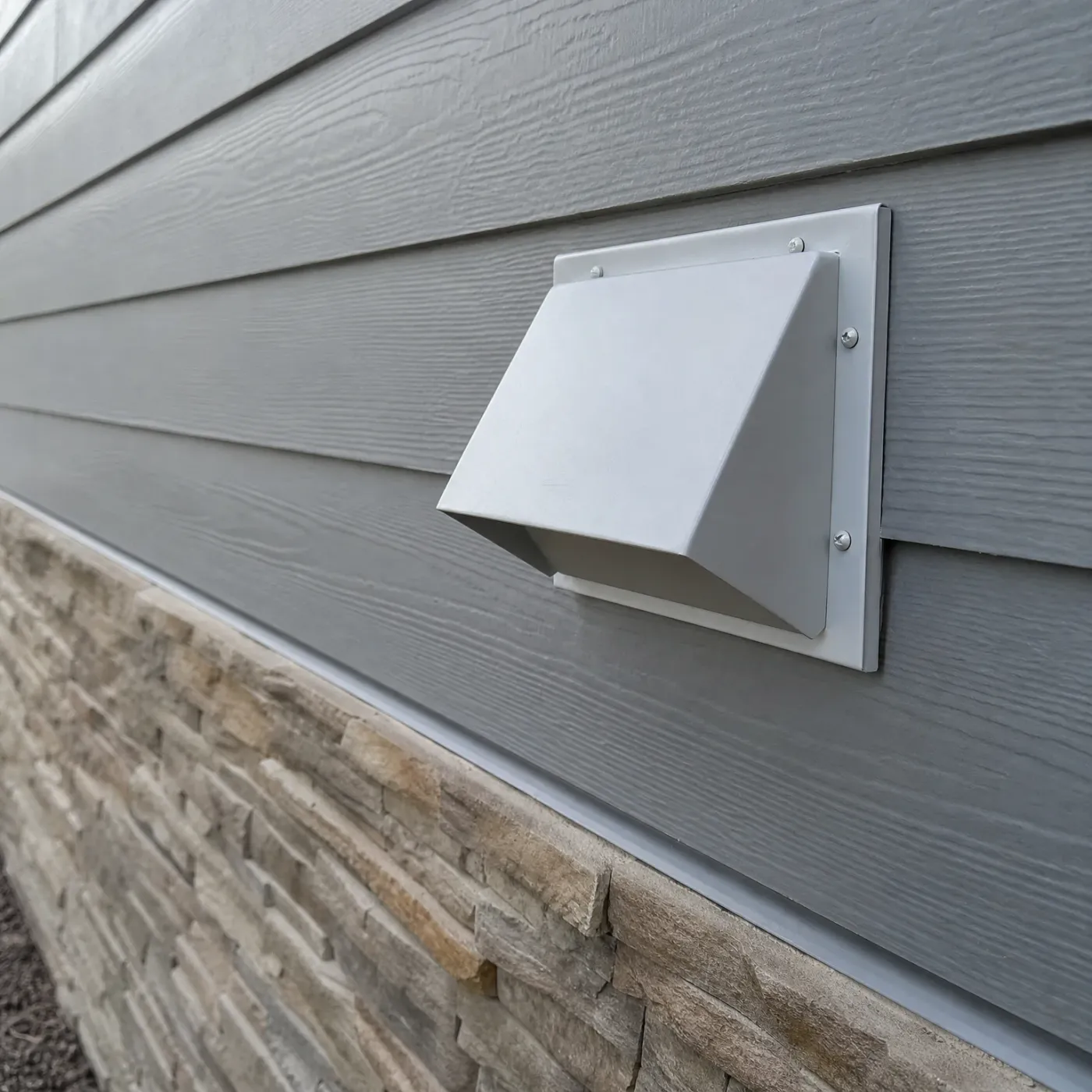
A white hooded exterior vent cover screwed to gray horizontal lap siding above a stacked stone veneer base.

Skip the calls to every shop

The pro who gets in touch is licensed in Iowa and works in Polk County.

Skip calling around for someone who cleans dryer vents.

Get a licensed local pro

You're not committing to anything by asking.

Why does my laundry room feel hotter than it used to

A dryer venting properly sends the hot, moist air outside, and the room stays close to normal. Once the duct starts choking down with lint, that heat has nowhere to go but back into the room. You'll notice the air feels thicker, a load that ran forty-five minutes now takes over an hour, and you're running it twice to get clothes actually dry. Check the vent hood outside while the dryer runs. If the flap barely lifts or doesn't move at all, air isn't getting through. A duct packed with lint also means the heat building up near the drum has fewer places to escape, and that's the condition that leads to dryer fires in homes across Polk County every year.

A square plastic dryer vent hood mounted on light-colored horizontal lap siding above a concrete foundation, with gray lint clogging its screened opening.
Before you get your dryer vent cleaning
A white hooded dryer vent cover mounted on beige horizontal vinyl siding above a concrete foundation wall with gravel at the base.
After you get your dryer vent cleaning

Why lint builds up this fast

Every load pushes a fresh layer of lint past the trap and into the duct, and the trap only catches part of it. The rest rides the airflow until it hits a bend, a seam, or a long run toward the outside wall, and that's where it catches. Over a year of normal laundry, that layer thickens enough to choke the duct down well before it looks blocked from either end. A dryer run daily reaches that point the same as one run twice a week, since lint shedding tracks loads more than it tracks the calendar days between them.

What a tight duct does to the dryer

A dryer is built to push air out against some resistance, but the motor and heating element both run harder once lint narrows the path. Clothes take longer to dry, the dryer runs hotter than it should, and the heating element cycles more to make up for the air it isn't getting. None of that shows up as a loud noise or a warning light. It shows up gradually, in run time and in heat, which is why a vent can be most of the way to blocked and still seem to work fine load after load.

2.41 people per household on average

Most households here run 2.41 people, so the dryer in your house is probably doing laundry for a small family, not a single person living alone. More people means more loads through the week, and more loads means lint reaching the duct faster. A once-a-year cleaning keeps up with that pace.

ACS 2020-2024

You can keep putting off a dryer vent cleaning if the dryer still runs fine and nobody's home to notice the smell.

But a tech who clears vents all over Polk County every week knows what a choked duct looks like before it fails, and one visit a year keeps your house out of that spot.

What does your household mean for your dryer vent?

  • 2.41 people per household on average

    Polk County households run 2.41 people on average, so most dryers here are running loads for a few people, not just one.

  • Half the homes here were built by 1982

    Half the homes in Polk County went up in 1982 or earlier. An older duct run is more likely to have the long bends that trap lint.

  • Power here costs 11.37 cents per kilowatt-hour

    Electricity here runs 11.37 cents per kilowatt-hour, cheap enough that a slow dryer costs you time more than it costs you money.

ACS 2020-2024 · EIA-861 2025

A closed laptop and a ceramic mug on a wooden table in front of a kitchen with green cabinets, marble counter, black pot, cutting board, wooden bowl, and a white vase with greenery.

Once a year, and you're done thinking about it

Clean the dryer vent once a year. That's the answer for most homes around Des Moines and the rest of Polk County, whatever your laundry routine looks like. The rest comes down to watching for the signs in between, a flap that won't swing open, a laundry room that stays warm after the cycle ends, a dryer that needs a second run to finish what used to take one.

Finding someone to do this job usually means a handful of calls, explaining the same thing to each one, then sitting with quotes trying to guess who actually knows duct work from someone who just vacuums the trap. This connects you with one licensed local contractor instead, someone who clears vents around Polk County every week and knows what a duct choked with a year of lint looks like before it causes a problem. No comparing bids, no repeating yourself. You end up knowing exactly where your vent stands and what, if anything, it needs.

Living room interior with a light sofa holding a dark green cushion and a brown knit throw, a tall leafy plant by a black-framed window, a wooden coffee table with a round tray, and wooden shelves holding vases and books.
A dark gray hooded exterior vent cover with a louvered opening mounted on dark horizontal lap siding, viewed at a steep angle.

Skip calling around

The pro who reaches out is licensed in Iowa.

Duct and vent cleaningPolk County, IA
Step 1 of 3

What kind of equipment?