
How often to clean air ducts in Iowa
Skip searching for a duct system pro and answer a few questions instead.
How often should I clean my air ducts in Iowa?
You've got a house full of ducts you can't see, and no easy way to know what's built up in them. Between the furnace running all winter and the AC fighting the humidity all summer, the system moves a lot of air. You're not looking to do this more than you need to, but you also don't want dust and allergens cycling through the house because nobody ever checked.
Every 3 to 5 years for most homes
Most homes do fine on that schedule. Ducts collect dust, pet hair and some mold spores over time, and a gas furnace running October through April plus an AC working through a muggy Iowa summer pushes a lot of air through that system each year. That buildup doesn't clear itself out. If anyone in the house has allergies or asthma, or you've noticed dust settling fast after a cleaning, go shorter. If you've just finished a remodel or had rodents get into the ductwork, don't wait for the schedule, get it done sooner. Homes with pets or a recent water leak near the ducts also tend to need it more often than the standard 3 to 5 years.
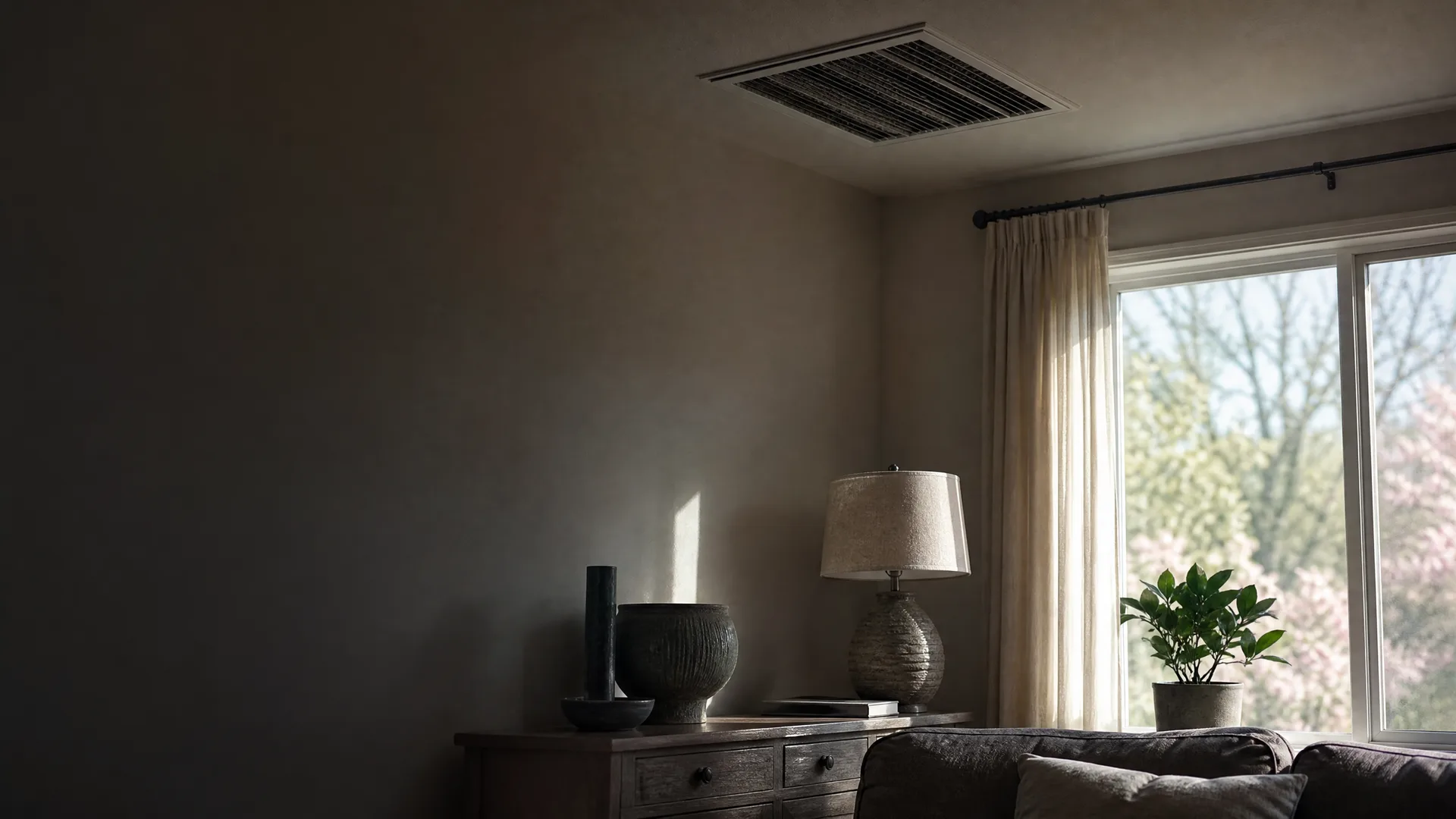
You're dusting the TV stand on a Saturday in April, windows open for the first time in months. You look up at the ceiling vent and the grille is gray, a soft line of dust along every slat. Run a finger along the top edge of the TV and it comes away the same color. The furnace just finished its last hard month of work, and this is what it left behind on its way out of the vents. Nobody wiped this surface since fall. It isn't dirt from the window you just opened. It settled there over the winter, a little at a time, every time the furnace kicked on.
Why does the house feel dustier than it should?
You wipe down the shelves and by the weekend a thin gray film is back. The return vent whistles a little when the furnace kicks on, like it's pulling harder than it should. Someone in the house is sneezing more at home than anywhere else, or the air just smells stale when the AC first turns on after sitting idle. Pets make it worse between the hair and the dander that settles into the ducts along with everything else. None of this means the ducts are the only cause, but a system that's loaded with dust and pet hair has to work harder to move air through the house, and what it's moving is whatever's built up in there.




Describe it once
Finding someone to look at your ducts usually means a string of phone calls, explaining the same gray grilles and the same whistling return vent to three or four different companies, then trying to compare quotes that aren't really for the same job. That part you can skip. One request here goes to a licensed contractor working in Iowa, someone who's up in attics and crawlspaces every winter when the furnace is running flat out and every summer when the AC is working against the humidity, and who knows what that cycle does to a duct system over the years. You're not fielding calls from five different companies trying to win the job. You already know what's coming out of your vents. The next step is getting someone who deals with Iowa duct systems all year to go look at them.
How a duct cleaning actually works
- A duct cleaning clears the supply runs, the return runs, and the plenum, the sheet metal box right off the furnace.
- A tech runs a brush or a whip through each run before the vacuum pulls the loosened dust out, working from the furnace end outward.
- The coil stays out of this job, that's a separate cleaning a furnace or AC tune-up covers.
- Every register and grille comes off the wall or ceiling first, since dust packs up behind them where the duct bends to meet the room.
- A gas furnace draws return air across the house all winter, so the return side usually carries more buildup than the supply side.
- The job isn't done until every branch line is checked, since one skipped run can leave dust to get stirred back through the house.
A duct cleaning starts at the furnace and works outward, not room by room. The tech pulls every register and grille off the wall or ceiling first, because that's where dust packs up thickest, right at the bend where the duct meets the room. From there a brush or a whip goes through each run, supply and return both, knocking loose what's built up on the walls of the metal, while a vacuum on the other end pulls it out so it doesn't just resettle somewhere else in the system. The plenum, the box of sheet metal right off the furnace where all the branch lines meet, gets the same treatment, since it's the one spot every bit of air passes through going both directions.
Return air usually gets more attention than supply. A gas furnace pulls air from across the house all winter to heat it, so the return runs carry more of what's in your air: dust, pet hair, whatever's settled on the carpet and gotten kicked up again. The coil doesn't come into this job. That's part of the AC or furnace itself, not the ductwork, and a separate tune-up covers it.
The last step is checking every branch line, not just the main trunk. A duct system branches out to each room, and a tech who skips one leaves a pocket of dust sitting there, ready to get pulled loose and blown right back through the house the next time the blower kicks on.


Power costs 13.62 cents per kilowatt-hour statewide
At 13.62 cents a kilowatt-hour, running the furnace blower or the AC fan harder than it needs to adds up fast. A duct system packed with dust makes both work against that buildup all year, which shows up on the bill long before it shows up on the vents.
EIA-861 2025 statewide residential average
Every three to five years covers it for most houses here, sooner if someone's been sneezing more than usual or the vents have gone gray between cleanings. That's the answer. What changes is who clears it. A tech who services furnaces and AC systems all over Iowa all year knows which runs collect the worst of it in a house like yours, where the plenum sits, what a whistling return usually means before the vacuum ever gets hooked up. You're not describing the problem five times to five different companies and guessing which quote covers the same work. One contractor, licensed, local, comes out and does the job they already know how to do. The gray film on the shelves and the dust along the vent slats, that's the thing being solved. Keep an eye on the same signs going forward: the grille, the shelves, how hard the blower sounds like it's working, and you'll know when it's time again without having to guess at a calendar.





No phone calls to make
Your request goes to one pro, not a list of companies.
You're not committing to anything by asking.