Side profile of a bearded man wearing a faded dark blue baseball cap and a matching dark T-shirt against a plain light gray background.

Signs your ducts need cleaning in Cedar Rapids, IA

Duct and vent cleaningDucts or ventsLinn County, IA
Step 1 of 2

What ZIP code is the job in?

Dust that resettles on furniture within a day or two of cleaning, musty air when the furnace or AC kicks on, and rooms that stay dusty no matter how often you vacuum are the usual signs your ducts need attention. So is a furnace filter that looks gray again just weeks after you changed it. Ducts collect dust, pet hair, and debris over years, and in a Cedar Rapids home that runs the furnace hard all winter and the AC hard all summer, that buildup gets pushed through the house every time the system cycles on. If you can see dust or debris around the vent covers themselves, or if someone in the house has started sneezing more at home than elsewhere, that's air coming through ducts that haven't been cleared out in a while. None of this means something is broken. It means the system is doing exactly what it's built to do, moving air through ducts that need to be cleaned out.

A smiling woman with long brown hair in a cream sweater sits at a stone counter with a glass of red wine, with a dimly lit living room, beamed ceiling and glass doors behind her.
A woman with shoulder-length dark wavy hair in a beige sweater laughs while looking off to the side, seated at a white marble counter with a glass of red wine, in a dimly lit home interior with a kitchen and sofa in the background.
A smiling woman with long dark hair in a black sweater sits at a white marble counter with a glass of red wine, in a dimly lit kitchen and living area with pendant lights, a potted plant, and flowers.
A smiling woman with long brown hair in a light knit sweater sits at a stone-topped counter with a glass of white wine, with a dimly lit living room, sofa, fireplace and round mirror behind her.

Why would your ducts need cleaning more than someone else's?

  • Half the homes here were built by 1978

    Half the homes in Linn County were built in 1978 or earlier, and ductwork that old has had decades to collect dust the furnace and AC keep stirring back into the house.

  • Heat runs October through May

    Heat runs October through May here, eight months of pulling air through the same ducts, which gives dust and debris that much more time to build up inside them.

  • Cooling runs June through August

    Cooling runs June through August, so the system barely gets a break before heat season starts again, and the ducts rarely sit idle long enough to stay clean on their own.

ACS 2020-2024 · NOAA nClimDiv 1991-2020

Unfinished basement with concrete floor and walls, exposed wood joists, galvanized sheet-metal ductwork, a furnace unit, a steel support column, and a small window.

Ductwork doing its job

Metal supply trunks and a smooth spiral duct run tight along the joists, carrying air without leaking it into the basement. A clean filter and steady airflow mean the furnace isn't pulling extra dust through the system every time it cycles.

Empty unfinished basement with bare concrete walls and floor, showing exposed wooden joists, galvanized sheet-metal ductwork, pipes, and a white vent grille overhead.

Ductwork overdue for a look

Flex duct sags between the joists next to older galvanized metal, with small pipes crowding the same space near a single vent. Runs like this collect dust and give it more places to settle before it ever reaches that grille.

Empty concrete-walled basement with bare floor, showing large galvanized sheet-metal HVAC ducts, insulated pipes, wiring and wooden floor joists overhead.
Before you get your ductwork cleaning
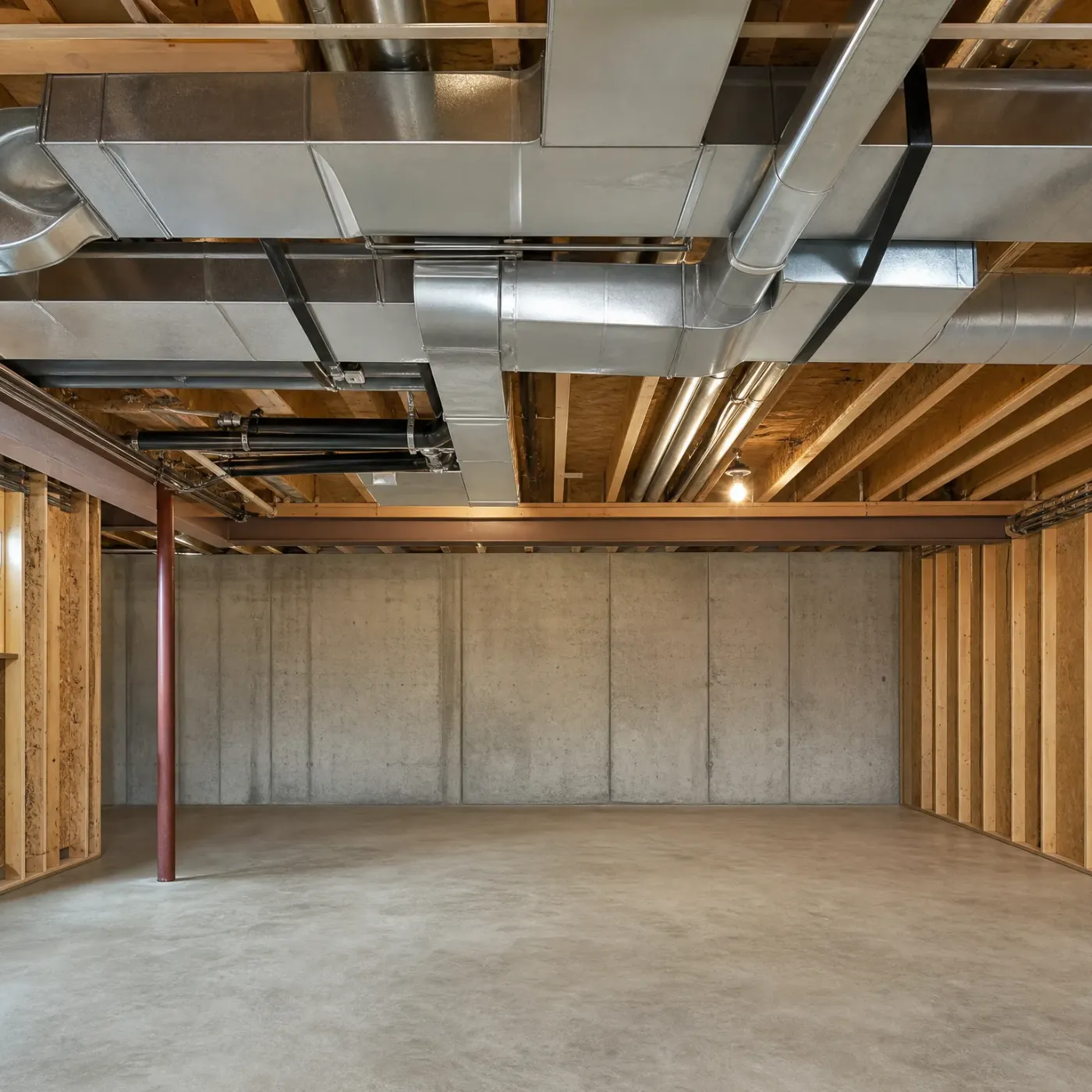
Empty unfinished basement with bare concrete floor and wall, wood-framed stud walls, exposed joists, galvanized HVAC ducts and pipes overhead, a steel beam and red support column, and a single bare bulb light.
After you get your ductwork cleaning

A contractor doesn't just run a hose into one vent and call it done. The supply side comes first, a brush or whip worked down each branch toward the room it feeds. Then the return side, since that's the path room air takes back to the furnace, carrying along whatever dust and pet hair it picked up on the way. The whole system gets put under negative pressure with a vacuum hooked to the trunk line, so what gets knocked loose pulls out of the house instead of settling deeper into the ductwork. Every register comes off the wall or floor, because dust packs in behind the grille where a hose can't reach with it still screwed down. The plenum gets attention too. That's the sheet metal box the furnace pushes air into before it splits off into every duct run, so whatever sits in there ends up spread evenly through the house. A lot of contractors will check the blower wheel while they're in there, since a dirty one can put the dust right back into clean ducts within a few weeks.

How a duct cleaning actually works

  • A duct cleaning job works through the supply side first, running a brush or whip down each branch toward the vent it feeds.
  • The return side gets cleaned next, since that's where room air and whatever it carries gets pulled back toward the furnace.
  • A contractor puts the whole system under negative pressure with a vacuum attached at the trunk line so loosened dust gets pulled out instead of pushed further into the ducts.
  • Every supply and return register comes off the wall or floor during the job, since dust builds up behind the grille where a vacuum hose can't reach otherwise.
  • The plenum, the sheet metal box the furnace pushes air into, gets cleaned too, since it sits ahead of every duct run and feeds dust into all of them equally.
  • A coil check often comes with the job, since a dirty blower wheel inside the furnace can reload the ducts with dust within weeks of a cleaning.
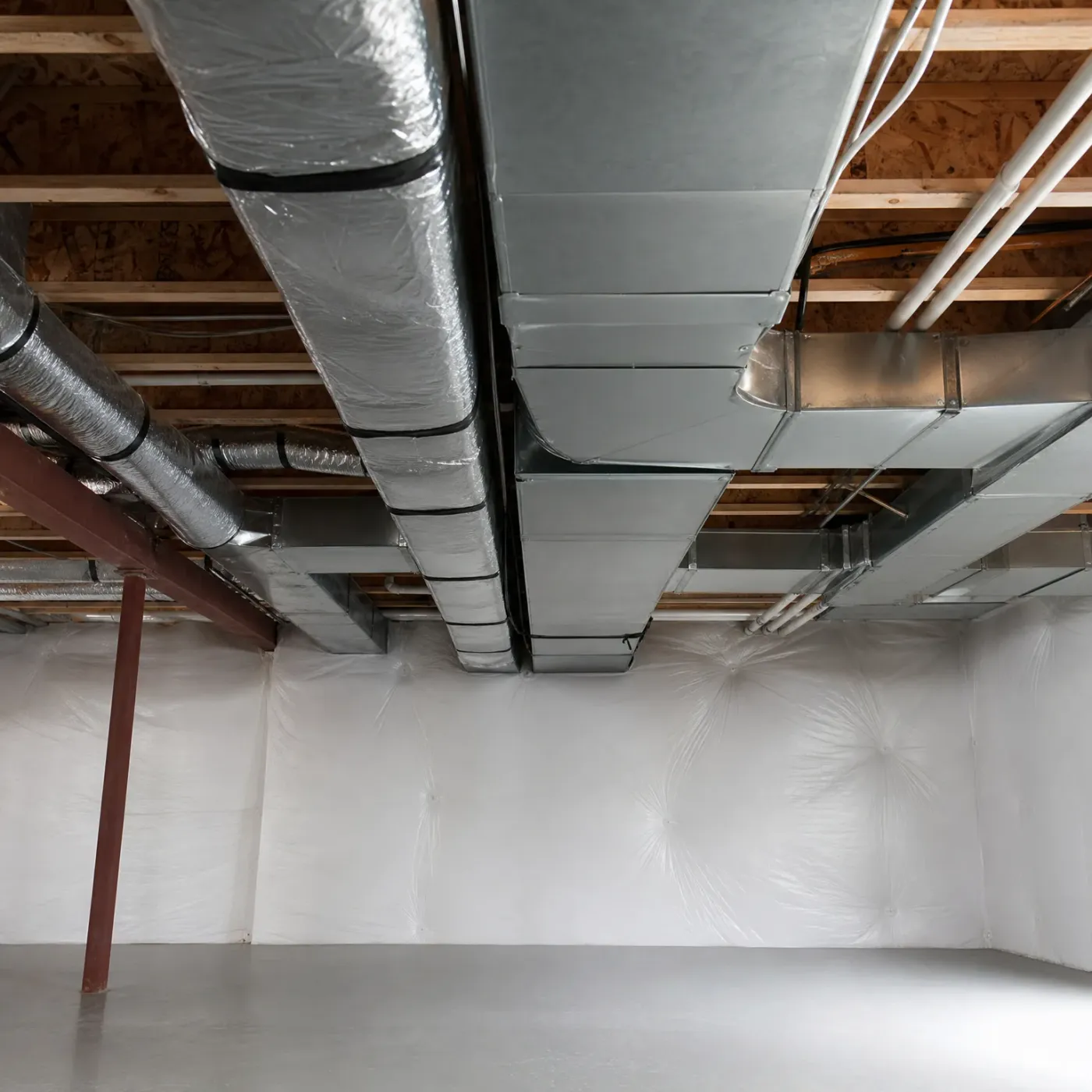
Unfinished basement with exposed wood joists, sheet metal and insulated flexible ductwork, white pipes, a steel support post, plastic-covered walls, and a bare concrete floor.
Ducts running tight to the joists, holding together with no gaps where metal meets flex.
Galvanized sheet-metal ductwork and round pipes run beneath wooden floor joists in a basement with concrete walls and floor.
A crushed elbow and loose metal joints like this leak conditioned air into the basement instead of your rooms.
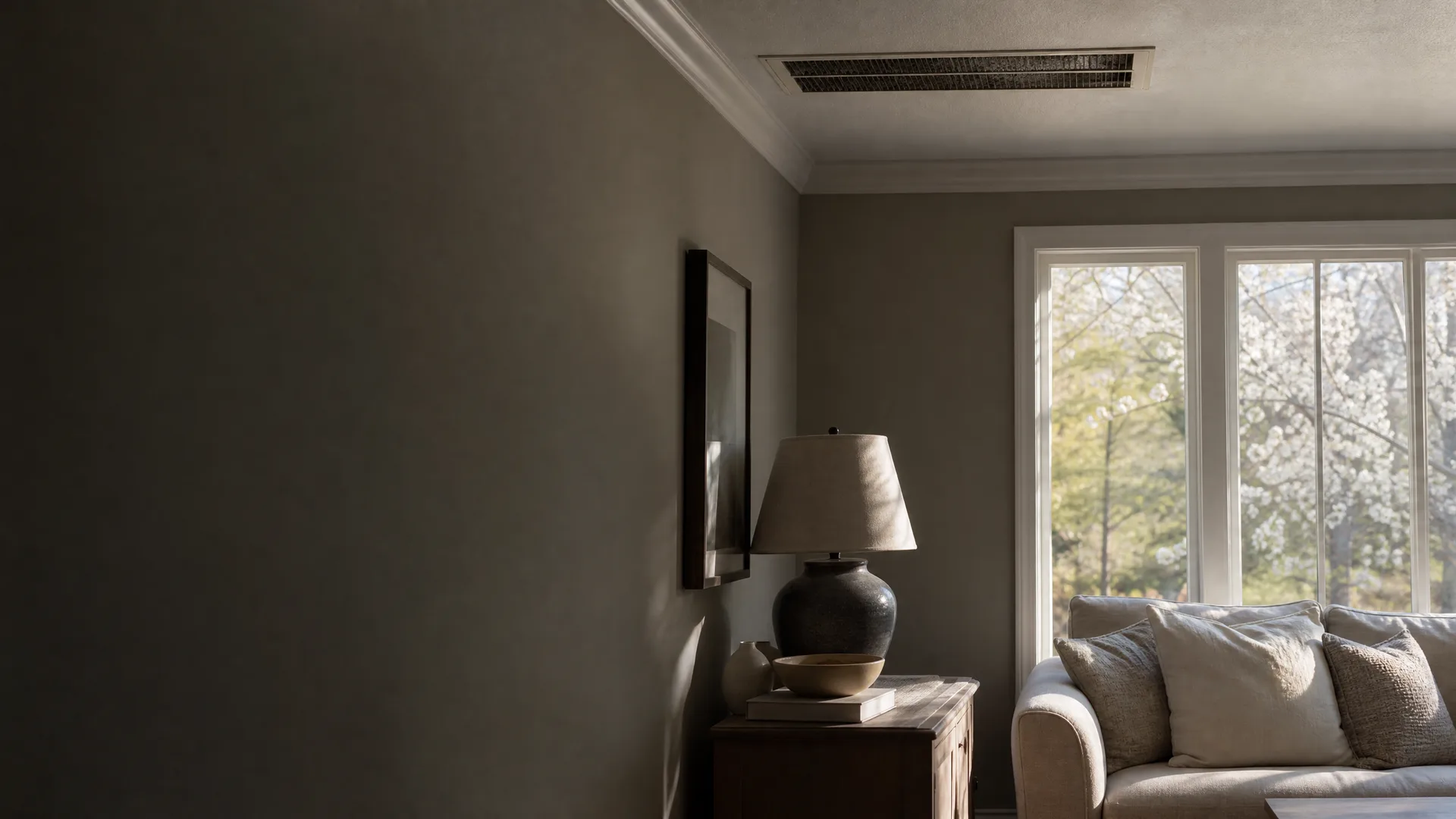
A dimly lit living room corner with a gray wall, framed picture, a table lamp on a wooden side table, a beige sofa with pillows, a ceiling vent, and windows showing flowering trees outside.

It's late April, and the sun through the window shows what the lamplight hid all winter. You're on the couch with the windows cracked for the first time in months when you notice it: the ceiling vent grille above the bookshelf is furred gray with dust, and the top of the shelf below it has its own thin layer, the kind that wasn't there the last time you dusted. You run a finger along the grille slats. Gray comes off on your skin. The furnace has been off for a week now, but the dust it pushed through all winter is still settling, one surface at a time, into the room you sit in every evening.


No calling every shop in Linn County

The pro who gets in touch is licensed in Iowa and works in Linn County.

No charge to send it. You decide if you hire them.

What the furnace pulls through the ducts

A furnace doesn't just heat air, it moves it, and every pass through the return duct carries whatever is sitting in that stretch of metal. The filter catches some of it, but a filter only works on air passing through the face of it head on. Dust sitting in a duct bend, or in a trunk line with a loose joint, gets stirred and redeposited rather than filtered. That's why a clean filter doesn't always mean clean air. If your ducts have gaps where sections meet, or runs that have sat untouched since the house was built, the furnace is working as a fan for that dust every time it cycles, not just in winter but whenever the AC runs too.

What a dirty blower wheel means for you

The blower wheel sits behind the filter, and it's the part actually pushing air through every duct in the house. Dust that gets past the filter sticks to the blower blades the same way it sticks to a ceiling fan, except you can't see it or wipe it down yourself. A coated blower wheel moves less air per cycle, so the furnace or AC runs longer to reach the same temperature on the thermostat. Duct cleaning that skips this part only cleans the pipes the air travels through, not the thing moving it, so what the ducts carried into that wheel over the years still needs to come off for the system to move air the way it did when it was new.

A smiling man with curly graying hair and a dark knit sweater sits at a candlelit dinner table with a glass of red wine, a water glass and a bowl of salad in the foreground, in a dimly lit room with a lamp, framed picture and window behind him.
A woman in a cream knit sweater reclines on a gray sofa with her eyes closed and a slight smile, covered by a fleece blanket with a closed book on her lap, a lit table lamp and potted plants behind her.
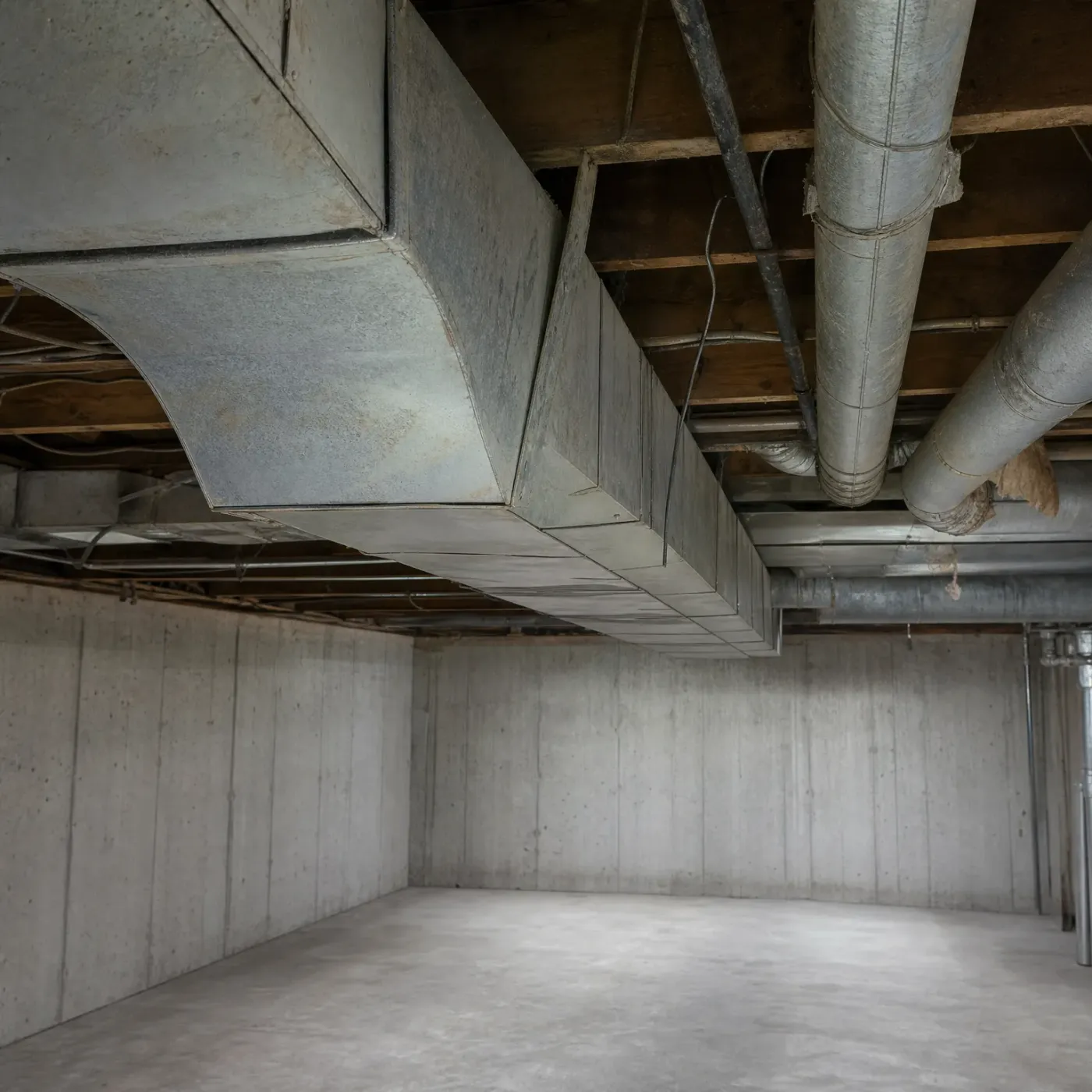
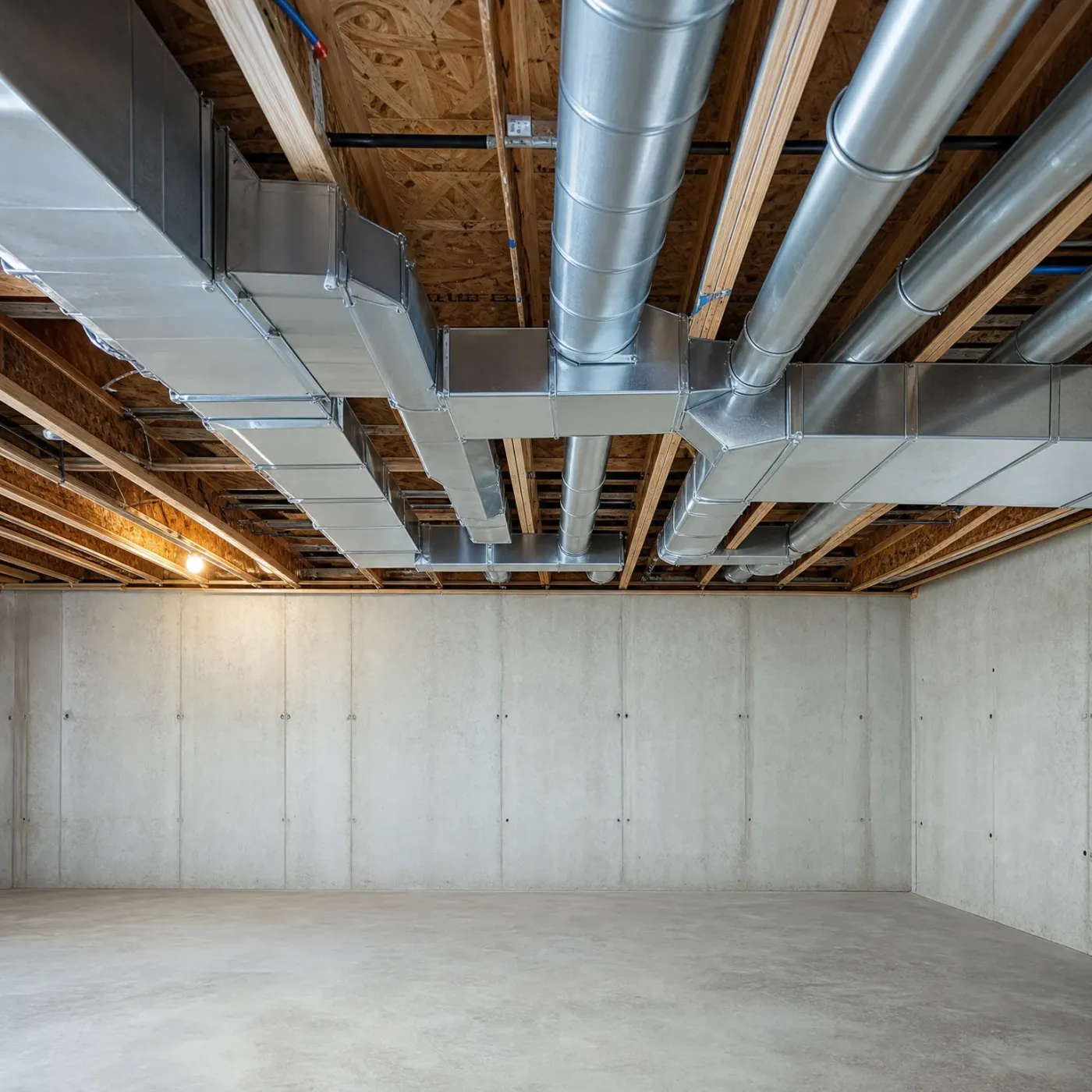
Empty concrete-walled basement room with bare floor and an exposed wood-joist ceiling carrying galvanized rectangular and round sheet-metal ducts, black pipes, and wiring.

Ducts running clean

This is what a duct system looks like when it's not fighting you. The trunk lines and branch runs are tight to the joists, the metal is bright, and air moves through without shedding dust into the rooms it feeds. A furnace in a system like this isn't working against buildup inside its own ductwork.

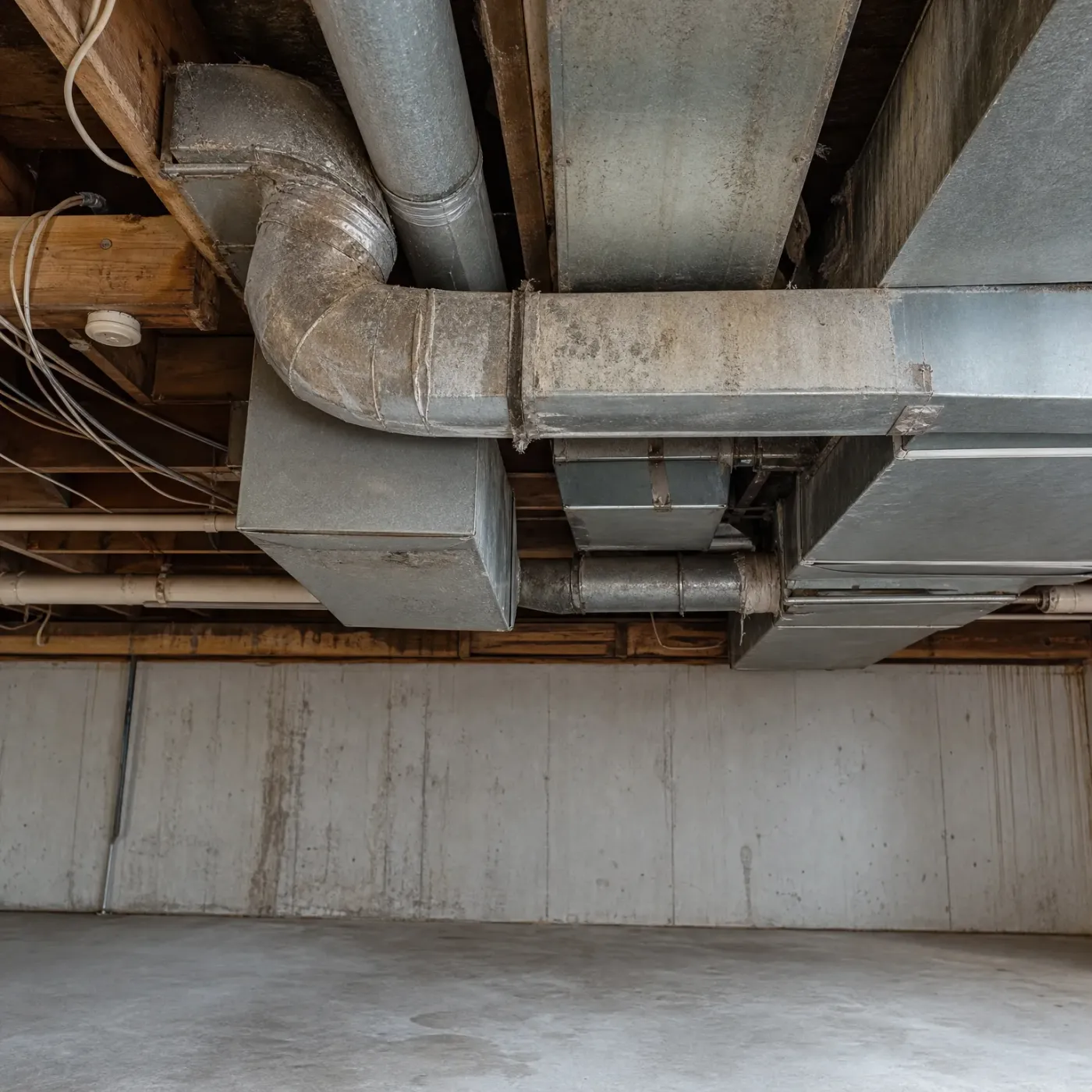
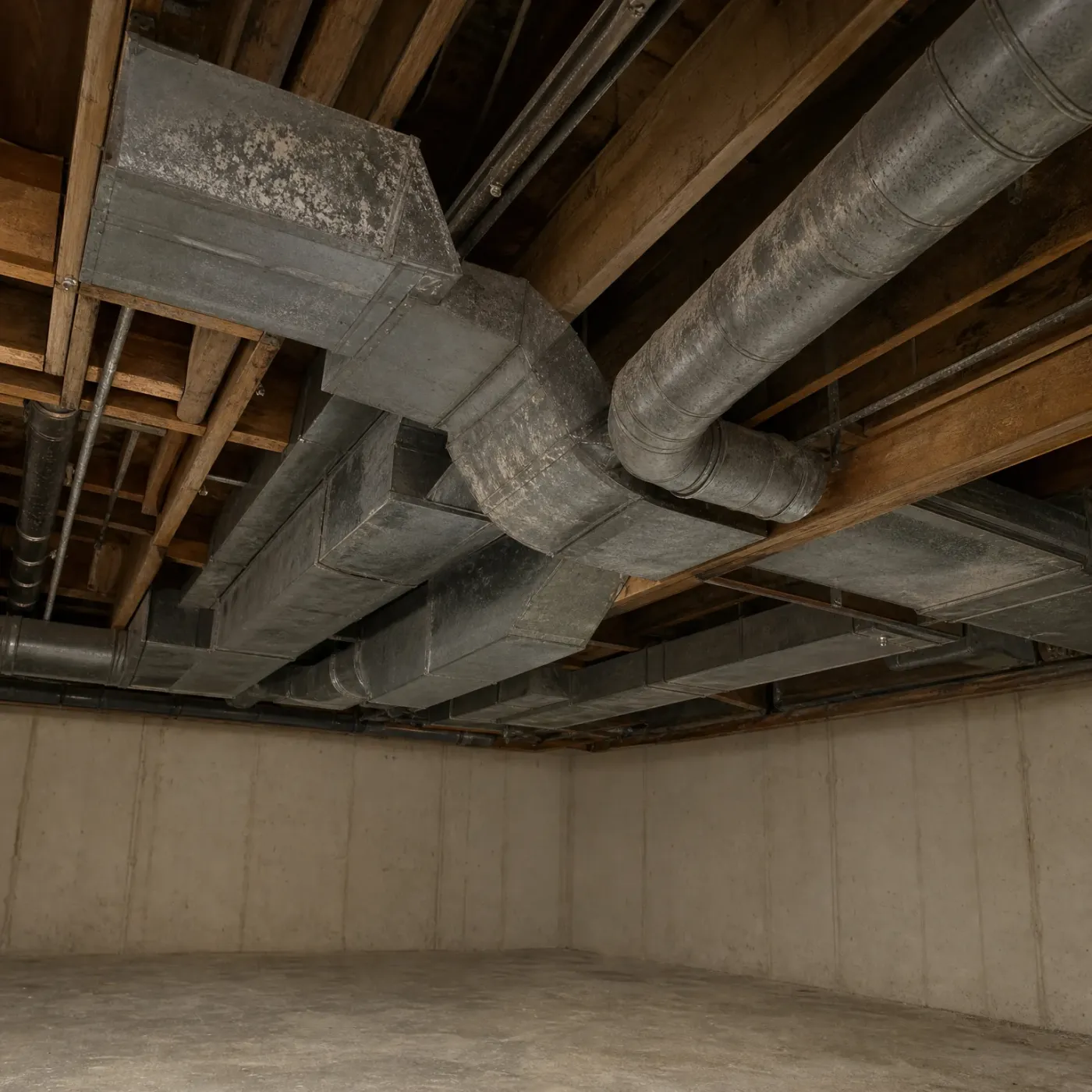
Empty concrete-walled basement room with exposed wooden joists and galvanized rectangular and round ductwork plus pipes running across the ceiling.

Ducts past due

Decades in a basement leave a mark. The oxidation on this ductwork isn't just age, it's a sign of what's built up inside too, since the same years that dulled the metal outside packed dust along the walls inside. Air still moves through it, but it's picking up more than it should on the way.

A closed laptop and a ceramic mug of dark coffee sit on a wooden table, with a blurred kitchen counter, potted plant, wooden utensils and cutting boards, and a large window in the background.

What this means for your house this winter

A dusty duct system shows up first in the rooms you use most. The bedroom you keep shut most of the day collects a film on the dresser within a couple days of dusting. Your furnace runs longer to push the same amount of heat through ducts that are shedding dust instead of just carrying air, and that shows up on the gas bill before you ever see the inside of the ductwork. Anyone in the house with allergies or asthma tends to notice first, often as congestion that eases up when they leave for a few days and comes back once the furnace kicks on again.

Finding someone to look at it is its own chore. Most people start by searching around, calling two or three duct cleaners, describing the gray filter and the dusty shelves to each one, then waiting on quotes that are hard to compare because no two companies check the same things. Request service here and one licensed Cedar Rapids contractor, someone who works on ductwork in homes like yours all winter, calls you back. No repeating the story three times, no stack of quotes to sort through on your own.

Interior corner of a living room with a beige upholstered armchair holding a textured pillow and throw, a eucalyptus arrangement in a ceramic vase on a wooden table in the foreground, a blurred glass-front cabinet behind, and a potted plant on a sunlit window sill.

Power here costs 16.91 cents per kilowatt-hour

At 16.91 cents per kilowatt-hour, a furnace blower straining to push air through clogged ducts shows up on your bill, not just in your comfort. Clearing the buildup lets the blower move the same air for less, all winter.

EIA-861 2025

Where this leaves you

  • Gray dust back on furniture within a day or two, musty air at startup, and a filter already dirty again are the signs worth acting on.
  • A local contractor who services this equipment all winter has seen which duct runs in older Linn County homes collect the most buildup.
  • One contractor means one visit and one set of answers, not several crews giving you different stories about your ductwork.
  • Crushed elbows, loose joints, and gaps where metal meets flex all show up the same way: dust that returns no matter how often you clean.
  • A blower fighting clogged ducts runs longer and costs more at 16.91 cents per kilowatt-hour, all winter long.
  • Knowing the signs is one thing; having someone local look at your actual supply and return runs is what settles it.

You came here with a filter that's dirty again, or dust that's back on the bookshelf two days after you wiped it down. Those are the signs, and if you've got one or two of them, your ducts are telling you something. The furnace isn't broken. It's just moving air through a system that's been collecting dust longer than you'd guess, especially if your house dates back to 1978 or earlier like half the homes around here. That buildup doesn't fix itself, and it doesn't wait for a convenient month. It sits in the trunk lines and the branch runs, and every time the blower kicks on, some of it ends up back in your living room.

What you don't have to do is figure out which of three or four companies to call, or explain the gray filter and the musty smell to each one separately. A contractor working in Linn County sees this same setup in winter after winter, the same duct runs in the same kinds of houses, and knows what a crushed elbow or a loose joint looks like before the camera even gets there. One visit, one person looking at your actual supply and return lines, and you know where you stand instead of guessing. That's the part that's simple, even though the duct work itself isn't.

Interior corner with a lit stone fireplace, built-in wood shelving holding a bowl, books and a pale ceramic vase, a potted olive branch and woven basket on a round table, and an upholstered chair with a fringed throw and cushions.
A large pale planter with a leafy green shrub sits on a stone front step of a gray clapboard house, beside a column, dark-framed windows, a wooden porch chair with a cushion, and clipped hedges in low sunlight.
A wooden front door with divided-light glass panes and sidelights on a cream clapboard house, approached by wide wooden steps and a stone path flanked by trimmed boxwood shrubs, potted plants, and overhanging tree branches.
Sunlit corner of a room with linen curtains at a white-framed window showing green tree leaves, an upholstered armchair with a cushion at right, and a round wooden table holding a ceramic bowl in the lower left.
A beige upholstered armchair with a matching cushion and a knitted fringed throw sits in a corner by two tall windows, beside a round wooden side table holding a bowl and a ceramic vase of leafy branches, on a wood floor with a woven rug.

Explain it one time

A licensed pro who works in Linn County gets your request.

Fill out one form

There's no charge for the request.