


Is duct cleaning worth it in Waterloo, IA

Match me with a pro

You want a straight answer on whether duct cleaning is worth it in your Waterloo house, and that depends on what's actually in your ducts, how your system is set up, and what a tech finds when they look. That's not something a page can tell you sight unseen. What it can do is get you to someone who can look. Instead of searching through company names, calling a few, explaining your ducts and your setup each time, then trying to line up what one contractor says against another, you fill this out once. A contractor who works on duct systems in Black Hawk County gets your information and reaches out to you directly. You get a real opinion on your ducts instead of a guess based on nothing. Whether cleaning makes sense for your house, and what that would involve, is a conversation worth having with someone who can actually see what you're dealing with.

Is duct cleaning worth it in Waterloo, IA?

You want a straight answer before you spend money on something you can't see inside your own walls. Duct cleaning gets pitched hard, sometimes by phone calls that have nothing to do with your actual house, so it's fair to wonder if it does anything or if it's a waste. The honest answer depends on what's going on in your ducts right now, not on a blanket rule.

It's worth it if there's a reason for it, not as routine upkeep

Duct cleaning helps when there's something in the ducts causing a real problem: a rodent nest, construction dust after remodeling work, visible mold, or debris heavy enough to block airflow. Black Hawk County homes run the furnace hard all winter and the AC hard through the muggy summer stretch, so a system that's choked with debris works harder than it should and can shorten the life of the equipment. But if your ducts look clean and your air moves fine, cleaning them on a schedule just because isn't going to lower your bill or improve your air. A tech looking at your actual ductwork is the only way to know which situation you're in.

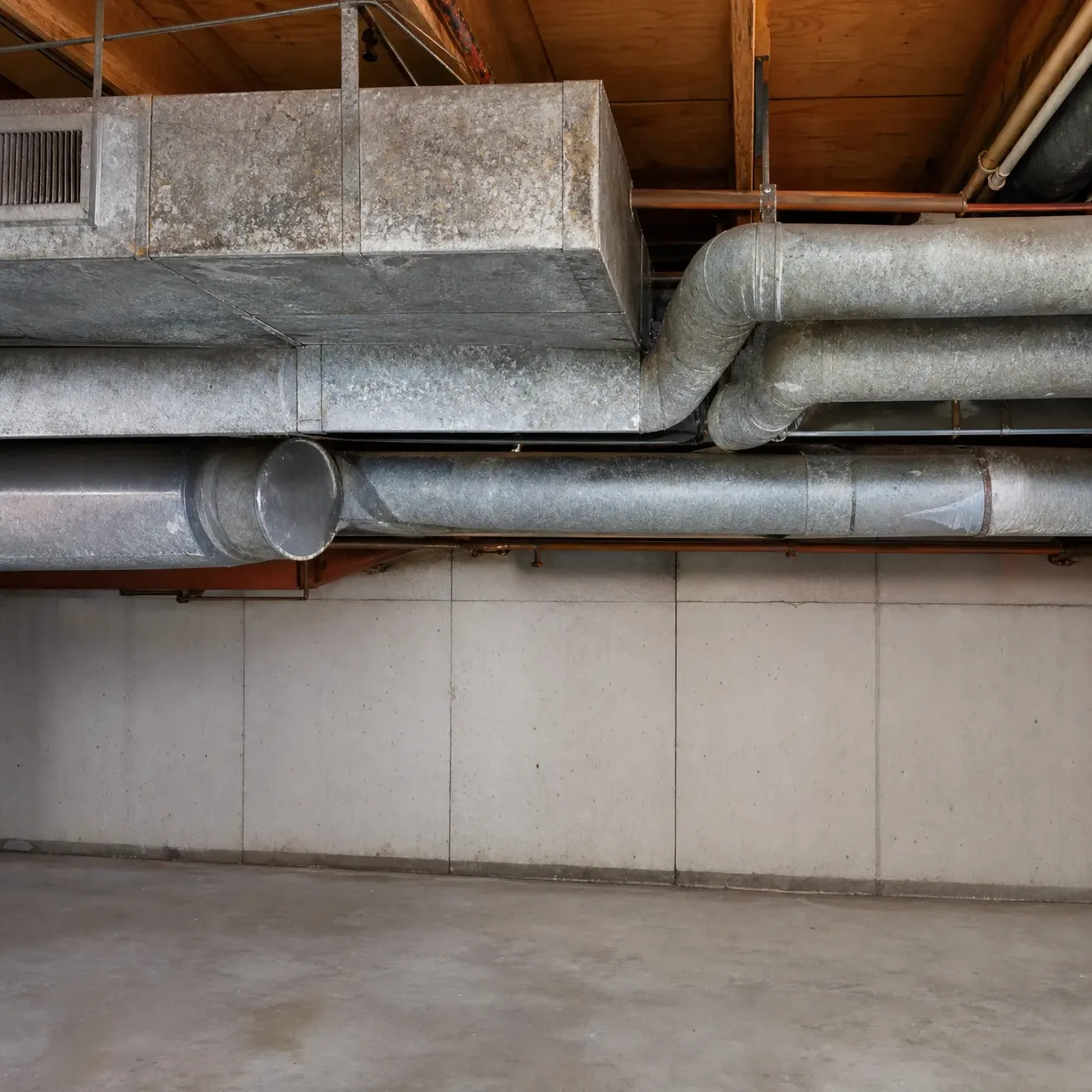
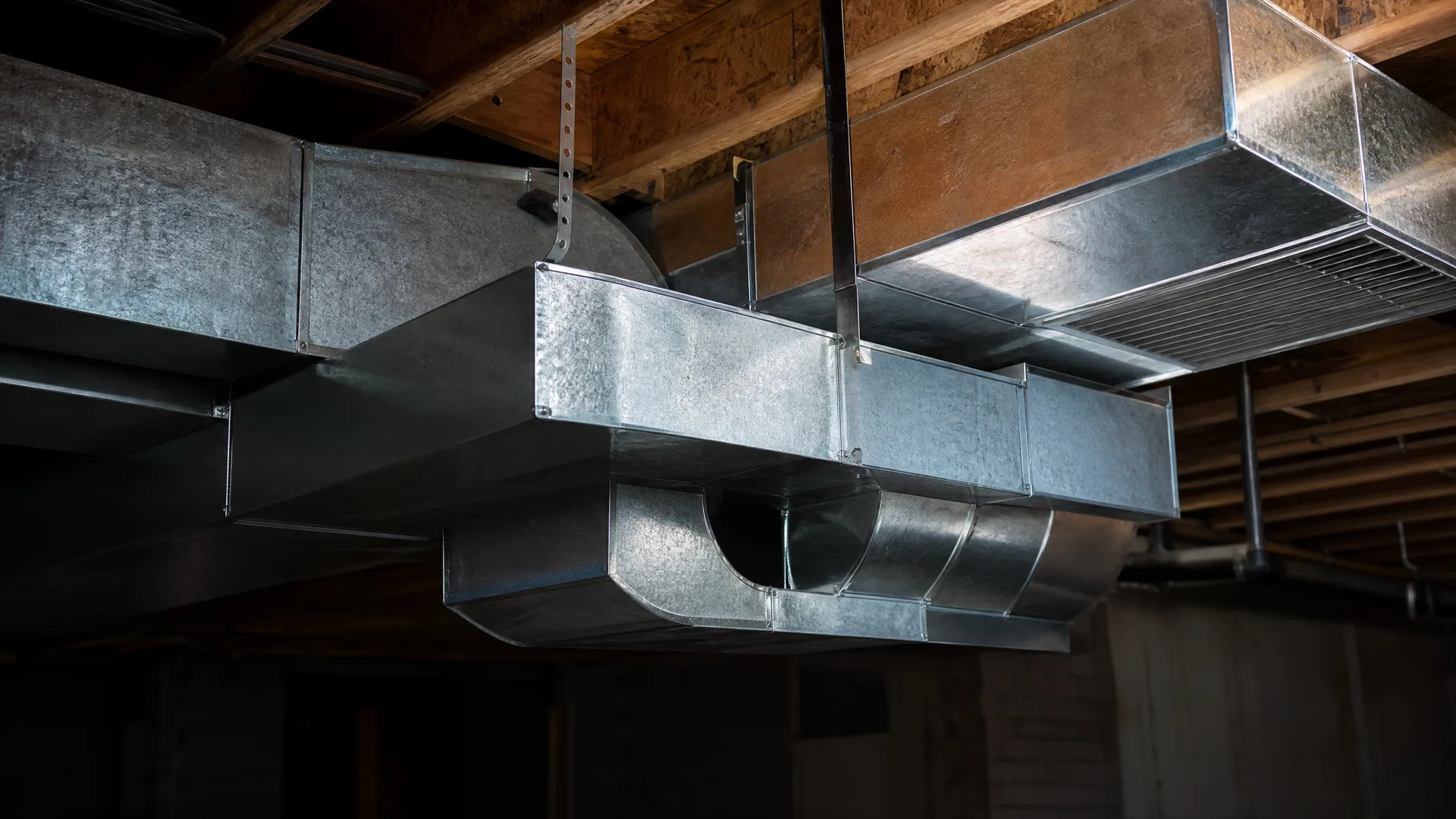
Galvanized sheet metal HVAC ductwork and round pipes running along an exposed wood-joist basement ceiling beside a plain white wall.

What actually collects in there

Ducts hold dust, pet hair, and whatever gets pulled in around a loose filter. A furnace filter catches most of what passes through it, but anything that slips by settles in the duct runs over months of the system cycling on and off. If a duct run was left open during any remodeling or if rodents or insects have gotten into it, a tech will find more than dust. None of that shows up by looking at a vent cover.

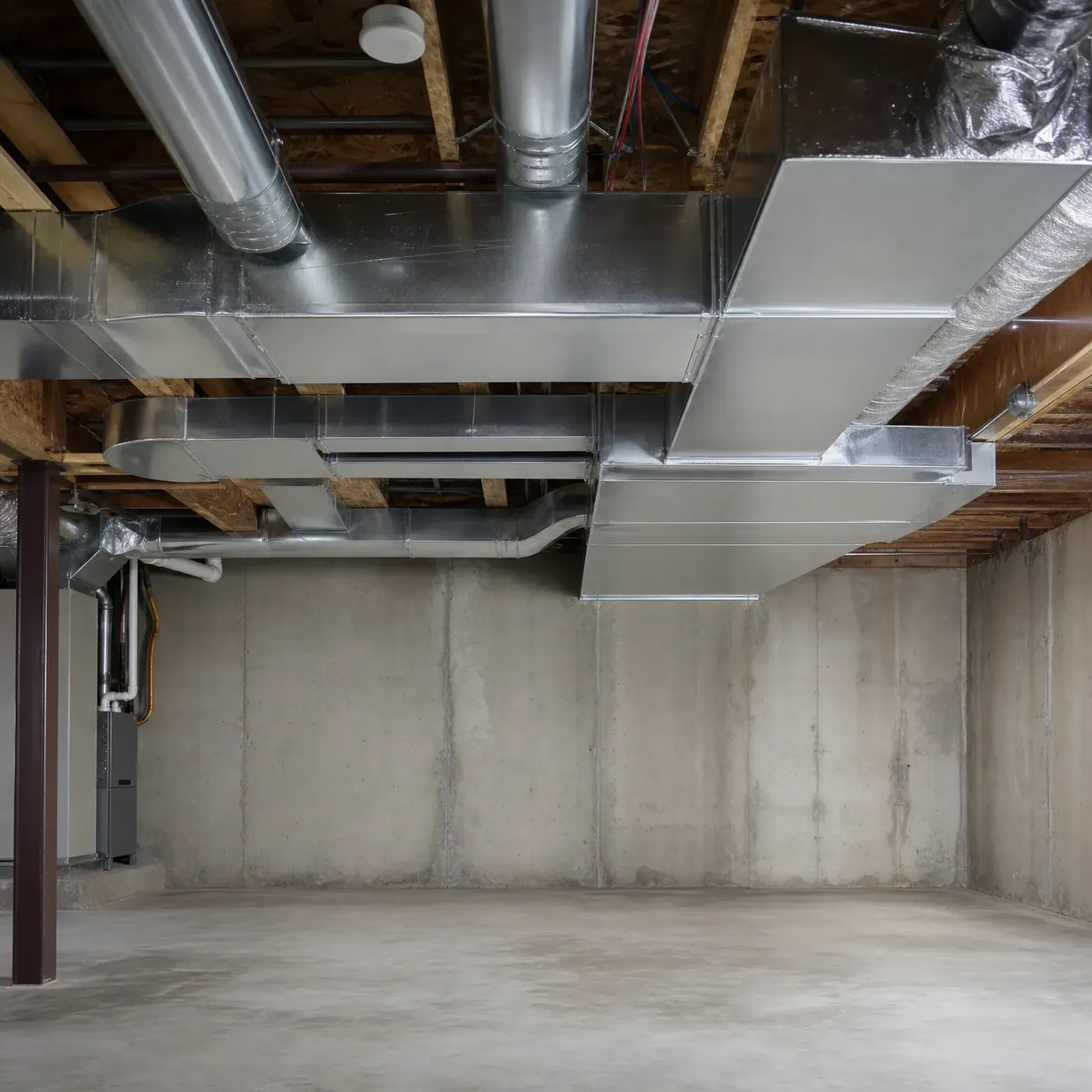
Galvanized sheet metal HVAC ducts and round pipes installed among wooden joists on a ceiling, beside a large blank white wall.

Why your setup changes the answer

Gas furnaces here run hard from fall through spring, and that moves a lot of air through the same ductwork all winter. A system with long duct runs, extra branches for additions, or returns in a basement near unfinished floor joists picks up more debris than a simple, newer layout. A tech who looks at your actual ductwork, not a generic system, is the only way to know if yours falls on the end where cleaning makes a real difference.

How much does your house use its ducts?

  • Half the homes here were built by 1966

    Half the homes in Black Hawk County were built in 1966 or earlier. An older duct system has had more years to collect dust in the runs, especially if it's never been cleaned.

  • Heat runs October through May

    Heat runs October through May here, about eight months out of the year. That's eight months of air moving through the same ducts, carrying whatever has settled in them.

  • Cooling runs June through August

    Cooling runs June through August. Those three months push air through the same runs from the other direction, so the system barely gets a break before heat season starts again.

ACS 2020-2024 · NOAA nClimDiv 1991-2020

How the cleaning actually works

  • A cleaning job runs the supply and return lines from the furnace to each vent, not just the vent covers you can see.
  • The tech hooks a vacuum collection unit to the system and uses a brush or air whip to knock buildup loose from the duct walls.
  • Negative pressure pulls the loosened dust into the collection unit so it leaves through the vacuum, not back into your rooms.
  • The furnace blower compartment, the coil, and the plenum get cleaned along with the duct runs since they're part of the same airflow path.
  • A return line near a basement or crawlspace tends to pull in more than a supply line does, so it often needs more work.
  • If the ducts have never been sealed, cleaning can also turn up gaps where conditioned air is leaking out between joints.

A tech doesn't just vacuum the vent covers and call it done. The job starts by sealing off each register so the whole duct system can be put under negative pressure, then a brush or an air whip gets fed into the runs to knock loose whatever's built up on the walls. That includes the long supply lines running from the furnace out to each room and the return lines pulling air back. As the buildup breaks free, the vacuum collection unit hooked to the system pulls it out through the ducts and into a container, so it isn't just getting stirred up and blown into your living room. Because the furnace blower, the coil, and the plenum all sit in that same airflow path, a real cleaning covers those too, not just the ductwork. Return lines tend to need more attention than supply lines, especially one that runs near a basement or crawlspace where more dust and debris gets pulled in to begin with. Sealing matters here too. If your ducts have never been sealed at the joints, a tech doing this work will often find gaps where air is escaping before it ever reaches a vent, which is worth knowing even apart from the cleaning itself. None of this is a quick wipe-down. It's a system-wide job that touches every part the air actually moves through.

Power here costs 11.96 cents per kilowatt-hour

At 11.96 cents per kilowatt-hour, power here is cheap next to most of the country. That matters for this question because a blower pushing air through clogged ducts is the same motor either way. Clean ducts don't cut your electric bill much when electricity itself is already low.

EIA-861 2025

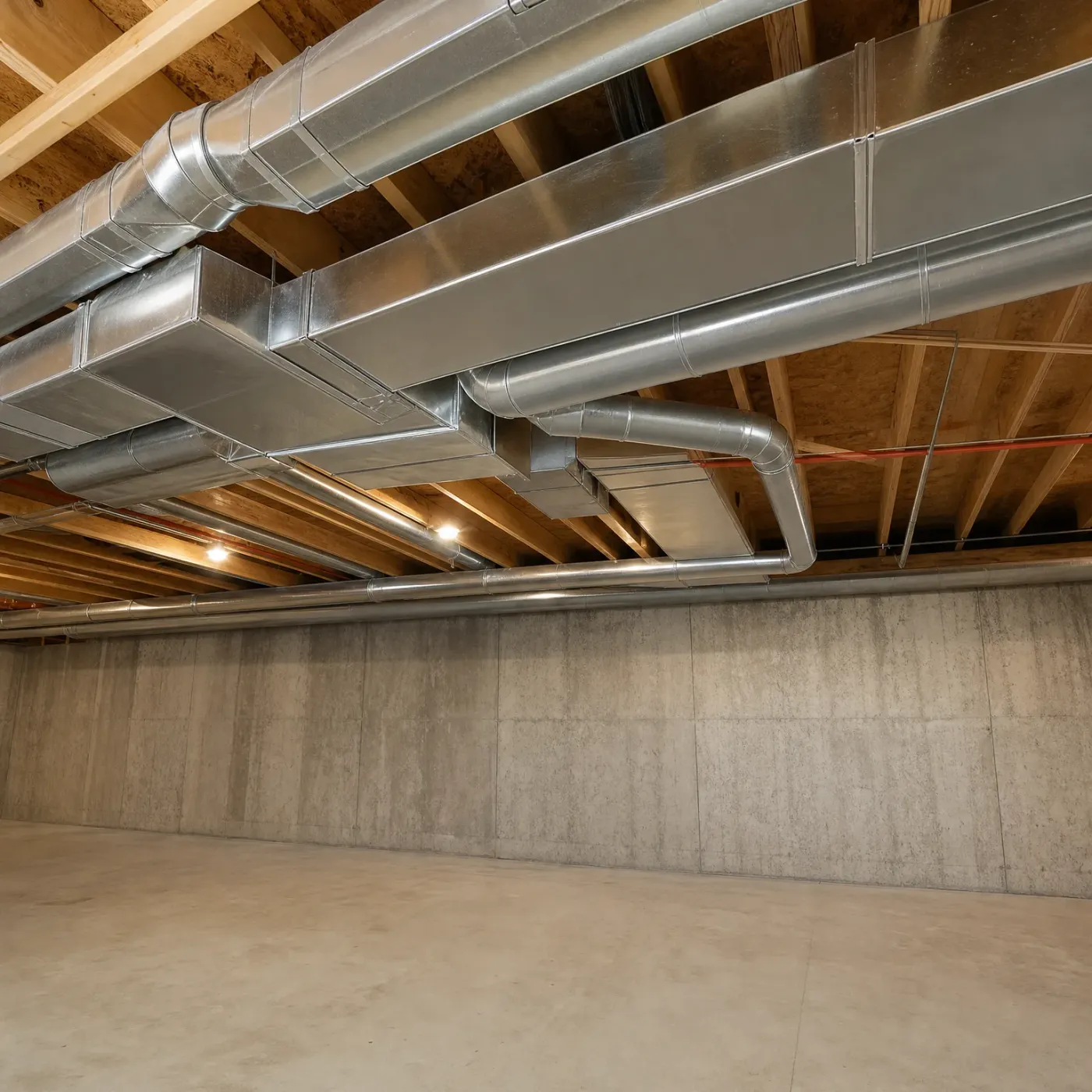
Unfinished basement with concrete walls and floor, a steel beam on posts, and exposed wooden joists with sheet-metal ductwork and piping overhead.

Ducts doing their job

This is what a duct system looks like when it's moving air the way it should. The runs stay put, joints stay sealed, and the furnace pushes air through without extra resistance. A tech who opens this up mostly checks for dust buildup, not a repair.


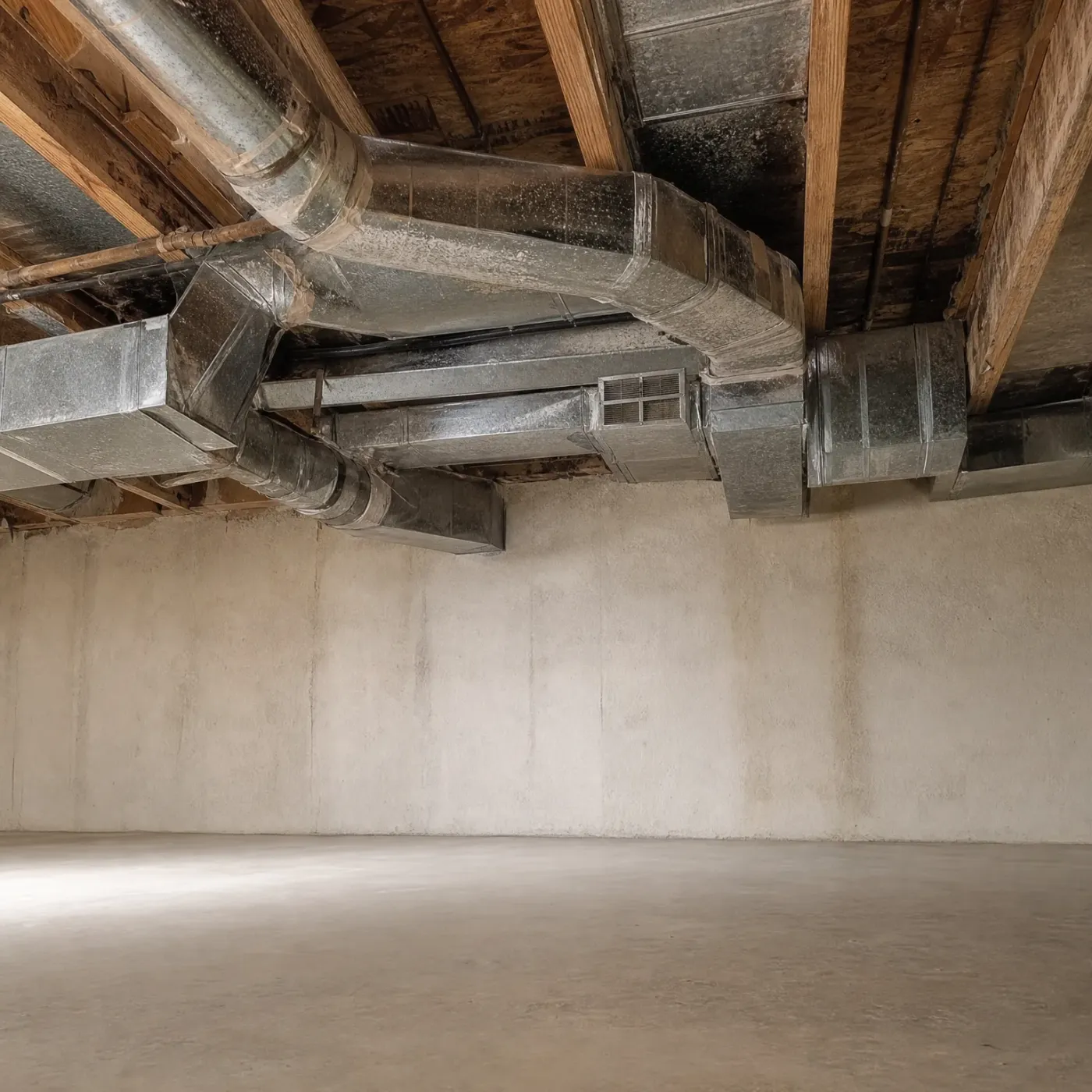
Unfinished basement with bare concrete walls and floor, and galvanized sheet-metal HVAC ducts, pipes and wiring running along the wood-joist ceiling.

Ducts under strain

Runs like this can hide loose connections, gaps where sections meet, or dust thick enough to narrow the airflow. A tech looking at this setup is checking two things: how much has built up inside, and whether the ductwork itself needs attention beyond a cleaning.

A smiling middle-aged man in a dark green sweater sits at a candlelit table with a glass of red wine and a bowl of salad in the foreground.
A woman in a cream knit sweater reclines on a beige couch with eyes closed and a slight smile, a gray hardcover book resting open on a textured blanket over her lap, with a lit table lamp and a leafy plant in the dim background.

Get matched with a duct system pro in Black Hawk County

You've read through what's in your ducts and what a cleaning actually involves. What's left is deciding whether to find out for your own house. That means a tech getting into your attic or basement, running a camera or hand into the ducts you can reach, and telling you straight whether there's buildup worth clearing or whether your system's fine as is. Most homes don't need to guess at this. A tech who's done hundreds of Black Hawk County houses knows what normal looks like for a furnace running October through May and can tell you in minutes whether yours matches it. Finding that tech yourself means calling a few companies, describing your furnace and your ducts to each one, and weighing quotes that may not even be looking at the same scope of work. Handing that off means one contractor who serves Waterloo gets your request and reaches out, and you're done with the calling around. Your ducts are either worth cleaning or they're not. Worth finding out which.

What a clogged return does to your furnace

A furnace pulls air through the return duct to feed the blower. When that duct is choked with dust and pet hair, the blower works harder to move the same amount of air, and the parts around it run hotter and longer to heat your house to the same temperature. Over a winter that runs October through May here, that's a lot of extra cycles on a motor that was sized for clean air flow. You might notice certain rooms never quite reach the temperature on your thermostat, or that the furnace runs longer stretches than it used to. Neither one tells you for certain that your ducts are the cause, but both are worth asking a tech to check.

What it means for the air in your house

If anyone in your house has allergies or asthma, what sits in your ducts matters more than what it costs to move. Dust and pet hair get pulled back into the airstream every time the blower kicks on, in a house that's heating or cooling most months of the year. You'd notice it as dust settling back on surfaces faster than seems right, or a musty smell when the furnace first starts up after sitting idle. A tech can tell you, by looking inside the runs, whether that's actually what's going on in your house or whether the cause is somewhere else.

Basement interior with galvanized rectangular and round sheet-metal ductwork and copper piping running below a wood-joist ceiling, above a concrete wall and bare concrete floor.
Before you get your ductwork cleaning
Unfinished basement with bare concrete walls and floor, exposed wood joists, and large sheet-metal HVAC ducts and pipes running along the ceiling.
After you get your ductwork cleaning

A house with a dog that sheds, a wood-burning stove kicking ash into the return, or a recent remodel that left drywall dust in the runs has something real for a cleaning to remove.

A house with none of that, a filter that gets changed on schedule, and no one in it with allergies has ducts that are probably just holding ordinary dust, the kind a cleaning moves around more than it solves.

A smiling woman with long dark hair in a gray sweater sits behind a white countertop holding a glass of red wine, with a dimly lit living room and dark kitchen island in the background.
A woman in a beige knit sweater with her hair up laughs while looking to the side, seated in a dimly lit living area with a sofa, windows and a kitchen counter behind her, a glass of red wine in the lower right foreground.
A woman in a black sweater laughs while seated at a light stone counter with a glass of red wine, in a dimly lit living and dining room with bookshelves, a table lamp and framed artwork behind her.
A smiling woman with long dark hair in a beige sweater sits at a granite counter with a glass of red wine, with a living room, fireplace and dining area behind her.

What made you start wondering about your ducts

Maybe a vent is blowing out more dust than it used to, or you can see it collecting on the cover when you wipe it. Maybe the air coming out smells stale when the furnace first kicks on, or someone in the house has been sneezing more since fall. Sometimes it's simpler than that. You pulled the filter and it was grey sooner than you expected, or you just moved in and don't know when the last owner had anything looked at. None of that tells you on its own whether cleaning is worth paying for. A clogged return can make your furnace work harder over time, which is the only real risk here, but a dusty vent cover doesn't mean the whole run is bad.

Unfinished basement with bare concrete floor and walls, showing galvanized sheet-metal HVAC ducts, pipes and recessed lights beneath a wood-joist ceiling.

Ducts doing their job

The runs stay tight to the joists, joints sealed, metal clean where you can see it. A furnace pulling air through ducts like this doesn't work any harder than it has to. A tech opening this up is mostly checking, not fixing.

An empty basement room with bare concrete walls and floor, with galvanized sheet-metal HVAC ductwork and a vent grille running along the wooden joist ceiling.

Ducts that have been ignored

Dust cakes the outside of the metal and darkens it, which tells you something about what's built up on the inside walls of the run too. Years without a cleaning, maybe a filter that didn't get changed often enough. This is the duct system that gets a tech's attention.

Whether duct cleaning is worth it in your Waterloo house comes down to what's actually built up in there, and you won't know that for certain until someone looks. A dog that sheds, a wood stove, a remodel, a filter that never gets changed on schedule, an older system that's gone years without attention, any of those give a tech something real to find. A newer system with a clean filter history and no dust complaints usually doesn't. Figuring out which one describes your house means calling around to find someone who'll actually come look, explaining what you're seeing on the phone, then doing it again with the next company so you've got something to compare. That part isn't necessary. You already know what to watch for and what questions matter once a tech is standing in your basement with a camera. What's left is getting the right person there to tell you, for your house, if it's worth the money.

Galvanized sheet metal HVAC ductwork with rectangular trunks and round takeoffs suspended from wooden floor joists in an unfinished basement ceiling.

Find a duct system cleaning pro in Black Hawk County

Duct and vent cleaningDucts or ventsBlack Hawk County, IA
Step 1 of 2

What ZIP code is the job in?