



Signs your ducts need cleaning in Waterloo, IA

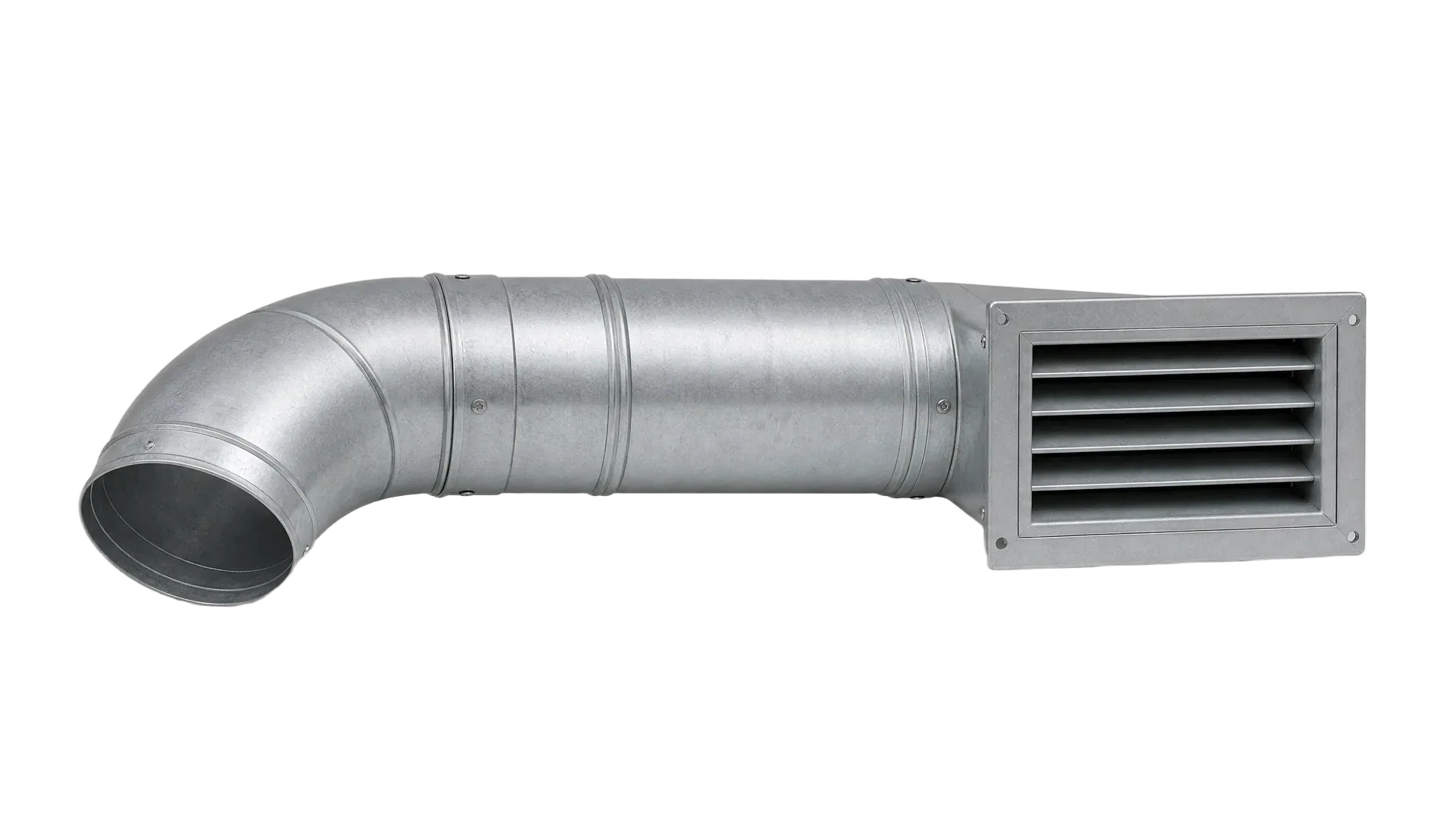
A galvanized metal round duct with a 90-degree elbow connected to a rectangular louvered vent grille, shown against a plain gray background.
Get matched

Dust coming back within a day or two of cleaning, a musty smell when the furnace or AC kicks on, and more sneezing indoors than out are the clearest signs your ducts need attention. In Waterloo, the furnace runs hard all winter and the AC runs hard through the muggy stretch of summer, and that nearly constant airflow pulls household dust, pet hair and whatever gets in through the attic or crawlspace into the ductwork, where it builds up on the inside walls of the trunk lines and branches. You might also notice weak airflow from some vents compared to others, or see dust marks around the vent covers themselves. If your filter is getting dirty faster than it used to, that is often the ducts feeding dust back into the system rather than catching it. None of this means the equipment is failing. It means the duct system is overdue for a real cleaning, and that is worth having looked at before another season of heavy use.

Why does duct dust build up so fast in a Waterloo home?

  • Half the homes here were built by 1966

    Half the homes in the county were built in 1966 or earlier. If yours is one of them, check how old the ductwork is, since older runs collect more buildup over the years.

  • Heat runs October through May

    Heat runs eight months a year here, October through May. That's eight months of air pushing through the same ducts, carrying dust onto every surface it passes.

  • Cooling runs June through August

    Cooling runs June through August. The system barely gets a break before the furnace starts again, so dust that settles in summer gets stirred up all winter.

ACS 2020-2024 · NOAA nClimDiv 1991-2020

When it's dust, when it's not

Dust on the vent covers and a bit of buildup near the register is normal in any house. That's surface dust, and a rag handles it. What points to the ducts themselves is dust that settles again fast after you've wiped everything down, or a layer forming inside the first few inches of the duct when you look in with a flashlight. If you pull a vent cover and see matted dust along the inside walls of the duct, not just on the grille, that's buildup the furnace and AC have been blowing through for a while, not a one-time thing.

When it's the ducts, when it's not

A musty smell when the furnace or AC first kicks on and then fades is often the ducts. A smell that lingers the whole time the system runs, or shows up near one specific room, points somewhere else, maybe a damp crawlspace or a leak near that register. Sneezing that's worse indoors than out suggests what's in the ducts is getting circulated through the house. Sneezing that follows you room to room regardless of whether the air is running points to something else in the house, like a pet or carpet, rather than what's in the ductwork.

An older man with gray hair and a beard stands in a dimly lit entryway wearing a dark hooded coat dusted with snow, with a lit table lamp, framed picture, and front door with glass panels behind him.
An older man with gray hair and a beard, wearing a dark snow-dusted jacket and scarf, stands smiling in a dimly lit entry hall with a lamp, wooden front door and staircase behind him.
A gray-haired bearded man in a dark coat with snow flecks on the shoulders stands just inside a dimly lit home entryway, with a lamp, framed pictures, sofa and candle-style lights in the background.
An older man with gray hair and a beard, wearing a dark coat and scarf dusted with snow, stands in a warmly lit home entryway with an arched doorway, lamps, and a living room visible behind him.

A furnace that runs eight months a year pulls air through the same ducts thousands of times. Whatever is sitting in those ducts, the system keeps moving it into every room, all winter and most of the summer too.

That's why the dust comes back so fast after you clean the registers. The ducts behind them are still loaded, and the furnace puts it back in the air before the week is out.

Power here costs 11.96 cents per kilowatt-hour

Power here runs 11.96 cents a kilowatt-hour, cheap enough that most people don't think twice about running the blower longer. If your ducts are dirty, that fan is still pushing air through buildup every time it kicks on, winter and summer. Cleaning them doesn't change the rate, but it means the air moving through your house for that price is actually clean.

EIA-861 2025

What you notice day to day

A room that never quite feels as clean as the rest, even right after you've dusted it. A sneeze or two at the desk or in bed that stops once you're out running errands. Vents that leave a faint ring of dust on the wall or ceiling near them. None of this is dramatic. It's the kind of thing you get used to and stop noticing, until a cleaning gets done and you realize how much was settling into the air every time the furnace or AC kicked on.


What it means for your system

The blower doesn't care what it's pushing, dust and all, through the same runs thousands of times a winter. That buildup doesn't slow the furnace down in a way you'd feel, but it means the filter is catching more than it should and working harder to do it. Over a full winter and summer of runtime, that's a lot of cycles moving the same buildup around. Cleaning the ducts out means the air moving through your house is the only thing the blower has to work with.

A woman wrapped in a thick fleece blanket sits on a sofa holding an open book, beside a lit table lamp and a frost-covered dark window.
A smiling older woman with gray shoulder-length hair in a cream cable-knit turtleneck sweater stands behind a wooden board holding a round loaf of bread, in a warmly lit kitchen with a dark window and shelves behind her.
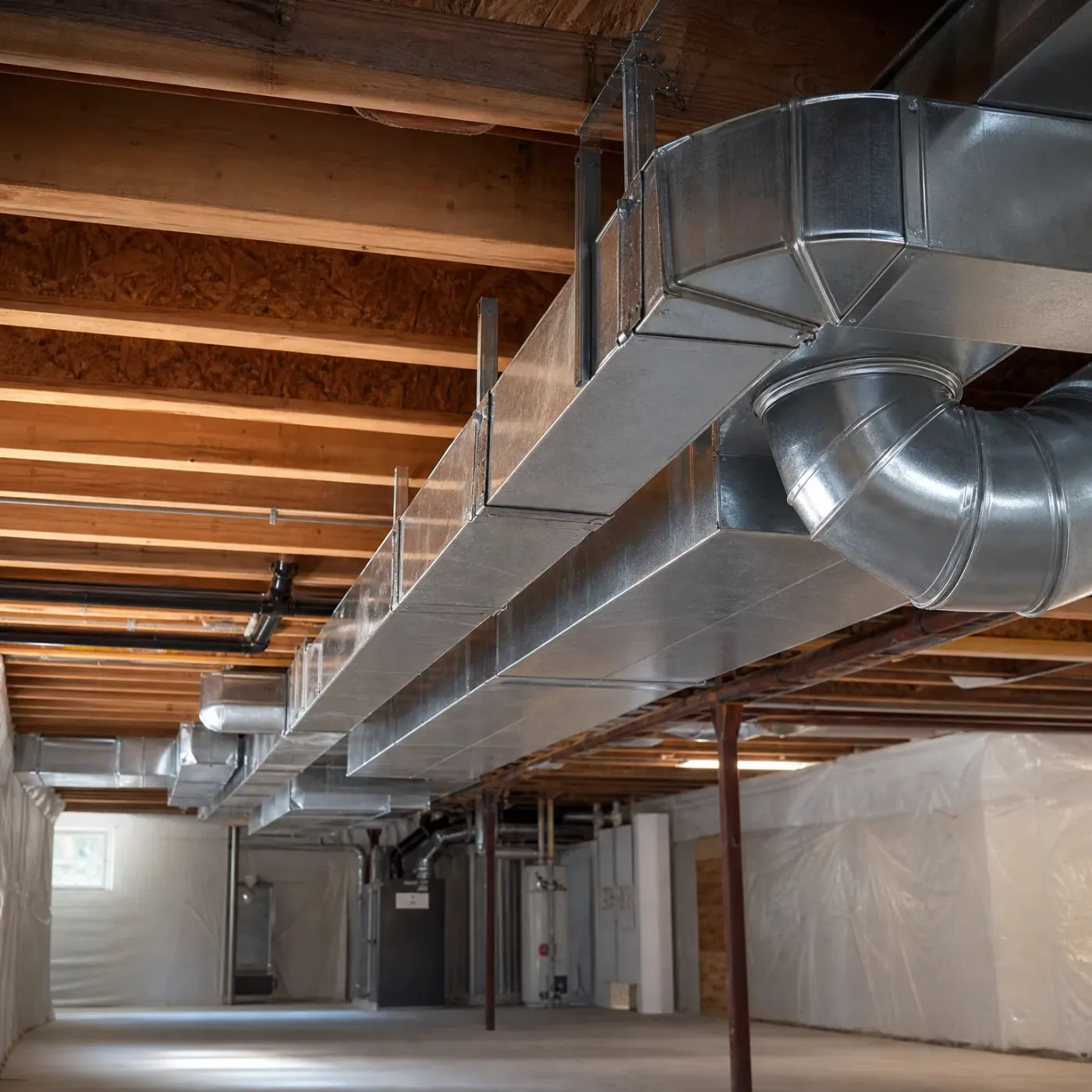
Unfinished basement with galvanized sheet-metal trunk ductwork and round branch ducts suspended beneath wood floor joists, with support posts, plastic sheeting on the walls, and a furnace and water heater along the far wall.

Get matched with a duct system pro in Black Hawk County

The pro who gets in touch is licensed in Iowa and works in Black Hawk County.

Your request goes to a Black Hawk County pro who takes ductwork jobs.

Find a duct system pro

Sending the form costs nothing.

Does this sound like what's happening in your house?

Walk through your own place and check for this. A windowsill or TV stand that's dusty again a day after you wiped it down. A closet or spare room that smells a little musty once the furnace kicks on, even though nothing in there got wet. Waking up stuffy or needing the inhaler more at home than anywhere else. Vents with a dark ring of dust around the edges, or a vent cover you haven't pulled off and cleaned in years. None of these mean your house is dirty. They mean the air moving through your ducts is carrying more than it should, and everyone breathing it knows before they can explain why.

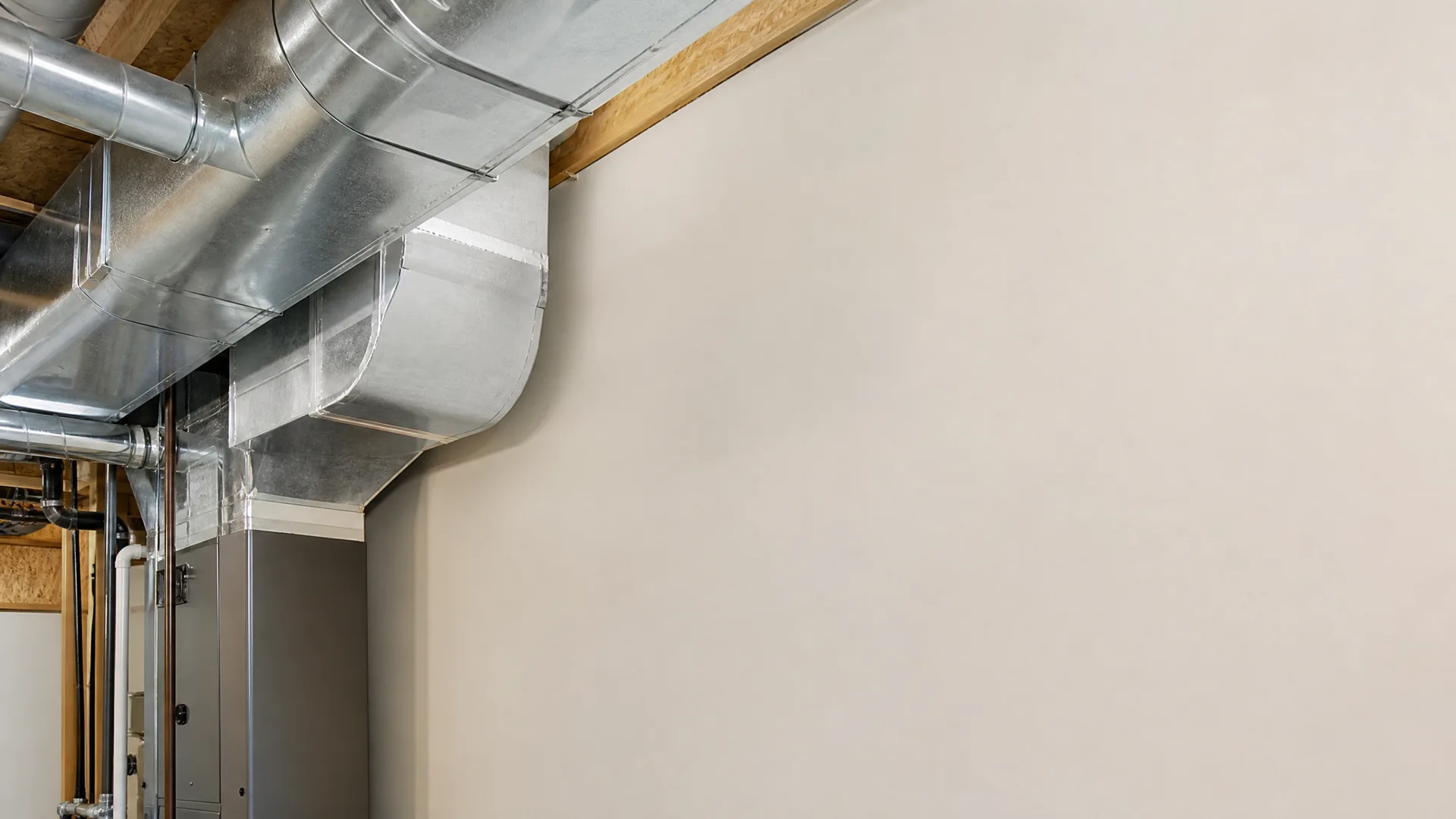
Galvanized sheet-metal ductwork and pipes running along an unfinished basement ceiling beside a plain beige wall, with a gray equipment cabinet below.

A house that's never run its ducts cleaned

Plenty of homes in Black Hawk County have never had this done. Dust still settles like it does anywhere, but it clears with a wipe and stays gone for a while. The furnace and AC move air through the ducts same as always, and there's no smell when either one kicks on. If that's your house, there's nothing here that needs fixing. Cleaning solves a problem, and a house like this doesn't have the problem yet.

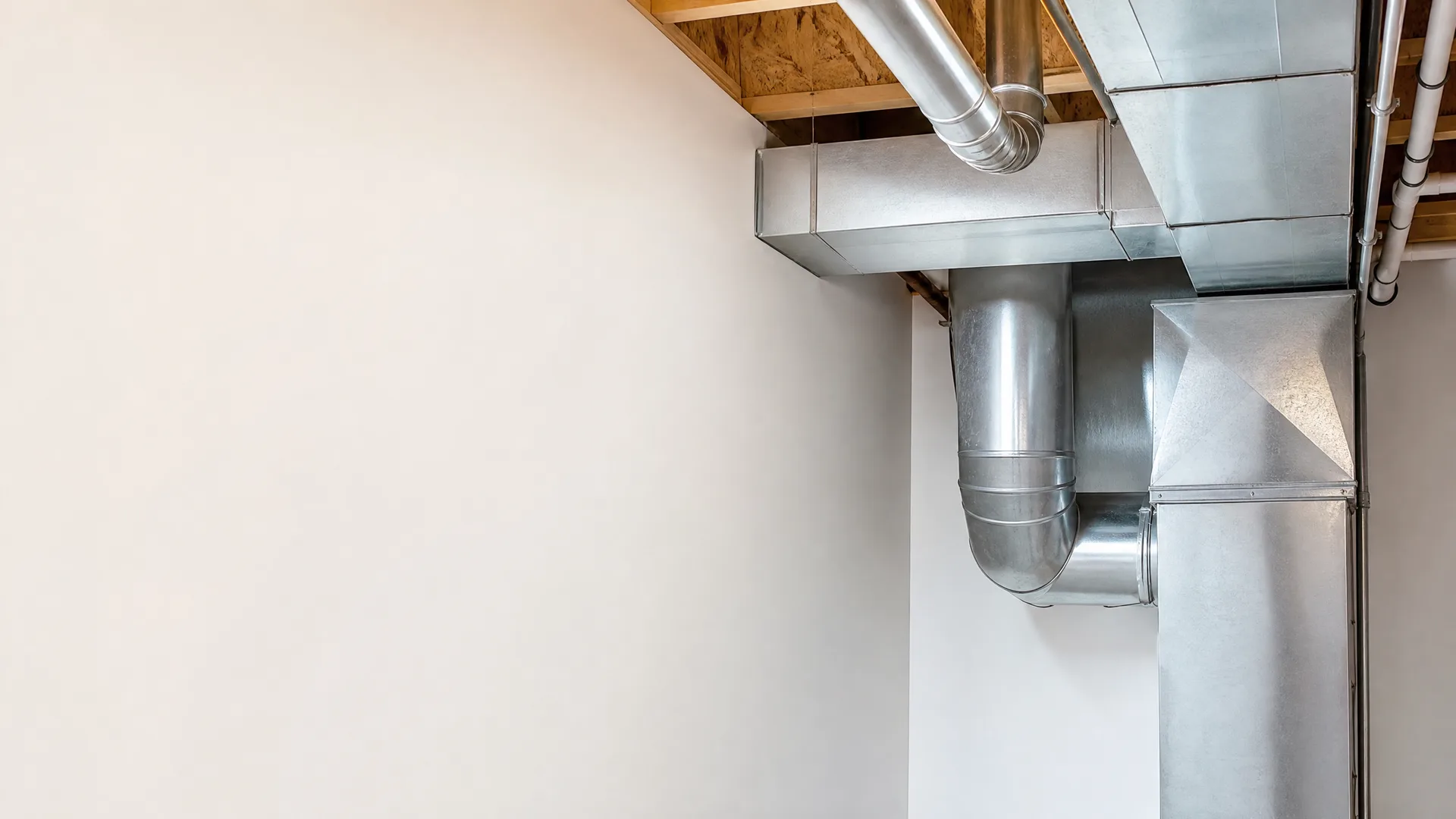
Galvanized sheet metal rectangular and round HVAC ducts running along a ceiling and down a white interior wall, with exposed wood joists and subfloor above.

A house where the ducts are overdue

Other homes reach a point where wiping a surface doesn't hold. The dust is back within a day, the musty smell shows up every time the furnace starts, and somebody in the house is sneezing more indoors than out. Ductwork that's older, or that's never been cleaned since the house was built, gets to this point sooner. Once you're seeing two or three of these at once, the ducts are the reason, not the house.

How does a duct cleaning crew actually clean the ducts?

You've gotten this far and you're wondering what actually happens the day a crew shows up. It's fair to want to know before you commit to it, since it's not like cleaning a filter yourself. Knowing the real process also tells you what to expect for noise, mess and how long someone's in your house working on it.

A crew hooks a vacuum to the ductwork and brushes or air-whips each run while the system pulls everything to one point

A duct cleaning crew connects a powerful vacuum to the trunk line, usually through an access cut near the furnace, so the whole system is under negative pressure. Then they go register by register, running a brush or a compressed air tool through each branch to knock loose what's stuck to the sides. Everything that gets knocked loose gets pulled toward the vacuum instead of landing back in the room. They work through the supply side and the return side both, since dust and pet hair collect in both. The furnace blower compartment and coil usually get a pass too, since that's another place buildup sits and gets pushed into the air every time the system runs.

Unfinished basement with exposed wood joists, galvanized sheet-metal ductwork, insulated flex ducts, piping, a small window, and a furnace or air handler against a gray wall.
Clean steel ducts and flex runs overhead, with the furnace tied in and nothing hanging loose or coated.
Empty basement room with bare concrete walls and floor, and an exposed ceiling of wooden joists with large galvanized sheet-metal ductwork and pipes.
Bare joists and open metal ducts with no insulation or finish, the kind of run that holds onto whatever passes through it.

Doing it yourself or calling a crew

Clean them yourself

  • Swapping the filter every month or two handles the dust that's actually airborne, and it costs almost nothing.
  • Vacuuming the vent covers and the first foot or two of visible duct behind them catches the dust you can reach.
  • A wipe-down of registers and the area around them keeps surface dust from building up between furnace cycles.
  • This only reaches what you can see and touch, so buildup further back in the runs stays put.
  • If the musty smell or the fast-returning dust keeps up after a few weeks of this, the problem is further into the ductwork than a rag can reach.

Have a crew clean them

  • A crew runs equipment into the full length of the ducts, not just the first foot behind the register.
  • They can show you what's actually in there, often with a camera, before and after the job.
  • This reaches the buildup that's been feeding dust back into the rooms all winter and all summer.
  • A local contractor who works on Waterloo ductwork every season knows what tends to build up in runs like yours and where it collects.
  • Matching with one contractor instead of several means one crew looking at your actual ducts, not a round of competing bids.
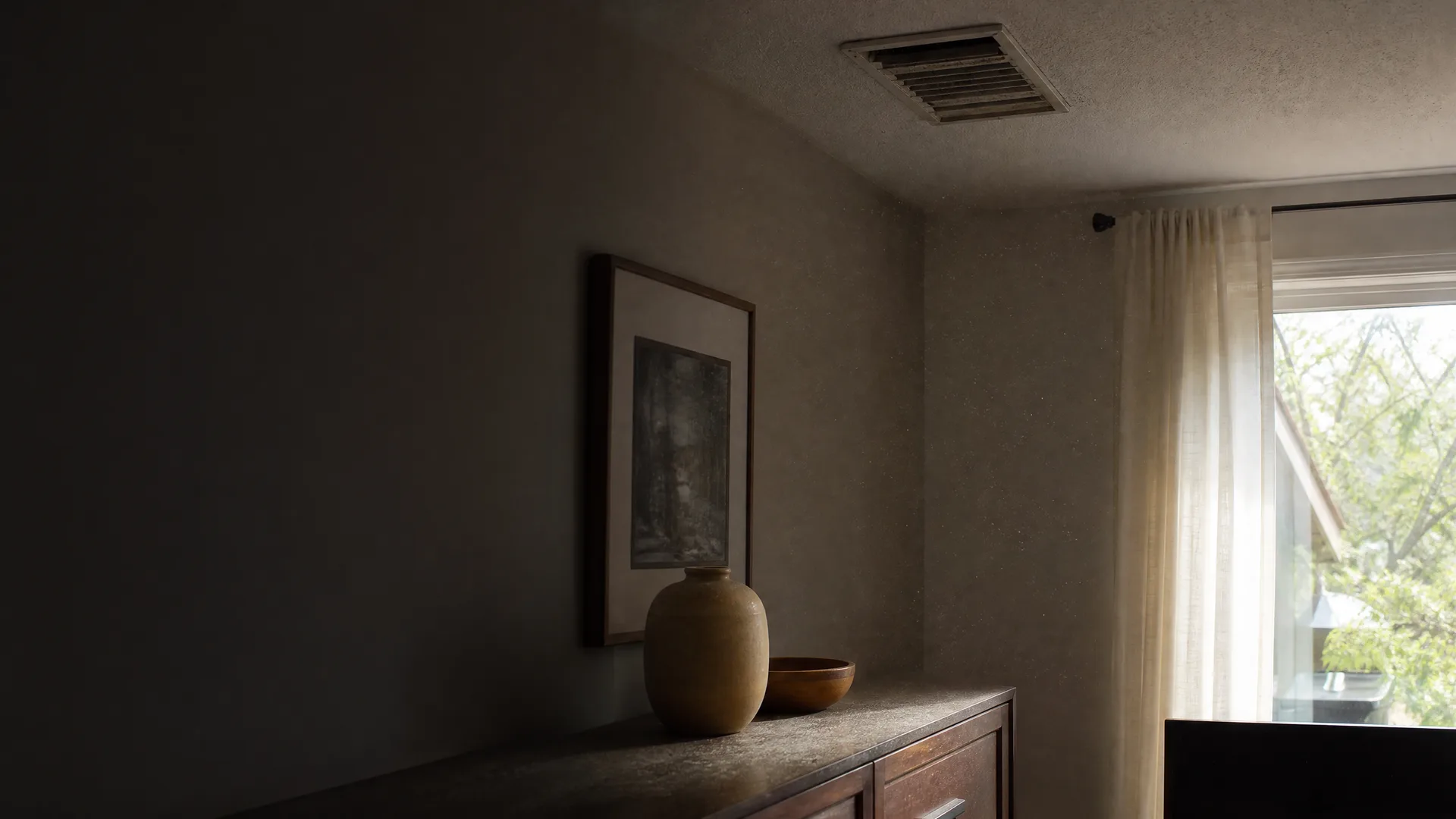
Dim room corner with a framed picture on a textured wall above a counter holding a tall ceramic vase and a shallow wooden bowl, with a sheer curtain beside a window and a ceiling air vent overhead.

Spring sun comes in low through the front window and lands right on the ceiling vent. You see it before anything else, a gray film across the grille, thicker than you'd expect for a room you vacuum every week. The side table underneath has that same dust, a fine layer that wasn't there when you dusted it Sunday. You run a finger along the slats of the grille and it comes away dark. The furnace kicks on behind you, and a second later a little more dust settles on the lamp shade next to the table. You dusted this room four days ago.

A man in a dark jacket and khaki pants walks through an open gate in a stone wall toward a woman standing in the open front doorway of a single-story white house with a dark shingled roof and river-rock accents.

So where does that leave you

If dust is back fast, if a room smells musty when the system kicks on, if you're sneezing more at home than away from it, that's your ducts telling you something. Check your own place against that before you decide anything. Some houses go years without needing this. Others, especially with older ductwork, show it plainly once you know what to look for.

If what you found matches, the next step is getting someone local to look at it directly, someone who works on ductwork in this county every season and has seen what eight months of heat and a muggy summer does to a system like yours. A contractor who knows your situation can tell you in person whether it's buildup or something else, and you'll hear from just that one.

A mug and a small round vase sit on a wooden windowsill beside sheer and heavier curtains, with blurred autumn trees seen through the rain-speckled window and a sofa with cushions and a throw in the foreground.
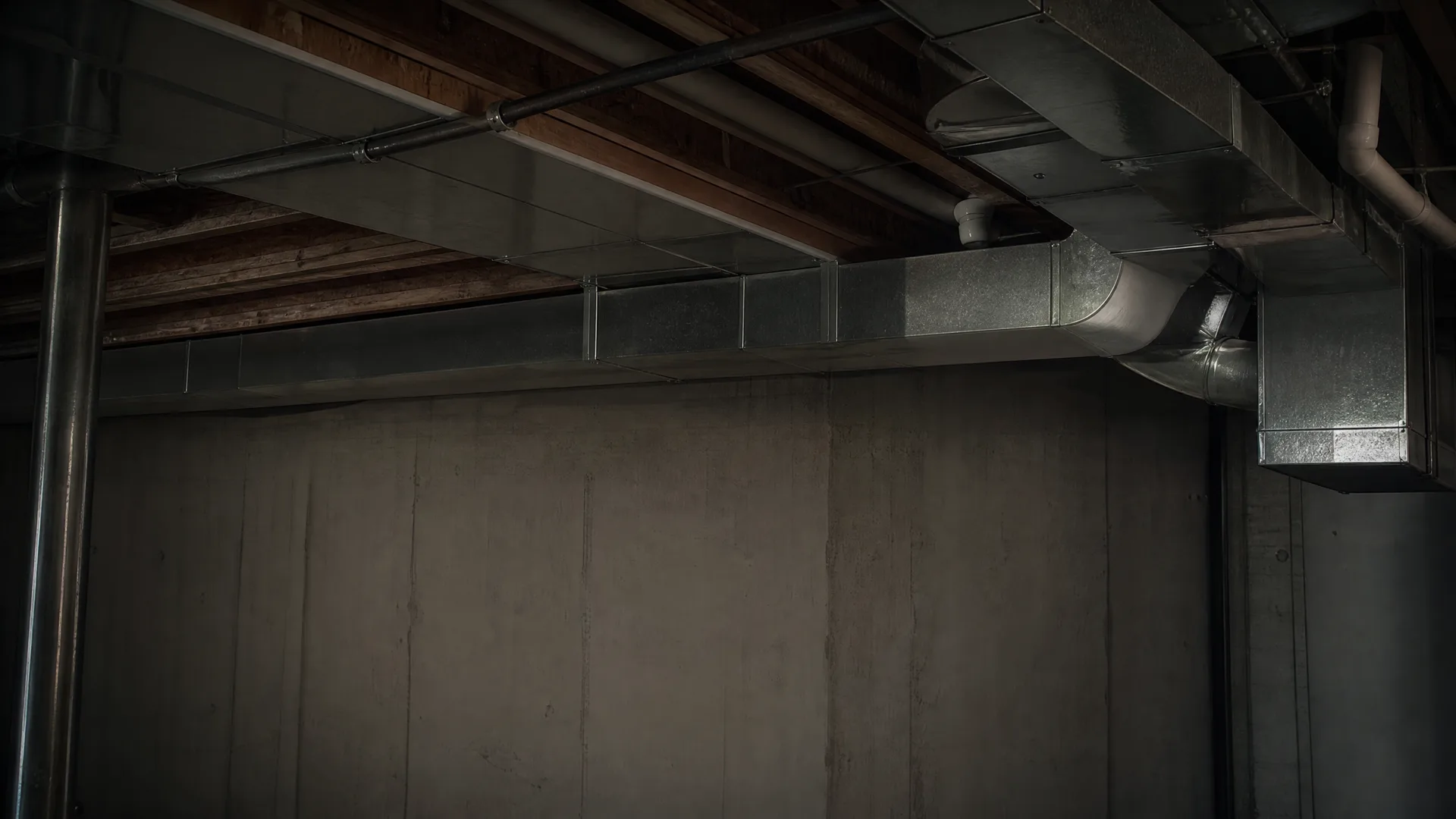
Dimly lit basement interior with galvanized sheet-metal ductwork and round pipes running along wooden floor joists above a bare concrete wall.

Find a duct system cleaning pro in Black Hawk County

A licensed pro who works in Black Hawk County gets your request.

Duct and vent cleaningDucts or ventsBlack Hawk County, IA
Step 1 of 2

What ZIP code is the job in?