Signs of leaky ductwork in Des Moines, IA

A galvanized steel round duct with a 90-degree elbow and a white louvered vent cover on one end, shown against a plain gray background.
Match me with a pro

What are the signs of leaky ductwork in my house?

You've noticed a few things lately. Maybe a room upstairs never seems to cool off, or your gas bill crept higher than it should have. You're wondering if the ductwork running through your attic or crawl space is to blame. It's a fair question, because ducts are hidden, and nobody wants to tear open a wall just to check.

Uneven temperatures, high bills and dusty rooms point to leaky ducts

Leaky ducts show up as rooms that never match the thermostat setting, a furnace or AC that runs longer than it used to, and a gas or electric bill that climbs without a clear reason. Dust settling fast after you clean, or a musty smell near vents, can mean the ducts are pulling in air from the attic or crawl space instead of just moving conditioned air. This happens because joints and seams in duct runs separate or loosen over the years, and the air you paid to heat or cool escapes before it reaches the room. In Polk County winters, that loss falls on a gas furnace working harder to keep up. In summer, it means muggy rooms even with the AC running.

An older man with gray hair and a beard, wearing a dark snow-dusted jacket and scarf, stands smiling in a warmly lit interior hallway with a lit table lamp, a vase of dried branches, and a framed picture in the background.
An older man in a dark snow-flecked overcoat and scarf stands smiling in a warmly lit home entryway, with a glass-paned door showing darkness outside and a lamp-lit room visible through a doorway behind him.
An older man with grey hair and a beard, wearing a dark coat dusted with snow, stands in a dimly lit entryway with a ceiling lamp, a side table with two shaded lamps, and a lit fireplace visible in a room beyond.
An older man with gray hair and a beard, wearing a dark coat dusted with snow, stands smiling in a doorway of a warmly lit home with a sofa, lamp and window visible behind him.

Why would your ducts be losing air in the first place?

  • Half the homes here were built by 1982

    Half the homes in Polk County were built in 1982 or earlier. Duct joints and seams loosen with age, and a house that old is due for a look.

  • Heat runs October through May

    Furnace air moves through your ducts about eight months a year here, October through May. That's a long stretch for a leak to waste.

  • Cooling runs June through August

    Your AC pushes through the same ducts June through August. A leaky duct makes it work harder for three months straight, in the heat.

ACS 2020-2024 · NOAA nClimDiv 1991-2020

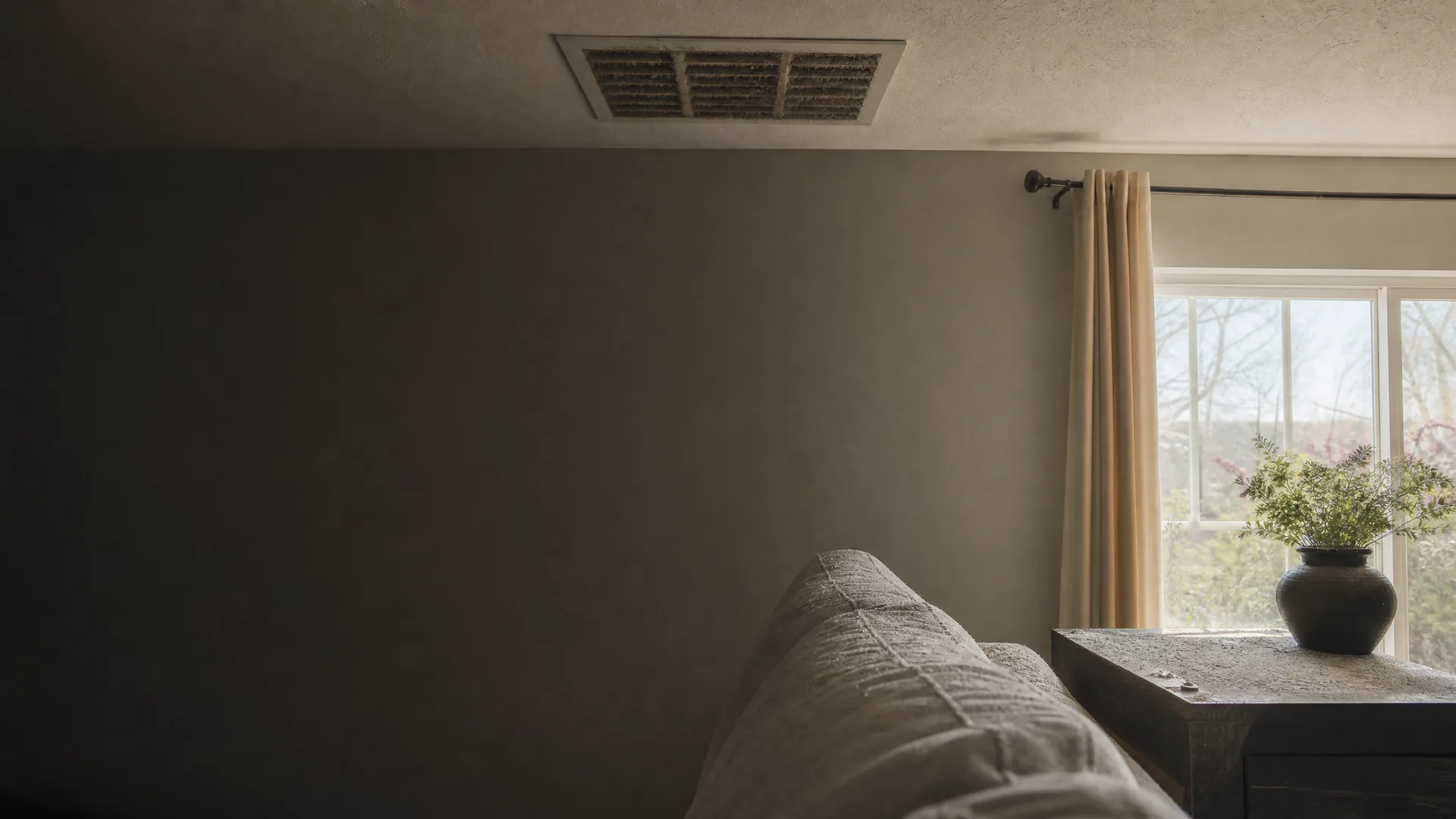
Dim interior corner of a room with a ceiling air vent, a beige wall, a cream curtain beside a window showing bare trees, and a dark ceramic vase of flowers on a wooden side table behind a light upholstered sofa back.

You're dusting the living room on one of the first warm days of spring, windows cracked for the first time since fall. You notice the ceiling vent hasn't been cleaned in a while, a gray ring of dust around the grille, more of it settled on the bookshelf and the top of the TV below it. You wipe it down, and by the next week it's back. The furnace stopped running months ago, but the blower still kicks on with the AC now, pulling attic dust in through a loose seam and pushing it straight into the room. You notice it most here, right under the vent, where the air lands first.

Leaky Ducts or Dirty Ducts

Leaky Ducts

  • A room at the end of a run stays warmer or colder than the rest of the house no matter where you set the thermostat.
  • Your furnace or AC runs longer each cycle because air is escaping before it reaches the vents.
  • Dust gathers faster than it used to, pulled in through gaps where ducts run through the attic or crawl space.
  • Gas and power bills climb even though you haven't changed how you use the house.
  • A duct joint you can reach feels loose or has separated slightly from the trunk line.
  • The attic or crawl space feels noticeably warm in summer or cold in winter near where ducts run through it.

Dirty Ducts

  • Vents blow out a visible puff of dust when the system first kicks on.
  • A gray ring builds up around the grille even on vents you clean regularly.
  • Airflow feels weak at the vent itself, not just uneven room to room.
  • You notice more dust settling on furniture and shelves than you remember from past years.
  • Someone in the house has started sneezing or coughing more since the heat or AC kicked on.
  • The return air grille has a visible layer of buildup across the screen or grate.
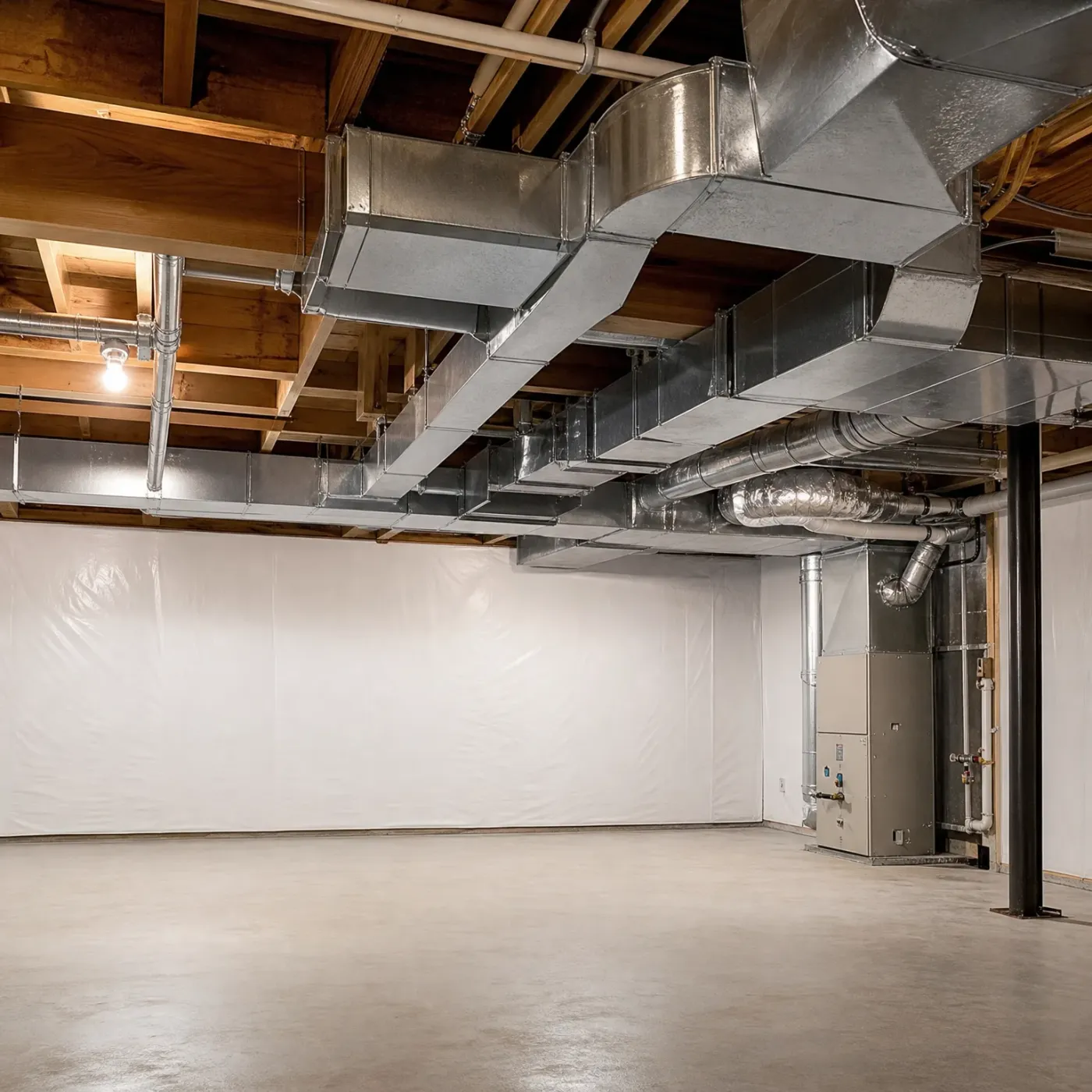
Empty basement with bare concrete floor, white plastic sheeting over one wall, exposed wood joists, galvanized sheet-metal ductwork and pipes overhead, and a furnace unit with a steel support column at right.

Ductwork Doing Its Job

Trunk lines run tight along the joists, each seam sitting flush where it was formed. Air moves from the furnace to the branch lines without a gap to slip through. A basement like this keeps you from wondering where your heat is going, because none of it is going anywhere but up through the vents.
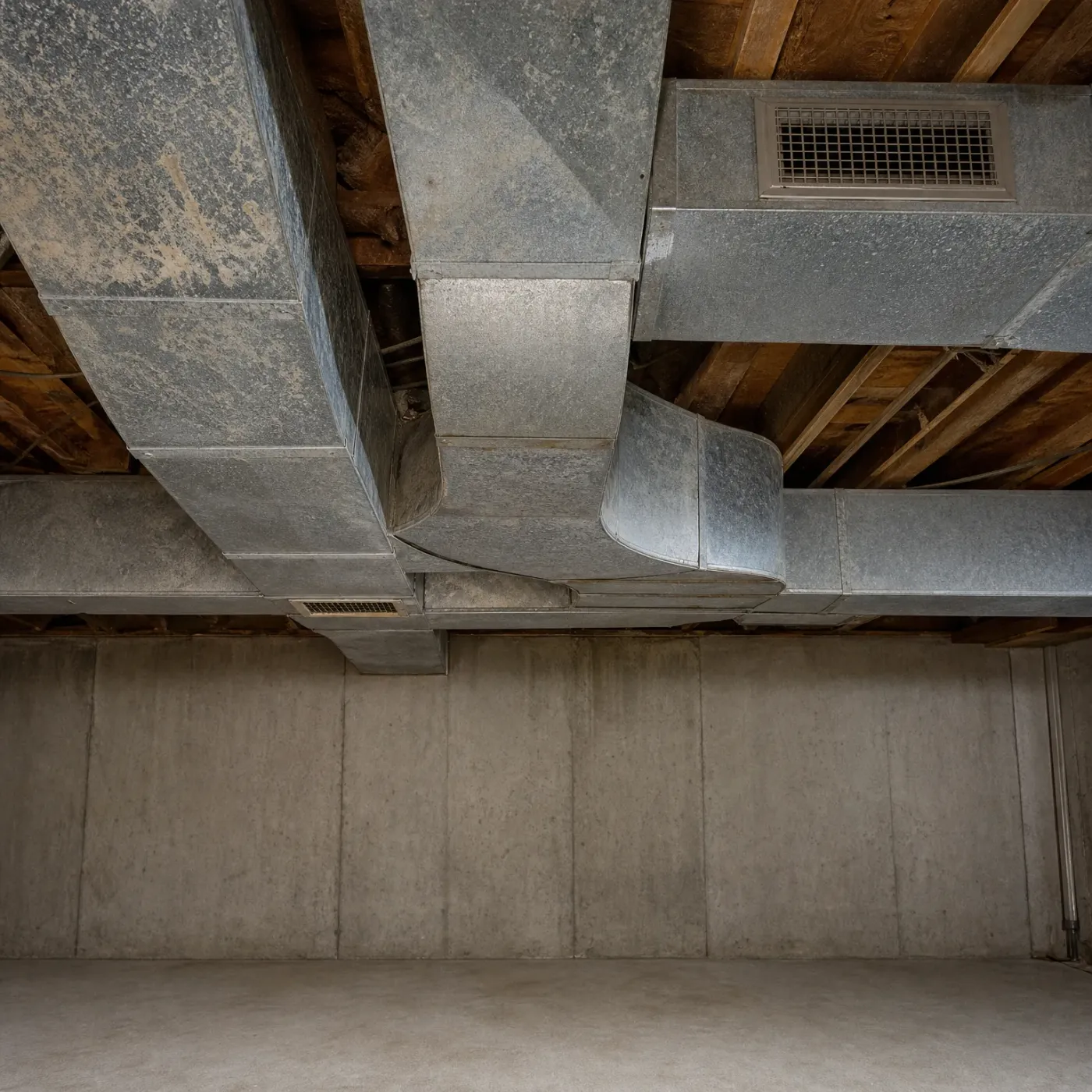

Galvanized sheet metal HVAC ducts with vent grilles run along a wooden floor joist ceiling above bare concrete walls and floor in an unfinished basement.

Ductwork Losing Air

Follow this run and you can see where the metal was cut and turned without being sealed back up. Every joint and elbow is a place for conditioned air to leak into the basement instead of reaching the register. The two vents feeding this stretch are only getting part of what the furnace sent.

What's actually going on with your ducts

Walk the house room to room with your hand near each vent. A weak flow where you used to feel real air movement is one sign. So is a supply line in the attic or crawl space that feels warm to the touch in summer or warm in a basement where it shouldn't be in winter, because that means conditioned air is leaking out before it reaches the room. Check the ductwork itself where you can see it. Flex duct sagging between joists, foil tape peeling back at a joint, or a seam you can slide a finger into all point to the same problem. A gas furnace working to make up for lost air runs longer, and in a house that already needs it every winter, that adds up on the bill month after month.

  1. A tech checks static pressure at the furnace and at the vents.

  2. A smoke pencil or fog at each seam shows where air escapes.

  3. Duct blaster test pressurizes the system to measure total leakage.

  4. Mastic sealant and metal tape close joints found to be leaking.

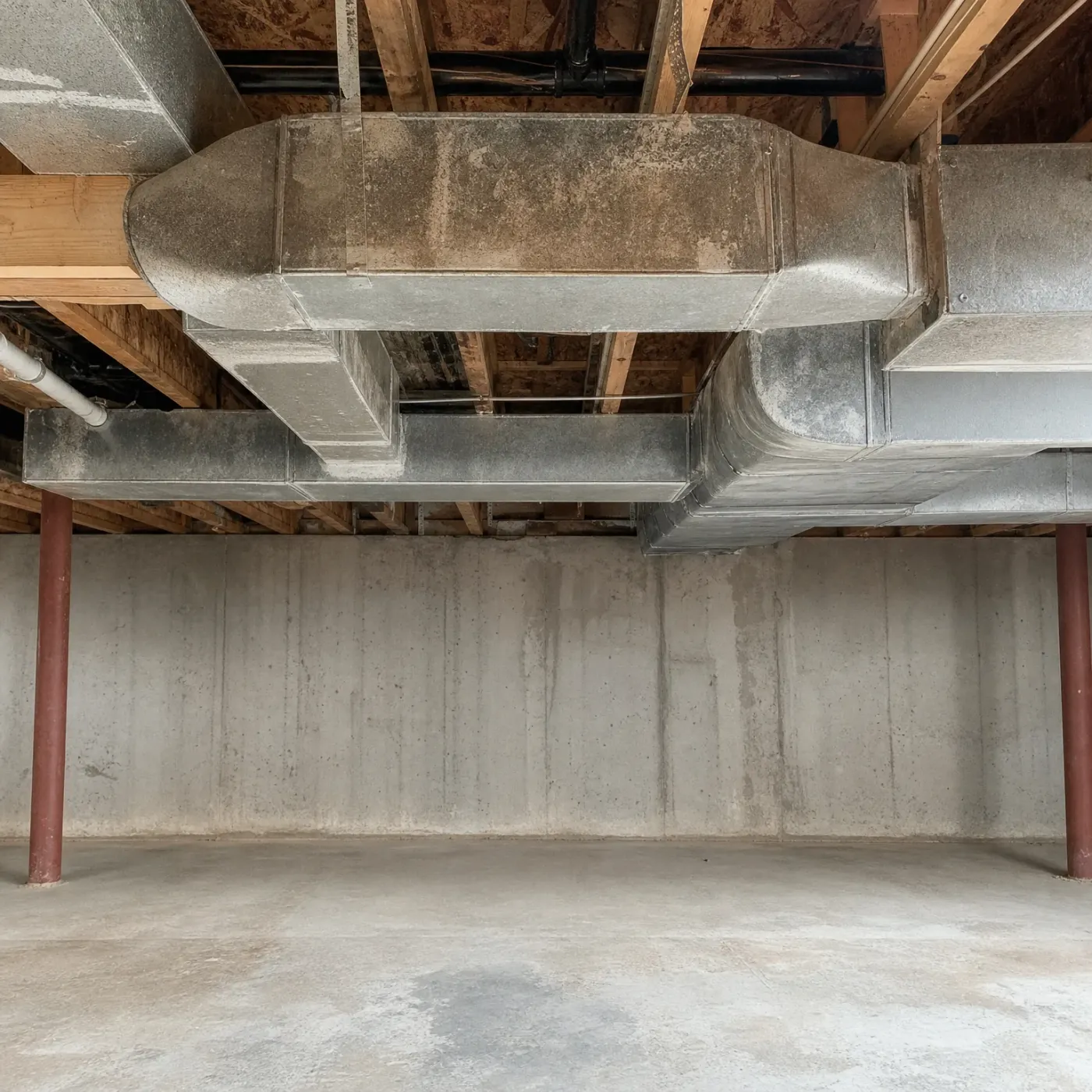
Unfinished basement with bare concrete walls and floor, galvanized sheet-metal HVAC ducts running beneath wooden floor joists, and two red steel support columns.
Before you get your ductwork cleaning
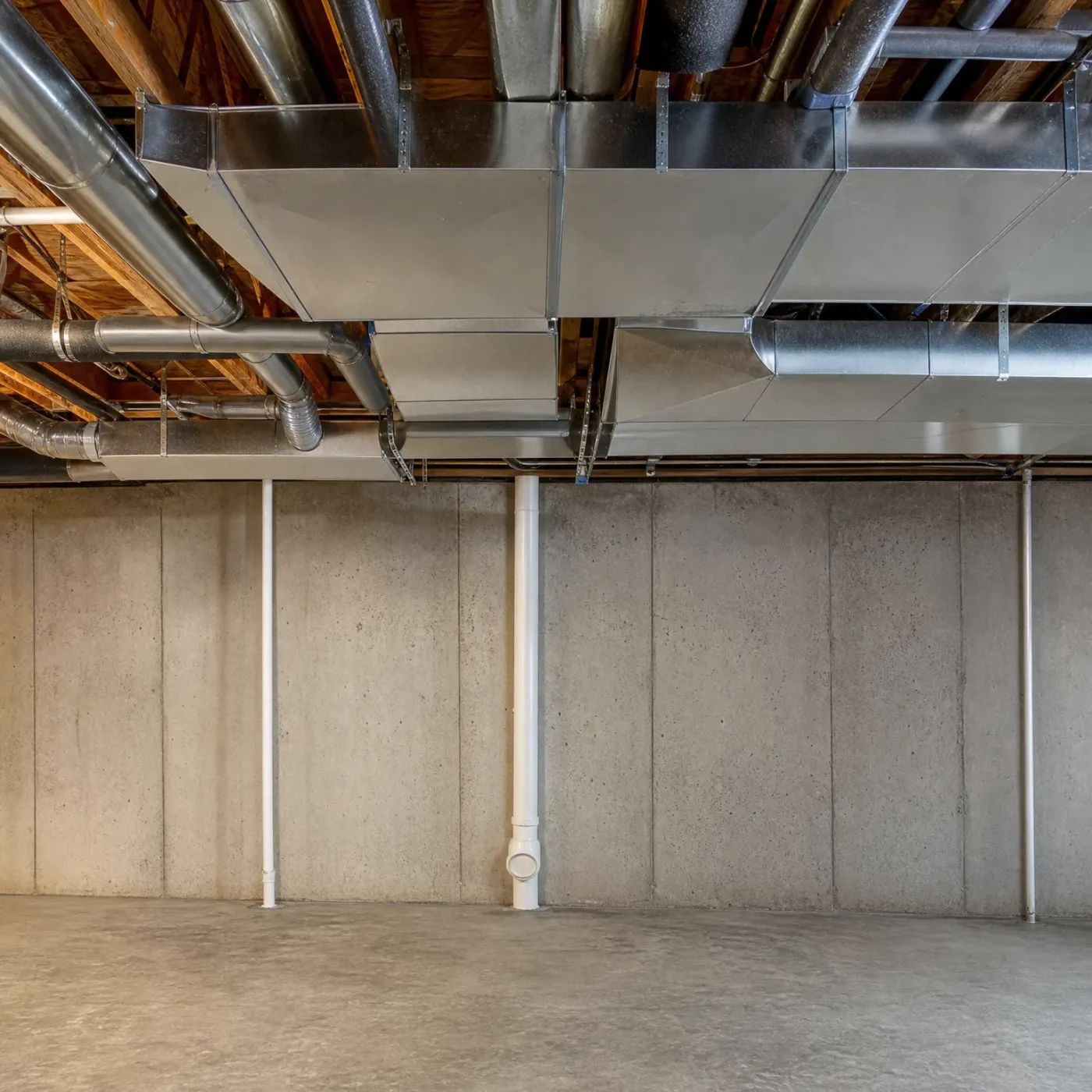
Unfinished basement with poured concrete walls, a bare concrete floor, white PVC pipes running down the wall, and exposed sheet-metal HVAC ductwork beneath wood floor joists.
After you get your ductwork cleaning
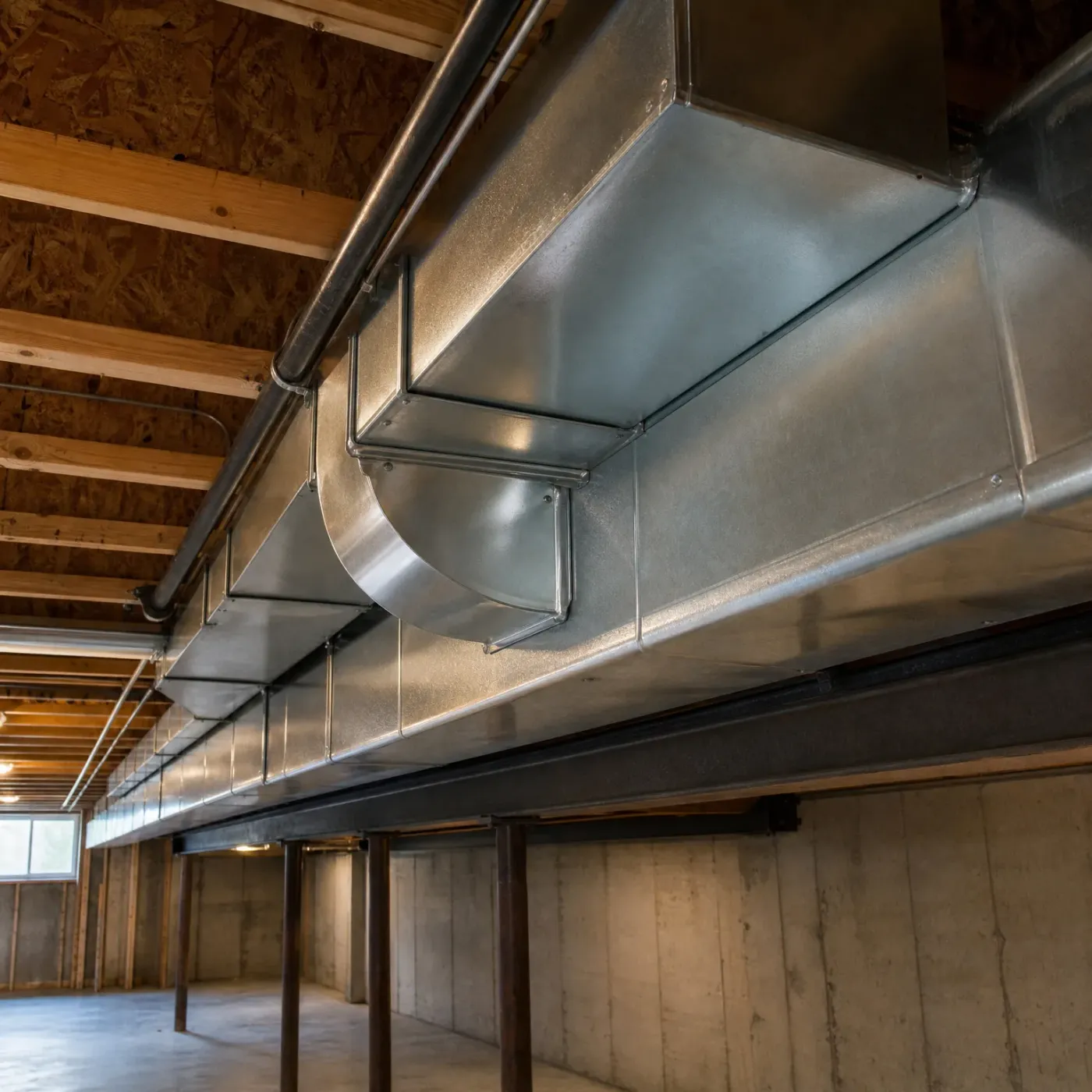
Galvanized sheet metal HVAC trunk ducts and branch takeoffs running below a wood-joist ceiling in an unfinished basement with concrete walls, steel support columns and a concrete floor.

A duct system pro near you

The pro who gets in touch is licensed in Iowa and works in Polk County.

Your request goes to a Polk County pro who takes ductwork jobs.

Find a licensed ductwork pro

It costs nothing to send, and you don't have to hire anyone.

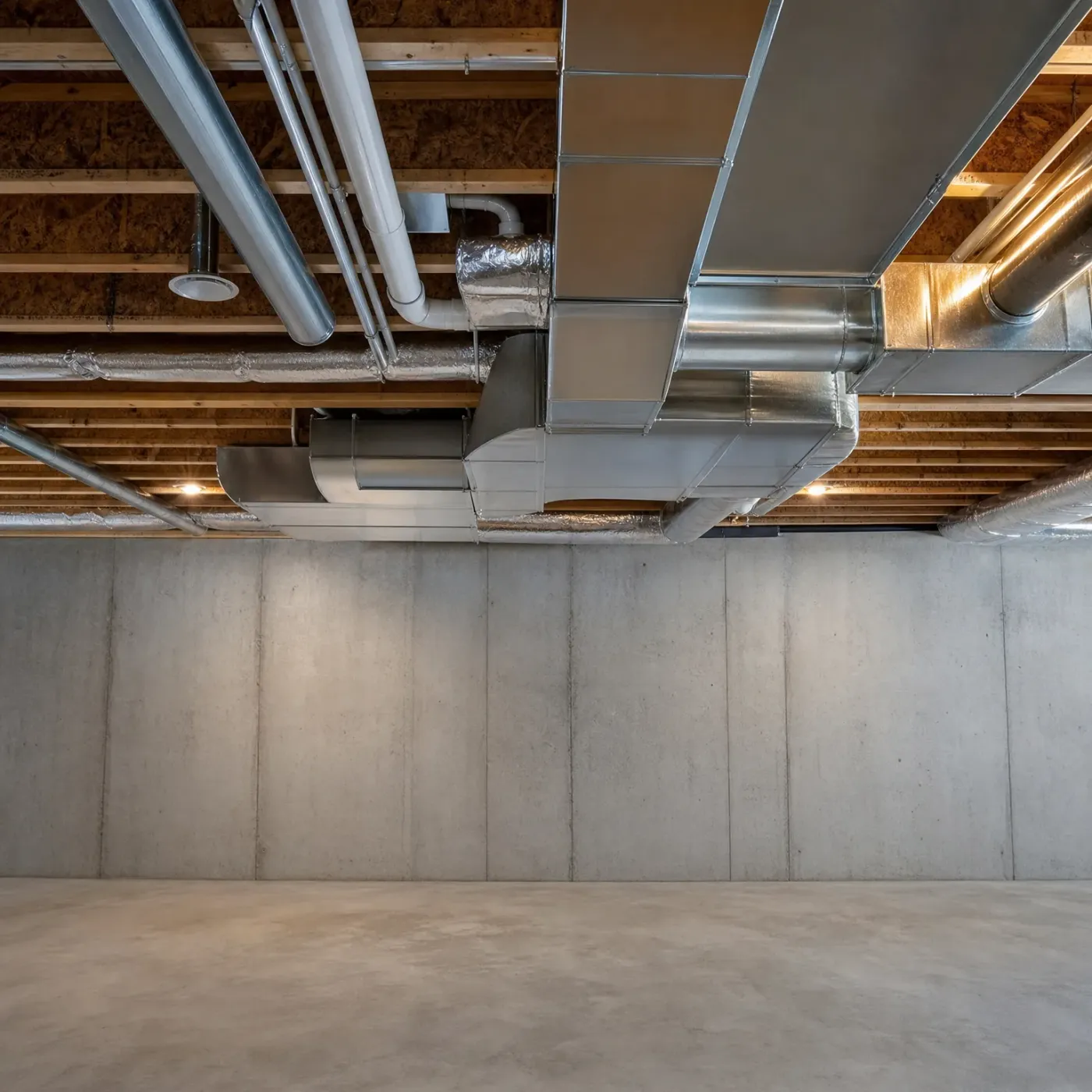
Empty basement room with bare concrete walls and floor, and an exposed wood-joist ceiling carrying sheet-metal ductwork, insulated pipes, and recessed lights.
Sealed trunk lines hold their pressure, so a basement full of exposed duct like this still delivers full airflow to every room above it.
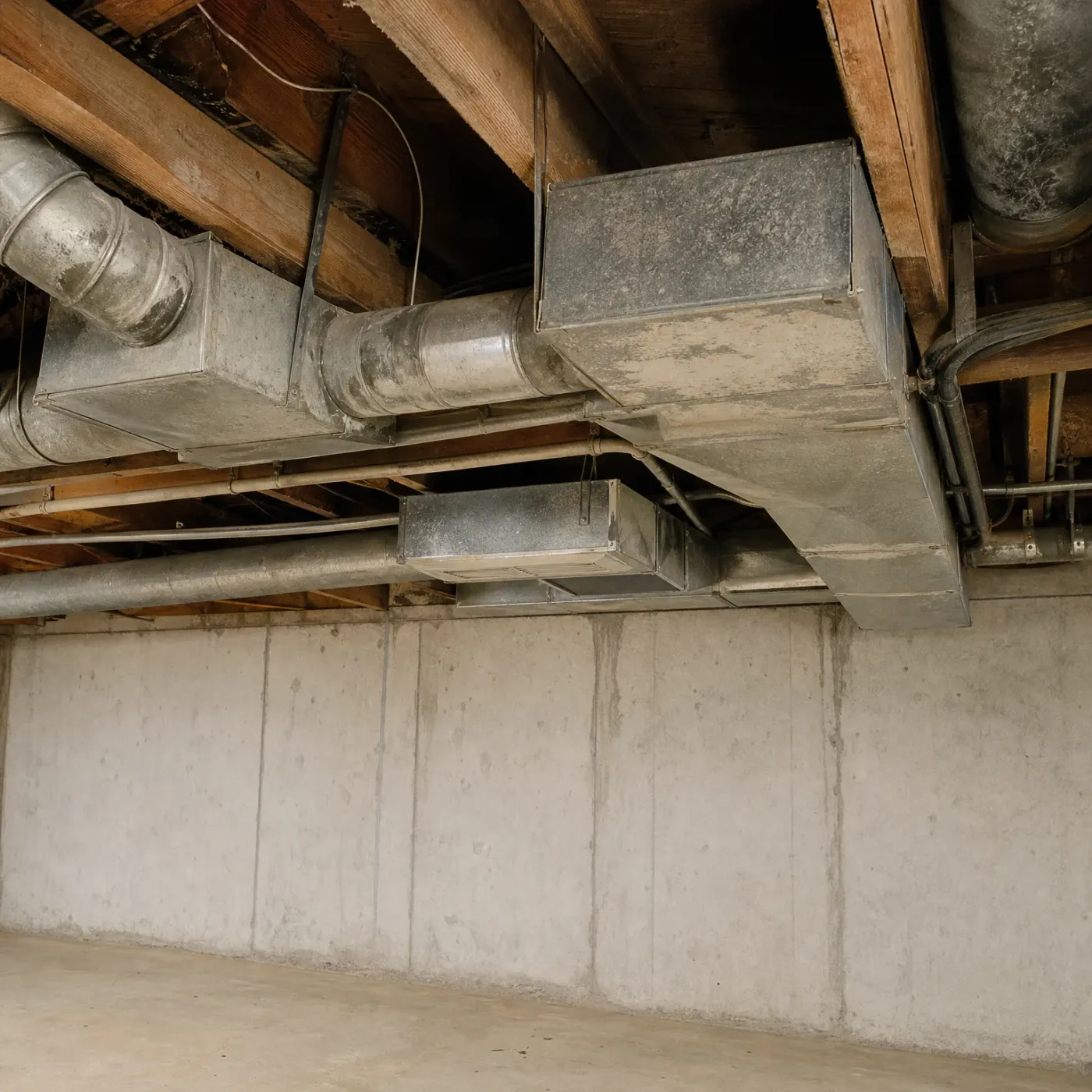
Basement ceiling with galvanized sheet metal ductwork, round pipes and rectangular plenums running between wooden joists above a bare concrete foundation wall and floor.
Loose fittings and gapped seams in a run like this let air escape into the joist bay before it ever reaches a vent.

A leaky duct run costs you in ways you can feel around the house. The thermostat might read 72 and the back bedroom still feels off, so you nudge it down a degree and the furnace or AC just runs longer without fixing the room that's actually cold or hot. That extra runtime shows up on the gas bill come January and on the power bill in July, even with power priced the way it is here. Air that escapes into the attic or crawl space also carries dust and insulation fibers back in through the return, so vents and registers need dusting more often than they used to. In a crawl space especially, warm moist air leaking out of a line in summer can settle on cold ductwork or framing nearby, which is worth a look if you've noticed any dampness down there. None of this happens overnight. It's the kind of thing that adds up over a season or two until the uneven rooms and the higher bill stop feeling like a coincidence.

A woman wrapped in a chunky knit blanket sits in an armchair with an open book on her lap, beside a lit table lamp and a window with frost and snow outside.
A smiling older woman with gray hair in a loose bun wearing a ribbed beige sweater stands in a dimly lit kitchen beside a window showing darkness outside, with a loaf of crusty bread on a wooden board in the foreground.

8 months a year

That's how long furnace or AC air pushes through your ducts in Polk County. Every hour of that run time, a leaky seam keeps feeding warm or cooled air into the attic or crawl space instead of your rooms.

Get one local pro

1982 or earlier

Half the homes in Polk County were built by then. Joints and seams loosen with age, so a duct system from that era is worth having checked even if nothing seems obviously wrong.

Get one local pro

Power here costs 11.37 cents per kilowatt-hour

At 11.37 cents a kilowatt-hour, power here is cheap, which is exactly why gas is doing most of the work heating your house. Air that leaks out of your ducts before it reaches a vent is furnace air, paid for in therms, not electricity. A sealed system keeps that gas bill tied to the rooms you're actually heating.

EIA-861 2025

What the Signs Add Up To

  • A room that won't hold temperature, a furnace that runs long, and dust around the vents point to the same thing: air leaving the ducts before it reaches you.
  • A house from 1982 or earlier has had that many more years for joints and seams to work loose.
  • Every month the furnace or AC runs, a leaky seam keeps paying out air into the attic or crawl space instead of your rooms.
  • A local contractor who services ducts in Polk County homes all season knows which joints and fittings tend to give out first.
  • One contractor takes on your job instead of a handful competing for it, so you deal with a single call back, not a stack of them.
  • The signs add up the same way in most houses: once you know what to feel for at the vent, you know what you're looking at.

A room that stays warm or cold no matter the thermostat setting, a furnace that seems to run all the time, dust rings around the vents. None of these show up for no reason. They show up because air is leaving the ducts somewhere between the furnace and the room, and in a house built in 1982 or earlier, the joints and seams have had decades to work loose. Once you know that, the rest of what you've noticed around the house stops being a mystery and starts being evidence.

You don't need to find the leak yourself. What you need is someone who knows where to look. A contractor who works on ducts in Polk County homes all season has seen which fittings give out first and where a trunk line tends to separate from a joist. That kind of familiarity comes from doing this work locally, not from a general sense of how ductwork is supposed to behave.

When you put in a request, it goes to one contractor, not a handful. That means one call back, from someone local who takes your job rather than competing for it against three other bids. You get a straight answer about what's going on with your ducts, not a sales pitch from whoever calls first.

The signs you've noticed, the warm room, the long furnace cycles, the dust, point the same direction in most houses. Once you know what they mean, the next step is just getting someone out to confirm it and fix it.

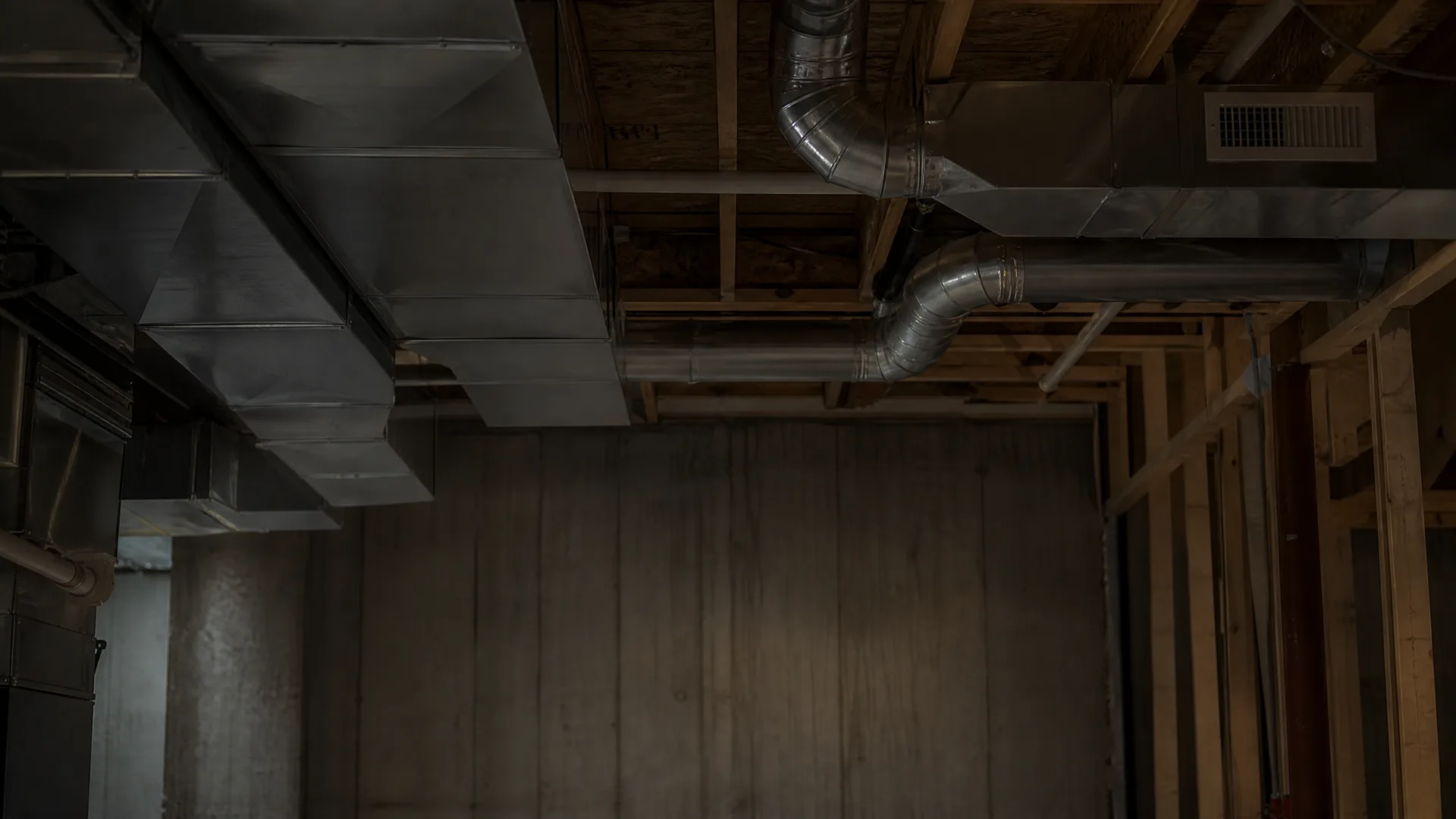
Dimly lit unfinished interior ceiling with galvanized rectangular and round sheet-metal ducts, a wall vent grille, exposed wood framing and joists.

A local pro for your ductwork cleaning

Your request goes to one pro, not a list of companies.

Duct and vent cleaningDucts or ventsPolk County, IA
Step 1 of 2

What ZIP code is the job in?