A basement interior with a gray furnace or air handler unit connected to large sheet-metal ductwork running along the exposed joist ceiling, with support posts and a concrete block wall in the dim background.

Describe it once

Mold in air ducts in Des Moines, IA

Musty smell when the furnace or AC kicks on, maybe a spot of dark buildup near a vent cover. You want to know if that's mold, how it got into your ducts, and whether it needs a full cleaning. That's what this page gets into. Skip the searching around and calling a handful of companies to explain it all again. One local contractor who deals with Des Moines ductwork takes it from here.

Skip calling around

A musty smell from your vents usually means mold somewhere in the duct system, and in most cases it's growing on moisture, not dust. Mold needs water to take hold, and ducts pick up moisture a few ways: a condensate line that backs up, a leaky duct joint pulling in humid attic or crawlspace air, or a coil that sweats and drips where it shouldn't. Des Moines summers run humid enough that any small leak in a duct run gives mold what it needs for months at a stretch. Once it's established on the inside of sheet metal or flex duct, running the furnace or AC just pushes that air, and the smell, into every room the system serves. It won't clear up on its own, and scrubbing a vent cover doesn't touch what's growing further back in the line. Whether it's a patch of growth near one register or something spread through the trunk line depends on where the moisture is getting in, and that's what a cleaning and inspection tells you.

Power here costs 11.37 cents per kilowatt-hour

At 11.37 cents per kilowatt-hour, running your blower longer to push air through moldy ducts doesn't hit your wallet as hard here as it does elsewhere. That's one less reason to put off a cleaning once you've found the source of the moisture.

EIA-861 2025

The AC coil is damp all summer

Your air conditioner pulls moisture out of the air every time it runs, and from April through October in Polk County that's most days. That water has to drain off the evaporator coil, and the ducts right next to it sit in a damp space for months at a stretch. Any dust already in that duct run has a steady water source sitting a few inches away. A musty smell that shows up or gets worse once the AC's been running a while points here. It's also why a cleaning done in spring tends to hold up better than one done after the mold's had all summer to spread.

The furnace side stays dry and still

Once the gas furnace takes over for winter, that part of the system isn't adding any moisture. Dry heat moving through dry ducts doesn't grow mold on its own, even if the ducts sat damp since summer. What you'll notice instead is the smell carrying through the house once the blower kicks on, because warm air moves faster and reaches every room. The mold itself isn't new. It's the same growth from the humid months, just more obvious now that you're running the furnace daily instead of the AC on and off. The source still traces back to where moisture got in.

Why does mold keep coming back in my ducts?

  • Half the homes here were built by 1982

    Half the ductwork in Polk County went in by 1982, and older metal duct seams loosen with age, giving moisture more places to seep in and mold more places to take hold.

  • Heat runs October through May

    Eight months of heat means eight months of warm air moving past any damp spot in the system, and warm air feeds mold faster than cool air does.

  • Cooling runs June through August

    Three months of summer cooling adds condensation to the mix on top of the furnace months, so the ducts rarely get a long stretch completely dry.

ACS 2020-2024 · NOAA nClimDiv 1991-2020

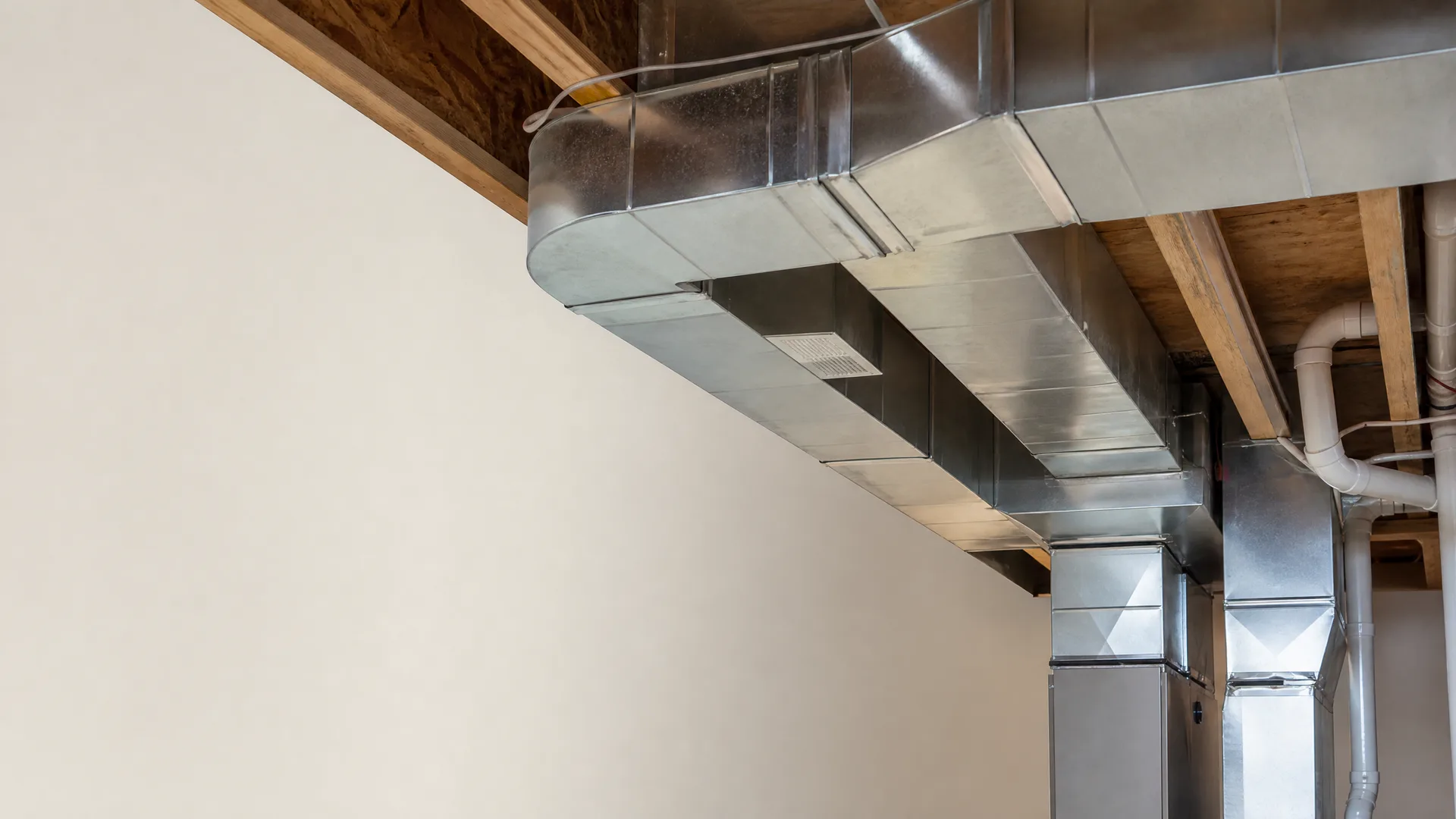
Galvanized sheet metal HVAC ductwork and insulated flexible ducts running along a wooden-joist ceiling beside a plain light-colored wall.

What a musty smell costs you

A furnace that pulls moldy air through the ducts is pushing that air into every room on the system, not just the one with the vent cover you noticed. Kids' rooms, the kitchen, wherever a duct runs. Spores settle on surfaces and get stirred up again each time the blower kicks on. If anyone in the house has asthma or allergies, a musty basement smell in October is worth tracking down before it's running through the house all winter.

Galvanized sheet metal HVAC ductwork running along a wood-joist ceiling beside a plain light-colored wall, with white pipes nearby.

What happens if you wait

Mold in a duct doesn't stay put. It feeds on moisture and dust, and both are already there, so it spreads along the duct run toward the vents rather than staying at the spot it started. A patch near one register this month can show up near another by spring. The dark buildup you can see on a vent cover is usually smaller than what's sitting further back in the duct, out of sight.

Why does my house smell musty when the air kicks on

You notice it most when the furnace or AC first starts up, a damp, earthy smell that fades after a few minutes. Look at the vent covers themselves, especially in rooms you don't use much. Dark specks or a fuzzy gray film around the edges usually means mold has already taken hold inside the duct, not just on the cover. Some homes also pick up a damp patch on the ceiling near a return vent, or a cold, clammy feel to the air even when the thermostat says otherwise. None of this is cosmetic. Anyone in the house with allergies or asthma will likely notice it first, coughing more at night or waking up congested, because the spores are riding the air into every room the system reaches.

Unfinished basement with bare concrete walls and floor, exposed wood joists, and galvanized sheet-metal HVAC ductwork and pipes running across the ceiling.

Ducts running clean

This is what a dry system looks like. The metal runs stay dry, the joints stay sealed, and air moves through without picking up anything it shouldn't. No condensation sitting on the ducts, no dark buildup where they meet the joists.

Basement ceiling with galvanized sheet-metal ductwork, wooden joists and subfloor, black and white pipes, above a concrete wall and floor.

Ducts holding moisture

Here the ducts sit next to drain lines and PVC in a basement that holds humidity, and a joint or seam has let water in. Once the metal stays damp, mold has what it needs, and the branch point is often where buildup starts first.

Empty basement room with bare concrete walls and floor, exposed wooden floor joists overhead, large galvanized sheet-metal ducts with a vent grille, colored pipes, and a single lit bulb.
Before you get your ductwork cleaning
Empty unfinished basement with bare concrete floor, insulated walls with vapor barrier between wood studs, exposed wood joists, galvanized sheet-metal ductwork, a recessed light, and a steel support column.
After you get your ductwork cleaning
  1. A tech inspects every duct run and the coil drain pan.

  2. A camera checks return and supply lines for dark buildup.

  3. The crew seals off vents and sets up negative pressure.

  4. An agitator knocks mold loose from the metal walls.

A woman in a beige V-neck sweater laughs while seated at a white marble counter with a glass of white wine, with a living room containing a gray sectional sofa, lamp, and dark windows behind her.
A woman with long dark hair in a cream sweater laughs while seated at a light stone counter with a glass of red wine, with a blurred dining table and living room behind her.
A woman in a dark green sweater laughs while seated at a marble kitchen island with a glass of red wine, with open shelving, cabinets and a living room visible behind her.
A smiling woman with dark shoulder-length hair in a cream V-neck sweater sits at a marble counter with a glass of red wine, with a kitchen and softly lit living room behind her.

No calling every shop in Polk County

Finding out who actually cleans ducts, and cleans them right, takes work. You'd be calling around, describing the smell and the dark spots near the vent cover to one company after another, then waiting on quotes to see who even inspects the coil drain pan before they touch anything. Hand this one off instead, and it goes to a local contractor who works on Polk County duct systems all season, the kind who's seen what a backed-up condensate line or a loose duct seam does by midsummer and knows where to look first. One contractor gets your request, not five, so your phone isn't ringing all afternoon with sales calls. You still have a musty smell working its way through the house every time the blower kicks on, into the kids' rooms and the kitchen alike, and that part doesn't wait. Getting someone qualified looking at your ducts is the part you can move on now.

Unfinished basement with bare concrete floor and walls, exposed wood joists, large galvanized sheet-metal ductwork, PVC and copper piping, and a gray furnace unit beside wood stud framing.

Dry ducts, sealed joints

This basement shows a system working the way it should. The ducts run across the joists dry, the furnace sits clear of standing water, and the condensate line drains off to the side without backing up into the metal.

Basement ceiling with large galvanized sheet-metal ductwork, round metal pipes and plumbing lines running beneath wood joists, above a bare concrete wall and floor.

Staining on the foundation wall

Water has gotten in here, and the stain on the foundation wall shows it. Ducts running this close to a damp wall pick up moisture from the air around them, and that's enough for mold to start on the metal and the joists next to it.

Does the duct cleaning actually kill the mold or just remove it?

You've gotten this far thinking about what a cleaning actually does, and that's the real question underneath it. Scrubbing buildup off a vent cover is one thing. Mold growing in a duct run is another, and you want to know if a crew vacuuming out the system is actually solving the problem or just making it look better for a while before the smell comes back.

A thorough cleaning removes the mold, and a contractor treats what it's growing on

The agitator and vacuum work together to knock mold loose from the metal and pull it out, so the mold itself is gone from the ducts, not just the dust sitting near it. But mold leaves a stain behind, and in a damp duct run a stain alone can hold enough moisture to let it start growing again. That's why a contractor checks the coil drain pan and condensate line as part of the job, not just the duct walls. If the source of the moisture never gets fixed, whether that's a backed-up drain line or a leaky joint, the ducts dry out for a while and then stay wet again, and mold comes right back to the same spot.

Empty basement with bare concrete walls and floor, a small window at left, and exposed wood joists with galvanized sheet metal ductwork and pipes overhead.
Metal stays dry, gas valves and joints are tight, nothing feeds mold a reason to start.
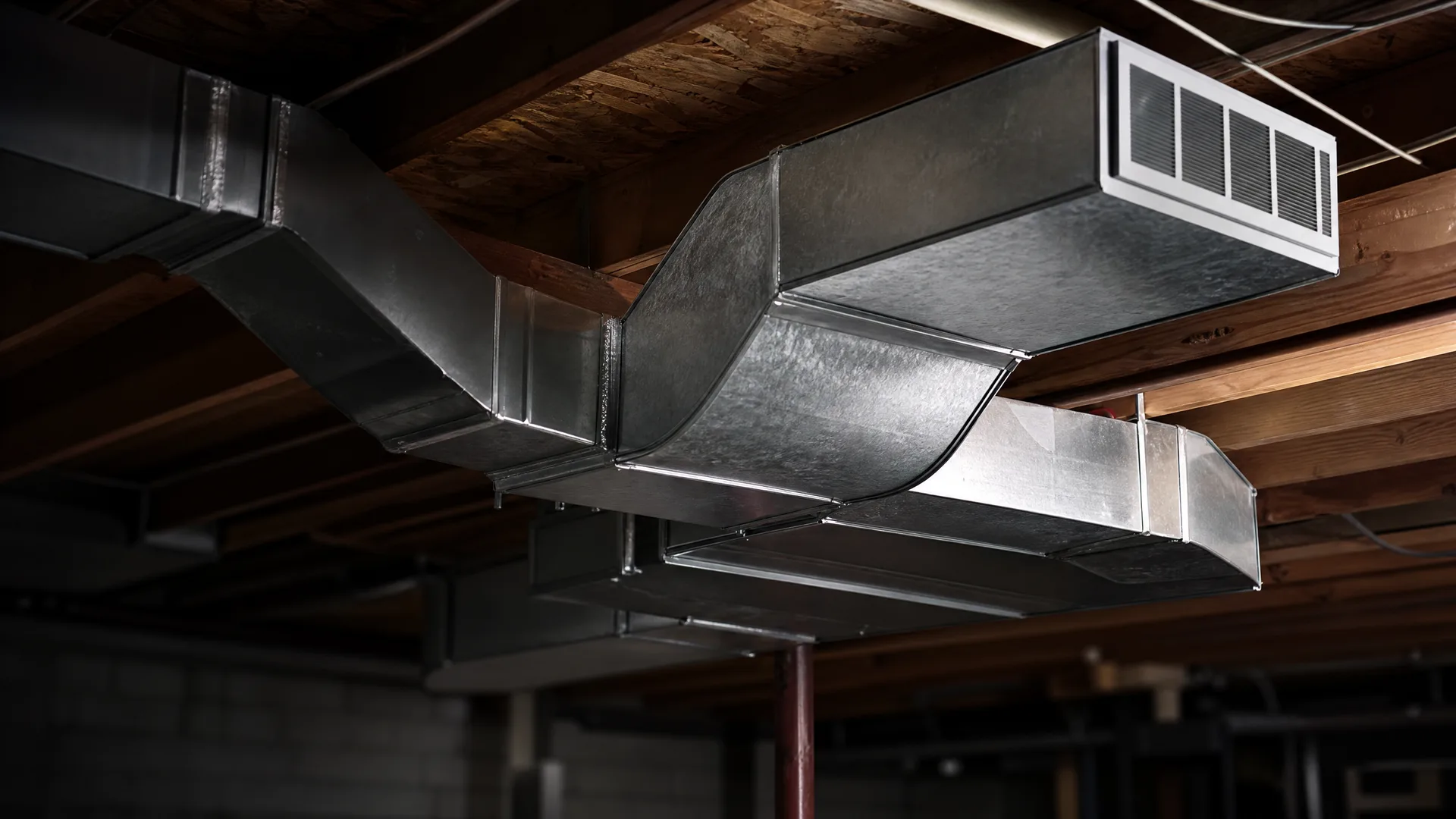
Dusty sheet-metal HVAC ducts with a rectangular vent register run beneath wooden floor joists above an empty concrete-walled basement.
Dark grime coats the duct walls here, built up on moisture that never had anywhere to go.
A smiling middle-aged man in a dark knit sweater sits at a dimly lit dinner table with a glass of red wine, a bowl of food, and a lit candle in the foreground.
A woman with long wavy brown hair in a knit sweater reclines on a couch with eyes closed under a textured blanket, an open book on her lap, beside a lit table lamp and potted plant.

Dry ducts, found and fixed

  • A musty smell from your vents means mold growing on moisture somewhere in the duct run, not just dust buildup.
  • The source is almost always water: a backed-up condensate line, a leaky duct joint, or a coil that stays wet all summer.
  • A cleaning without fixing the moisture source means the smell and the growth come back within months.
  • A local contractor who services Polk County duct systems every season has already seen what usually fails here, whether it's an old metal seam or a drain line that keeps clogging.
  • One contractor takes the job from inspection through the cleaning itself, so you're not fielding calls from three different companies explaining the same smell three times.
  • Once the moisture problem is found and fixed, dry ducts stay dry, and that's the actual standard to check your system against.

A musty smell from your vents has a cause, and it's almost always water, not just dust sitting in the ducts. Find where that water is coming from, whether it's a condensate line, a loose joint, or a coil that never fully dries between runs, and the mold has nowhere left to grow back. Clean the ducts without finding that source and you'll likely smell the same thing again before next summer.

This is where someone who works on Polk County duct systems all season matters. A contractor who's been in basements across the area knows which metal seams tend to loosen first and which drain lines clog more than others, because they've already traced that smell to its source in houses like yours. That's not a guess, it's what shows up again and again in this area's ductwork once you start looking.

It also means one contractor handles the whole job, from the first inspection to the camera check to the actual cleaning, instead of you repeating the same description of a vent cover and a dark spot to three separate companies and comparing notes afterward. One visit, one person who's seen the problem before and knows what to check for.

Once the source is fixed, the standard is simple: the metal stays dry, the joints stay sealed, and nothing in the system gives mold a reason to start again. That's what a duct system here should look like, no musty smell when the furnace or AC kicks on, no dark buildup creeping back around the vent cover.
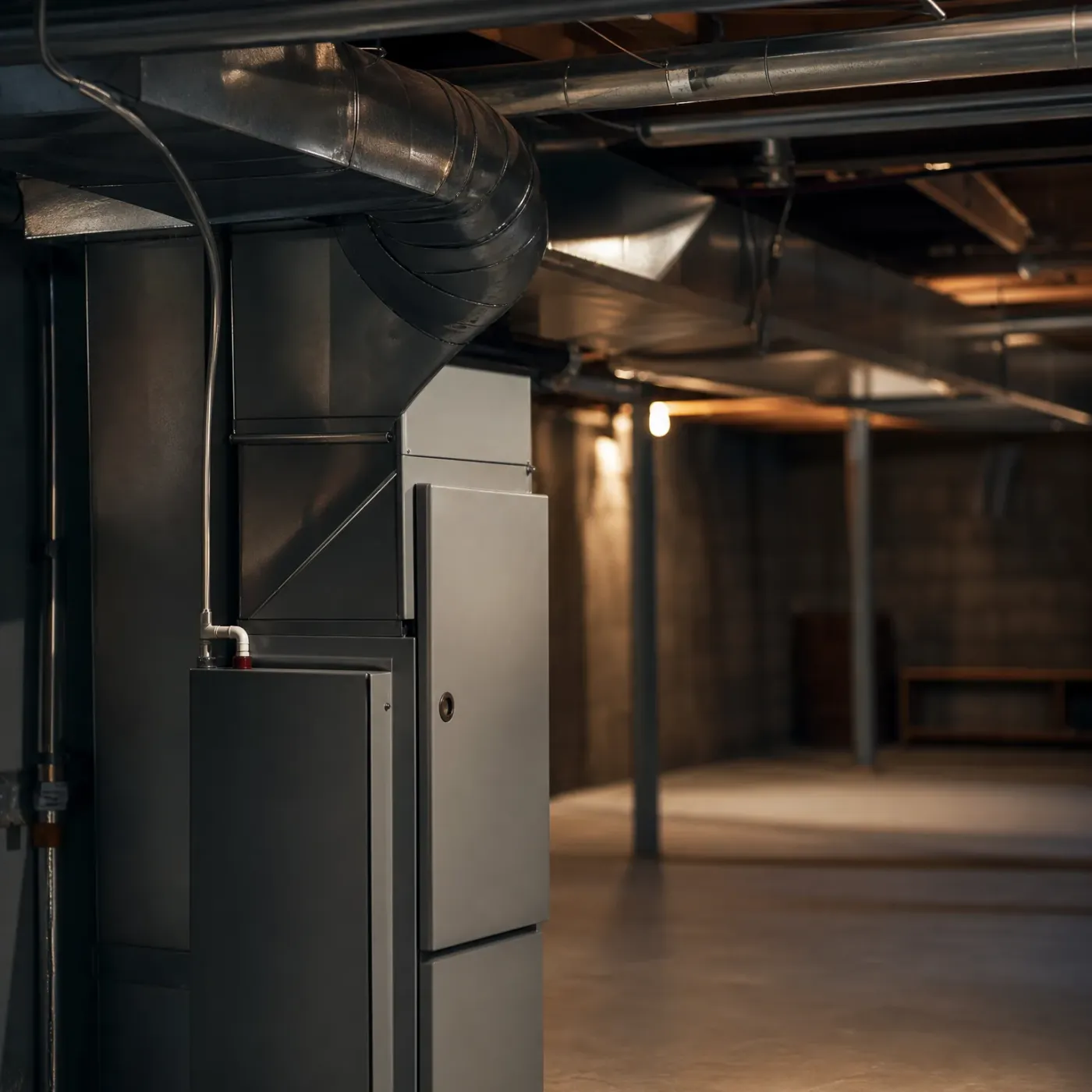

Galvanized sheet metal HVAC ductwork with a white vent grille, mounted against wooden floor joists in a dim basement with concrete block walls.

No phone calls to make

Duct and vent cleaningDucts or ventsPolk County, IA
Step 1 of 2

What ZIP code is the job in?