







Iowa HVAC Match

Musty smell from vents in Davenport, IA

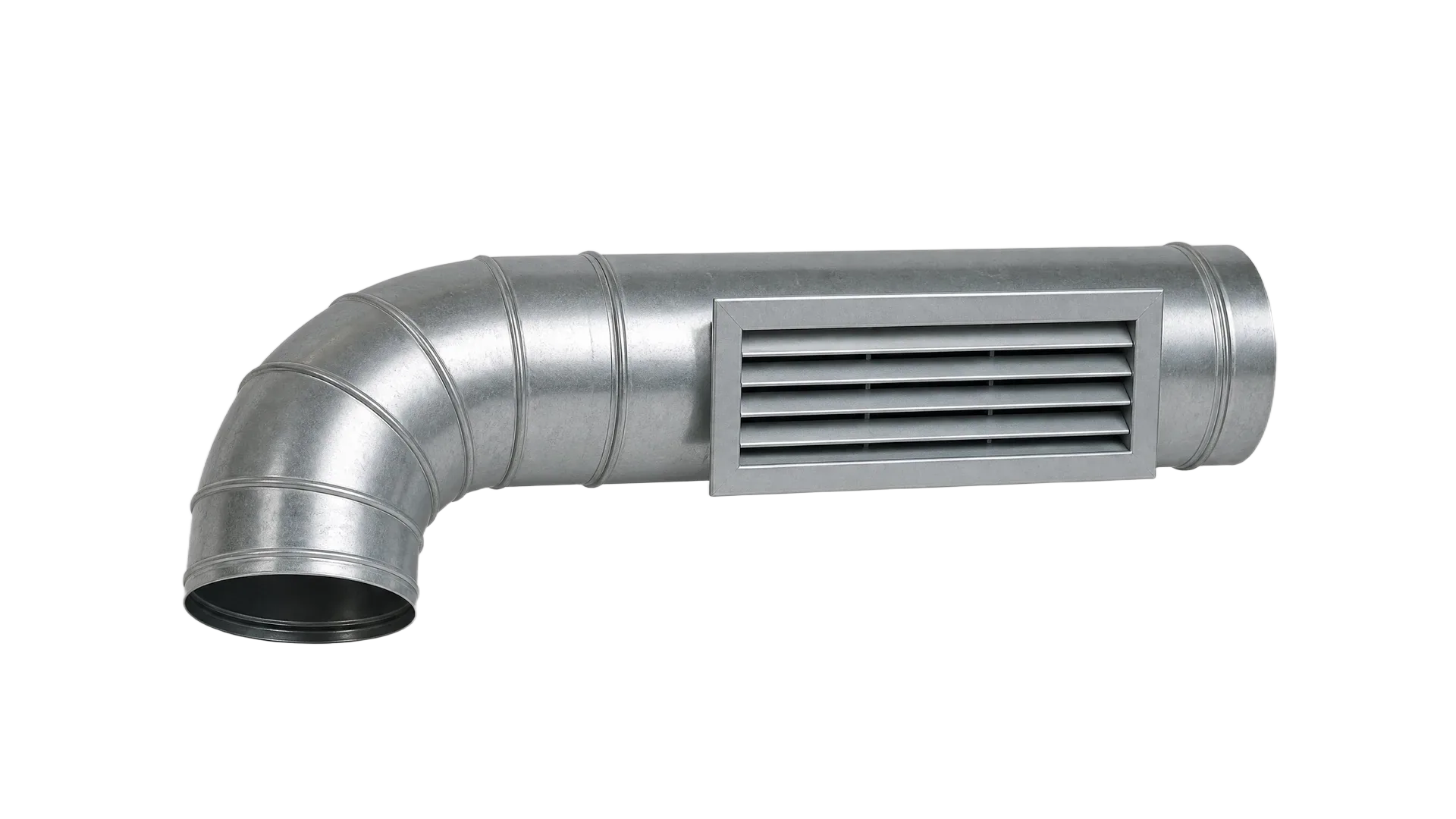
A galvanized steel round duct section with a 90-degree elbow and a rectangular louvered grille on its straight run, shown against a plain gray background.
Request a pro

A musty smell from your vents usually means moisture sitting somewhere in the duct system, and in Davenport that's often the humidity that builds up through summer. Water can collect in the ductwork itself, around the evaporator coil, or in the drain pan under your AC unit, and mold starts growing in that damp, dark space within a day or two. Once it takes hold, every time the blower kicks on it pushes that smell through the house. A dirty filter makes it worse, since trapped dust holds moisture longer and gives mold more to feed on. Sometimes the smell points to standing water from a clogged condensate line rather than the ducts themselves, which is worth knowing before anyone opens up your vents. Either way, the smell won't clear on its own. It means something in the system is wet when it should be dry, and that needs to get found and cleaned out.

Why does this smell keep coming back in your house?

  • Half the homes here were built by 1972

    Half the homes in Scott County date to 1972 or earlier, so a lot of duct systems have had decades to collect dust that holds moisture and feeds that smell.

  • Heat runs October through May

    Your furnace runs about eight months a year here, October through May, pushing air through the same ducts long enough for any trapped moisture to spread the smell through the house.

  • Cooling runs June through August

    Cooling runs June through August, and that's when the evaporator coil and drain pan hold the most moisture, which is why the smell often shows up worst in summer.

ACS 2020-2024 · NOAA nClimDiv 1991-2020

Where the smell actually starts

  • Mold needs moisture and a food source, and dust sitting in the ducts gives it both.
  • The evaporator coil stays wet whenever your AC runs, so it's the spot mold usually starts.
  • A clogged drain line backs water up into the pan and sometimes into the duct connected to it.
  • Once mold grows on the coil or in the ducts, the blower pushes that smell into every room.
  • Flex duct runs in crawlspaces or attics stay cool enough to sweat in summer, and damp insulation holds the smell.
  • Cleaning removes the dust and buildup mold feeds on, but it won't fix a drain line or a duct leak causing the moisture.

Mold needs two things to grow: moisture and something to feed on. Your duct system can hand it both. The evaporator coil sits inside the air handler and gets wet every time the AC cycles on, which in Davenport is most days from May through September. If dust has collected on that coil or in the ducts nearby, the mold has what it needs to take hold right there. Water is supposed to drip off the coil into a drain pan and out through a condensate line. When that line clogs, the pan backs up, and in some systems the overflow reaches into the ductwork itself. Flex duct is the other place to look, especially runs through a crawlspace or attic. That ductwork stays cooler than the air around it in summer, so it sweats the same way a cold glass does, and the insulation wrapped around it holds onto that dampness instead of drying out. Once mold is established on the coil, in the pan, or along a duct run, the blower does the rest of the work. It pushes air through that spot and out into every room on the system, which is why the smell shows up at vents nowhere near where the moisture actually is. Cleaning takes out the dust and buildup the mold has been feeding on, but it won't clear a clogged drain line or seal a duct leak that's letting the moisture in to begin with.

Power here costs 12.22 cents per kilowatt-hour

At 12.22 cents per kilowatt-hour, running the blower longer to air out a musty system doesn't cost much here. That's worth knowing if you're tempted to let the fan run on its own after the AC cycles off, since that airflow helps dry out the coil and ducts between cleanings.

EIA-861 2025

A gray-haired bearded man in a dark snow-dusted coat and scarf stands inside a dimly lit home entryway, with a hallway, framed picture, lit table lamp and staircase behind him.
An older man with gray hair and a beard, wearing a dark snow-dusted coat, stands in a warmly lit home entryway with a hallway, console table with lamp, patterned rug, and living room visible behind him.
An older man with gray hair and a beard, wearing a dark coat dusted with snow and a blue plaid scarf, stands smiling in a dimly lit entryway with a window, framed picture, table lamp and staircase behind him.
A gray-haired man in a dark coat dusted with snow stands in a warmly lit home entryway, with a lamp, sofa, window and white staircase banister behind him.

Matched to your ductwork job

Send the form and finding a duct cleaner is handled.

Sending the form costs nothing.

You run the blower on its own after the AC shuts off, letting air move through the coil and ducts until they dry.

You let the system sit between cycles, and the coil stays wet, the dust in the ducts stays damp, and the smell has time to build again before the next cycle starts.

Galvanized sheet-metal ductwork and round pipes run along a wooden floor joist ceiling above a bare concrete wall and floor.
Before you get your ductwork cleaning
Unfinished basement with concrete floor and walls, exposed wood joists, steel support posts, and large galvanized sheet-metal ductwork running to a furnace or air handler against the far wall.
After you get your ductwork cleaning
Unfinished basement with bare concrete floor and walls, exposed wood joists, metal ductwork, a furnace unit, steel support posts, and a small window.

Clean ducts, dry air

This is what a duct system looks like when it's keeping up. The metal is dry, the joints are tight, and air moves through without picking up anything it shouldn't. No damp dust sitting in the runs, no smell riding along with the air into your rooms.

Empty basement with bare concrete walls and floor beneath an exposed wood-joist ceiling carrying galvanized sheet-metal ductwork, round ducts and pipes.

Ducts holding onto moisture

Here the ductwork is doing the same job, but years of dust have built up inside the metal and it's holding moisture it shouldn't. That's what sends a musty smell up through the vents every time the blower kicks on, even after the AC has cycled off.

Is the smell coming from the coil or the ducts

Smell from the coil

  • Water sits on the evaporator coil every time your AC runs, and that's where mold usually gets started.
  • A technician can inspect and clean the coil directly, since it's a fixed spot rather than feet of hidden ductwork.
  • Coil cleaning alone won't help if the smell is coming from dust further down the duct runs.
  • If the drain line is also clogged, water can back up past the pan and reach the coil area again after cleaning.

Smell from the ducts

  • Dust that's sat in the ducts for years holds moisture and keeps feeding the smell even after the coil is clean.
  • Cleaning the duct runs reaches the dust sitting in the joints and bends where air moves slowest.
  • Duct cleaning won't stop the smell if the coil itself is still staying wet between cycles.
  • Older duct systems in Scott County have had decades to build up the kind of dust that holds onto moisture.
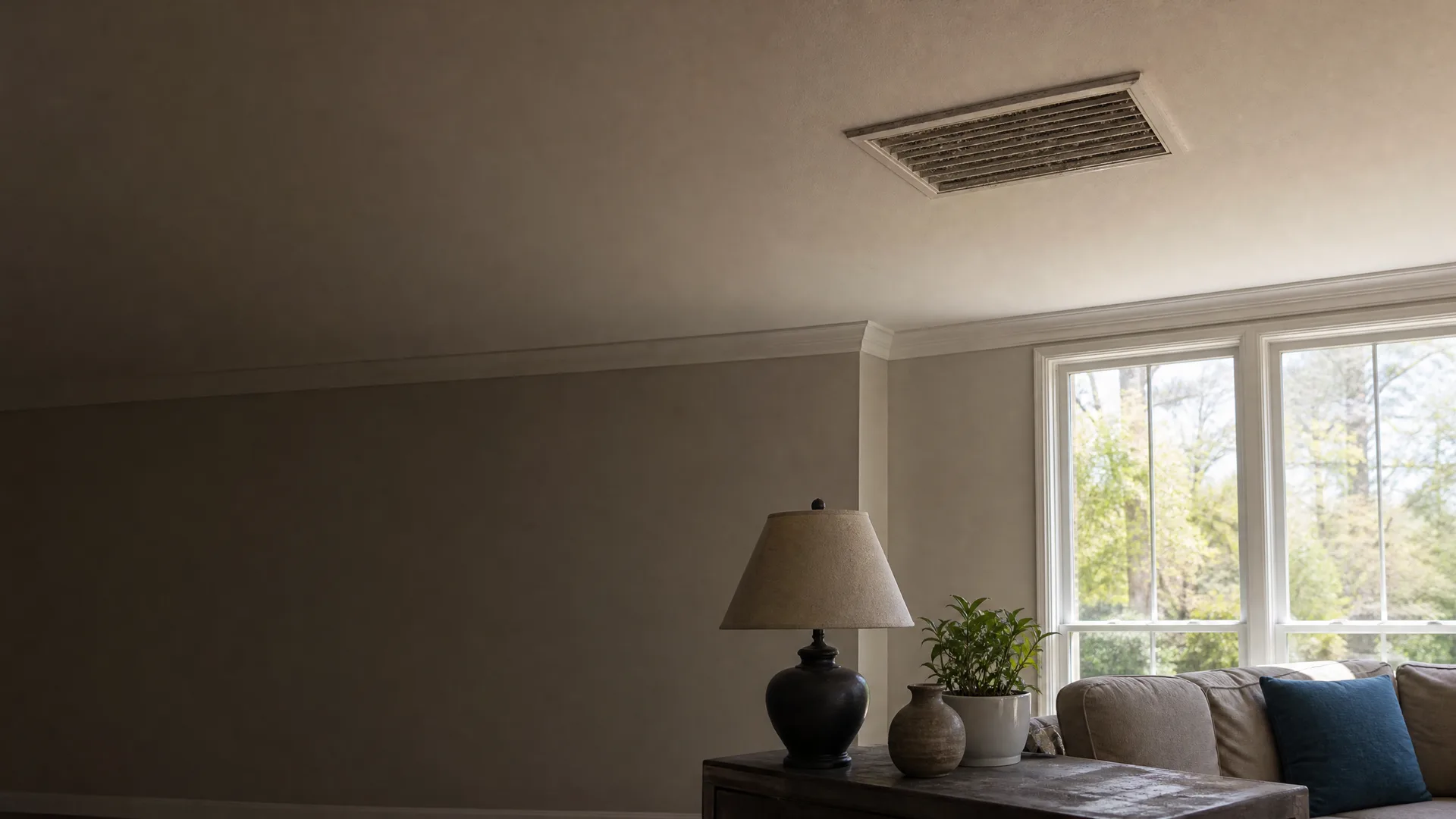
A ceiling air vent in a living room with beige walls, a table lamp and potted plant on a wooden console, a sofa with a blue cushion, and a window showing green trees outside.

It's a Saturday afternoon in May, warm enough that the AC kicked on for the first time in weeks. You're vacuuming the living room and you stop to look up at the ceiling vent. There's a ring of gray dust caked around the grille, thick enough that it's dropped a fine layer onto the lamp shade and the bookshelf underneath. You wipe the shelf down and it's back within a day or two. The smell hits you more in here than anywhere else in the house, especially right after the system cycles off, like the air itself needs a minute to clear.

A woman in a cream sweater stands in an open doorway of a single-story house with horizontal siding and a stone-veneer base, facing a man in a blue shirt with a bag strap seen from behind in the foreground.

A musty smell has a cause, and the cause can be cleaned out

The smell is moisture and dust sitting somewhere in your system, most likely the coil, the drain pan, or the ducts themselves. That's true whether it just started or it's been coming back every summer since you moved in. It's not something you have to live with, and it's not a sign anything is wrong with you or how you keep the house. It's a sign the system needs attention in a specific spot.

A contractor who works on duct systems in Scott County can find where the moisture is sitting and clean it out, coil, pan, or ducts, whichever is holding it. Once you send the form, that search is off your plate. You'll hear from a contractor who takes it from there, matched to what your system actually needs, not a guess from across town.

A living room corner with a beige upholstered armchair holding navy and striped cushions, a small round wooden side table with a carved bowl and a potted green plant, a framed landscape picture on a pale wall, built-in shelving, and a curtained window.
A woman wrapped in a thick textured blanket sits on a sofa with an open book on her lap, beside a lit lamp and bookshelf, with a frost-patterned window behind her.
An older woman with grey-blonde hair in an updo and a beige turtleneck sweater smiles while looking to the side in a warmly lit kitchen, with a round loaf of bread on the counter in front of her and a dark window showing snow outside.

Ductwork Cleaning

A duct system pro near you

One request and the duct cleaning stops waiting on you.

A black-framed smartphone standing upright against a plain light gray background, its screen filled with solid green.
Duct and vent cleaningDucts or ventsScott County, IA
Step 1 of 2

What ZIP code is the job in?