How a contractor finds a leak
- A contractor finds leaks with a blower door test or a duct blaster, which pressurizes the system to measure how much air escapes.
- Leaks at the supply side push conditioned air into the attic or crawlspace instead of the room, so your furnace or AC runs longer for the same result.
- A leak on the return side pulls unconditioned air from wherever the duct runs, which is how dust and attic or crawlspace air end up inside the house.
- Most leaks happen at the joints and connections, not along the duct itself, because that's where two pieces meet and the seal can fail.
- Flex duct that's kinked or crushed restricts airflow the same way a leak does, even with no actual hole in it.
- Sealing with mastic lasts longer than tape, because tape dries out and loses its grip over years of heating and cooling cycles.
A contractor tracking down a leak in Johnson County usually starts with a blower door test or a duct blaster, pressurizing the system so the leak shows up as a measurable number instead of a guess. That number tells them how much air the system is losing before they ever crack open a duct.
Where the leak sits matters as much as how big it is. A leak on the supply side sends warm or cooled air into the attic or crawlspace instead of the room it was meant for, so the furnace or AC keeps running to make up the difference. A leak on the return side works the other way. It pulls air from wherever that duct runs, attic, crawlspace, wherever, and that's often the real reason a house feels dusty even with a clean filter.
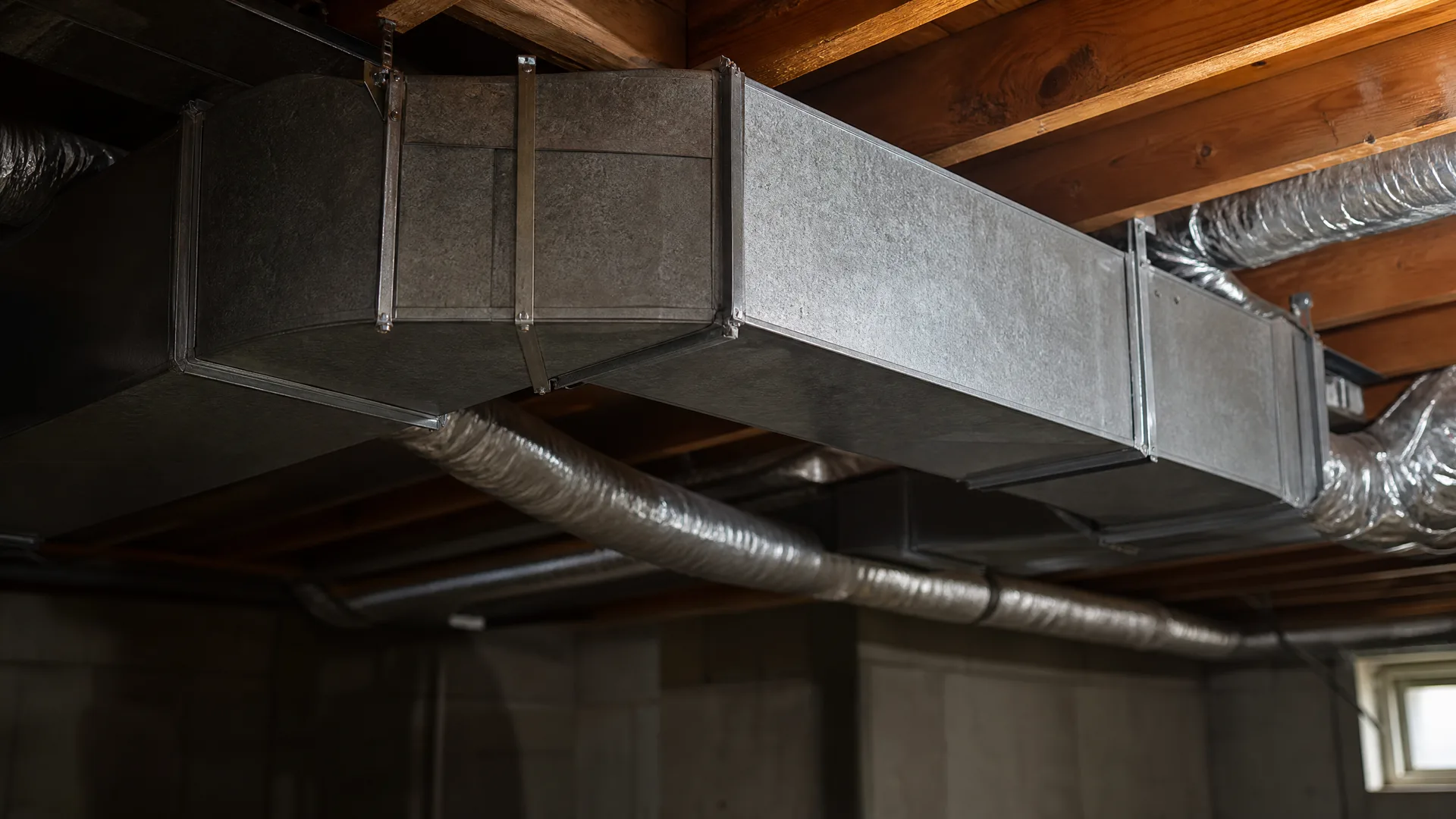
Most of this happens at the joints, not along a straight run of duct. Two pieces meet, the seal between them is what's supposed to hold, and that's the point most likely to fail over years of the system heating up and cooling down. Flex duct adds another problem that isn't a leak at all. If it's kinked behind a joist or crushed under something stored in the attic, airflow drops the same way it would with a hole, and a contractor checks for that too.
When it's time to seal what they find, mastic holds up better than tape. Tape dries out and loses its grip after enough heating and cooling cycles. Mastic doesn't.